


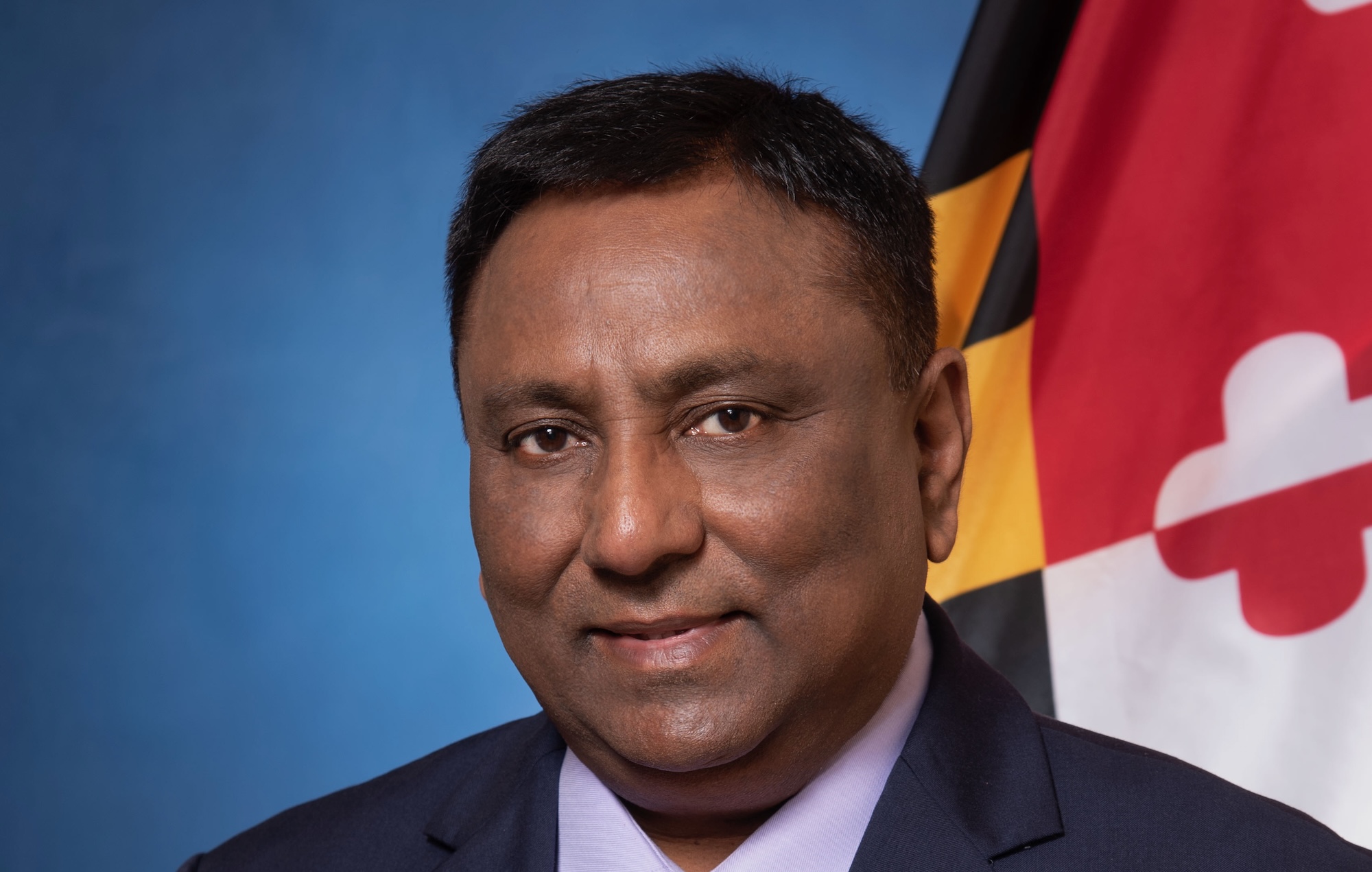
When Sanjay Rai took the helm as Maryland’s Secretary of Higher Education in April 2023, he brought with him decades of experience as an educator and administrator. Having spent 20 years at Montgomery College, including a decade as Senior Vice President, his journey from an international student from India to a key architect of Maryland’s higher education policy is nothing short of remarkable.
For Rai, stepping into his new role as Secretary of Higher Education was not just a career move, it was an extension of his lifelong commitment to education. “I am enormously thankful to Gov. Wes Moore and Lt. Gov. Aruna Miller for the opportunity to be part of their administration,” he told the American Bazaar in a recent interview. “Both have a great vision for the state of Maryland, and it also translates nationally and globally.”
READ: Automating healthcare administration: In conversation with Eden’s Naomi Rajput and Evan Smith (January 2, 2025)
In the wide-ranging conversation, he reflected on his transition into public office, Maryland’s competitive edge in higher education, and the evolving role of technology in academia, among other topics.
As Secretary of Higher Education, Rai manages a vast network of institutions: The University System of Maryland, Morgan State University, St. Mary’s College of Maryland, four Historically Black Colleges and Universities (HBCUs), 24 private institutions — including Johns Hopkins — 16 community colleges, and approximately 150 career and technical schools. “Together, these institutions serve about half a million students,” he says. “Maryland’s higher education system is one of the best-resourced in the country.”
The comprehensive systems of higher education institutions — which include private technical and career training schools, top-tier community colleges, private independent universities, and state universities — makes Maryland’s system unique and impactful, offering exceptional opportunities to the state and nation, Rai says. This ecosystem plays a crucial role in the state’s leadership in fields like quantum computing, cybersecurity, life sciences, and aerospace.
Anchored by the University of Maryland’s Joint Quantum Institute and Quantum Startup Foundry, the state is a hub for quantum computing. It’s also known as the “Cybersecurity Capital” of the U.S., thanks to its proximity to federal agencies like the NSA and U.S. Cyber Command. Similarly, Maryland excels in life sciences, bolstered by the NIH, FDA, and prominent biotech firms. The state also hosts NASA’s Goddard Space Flight Center and a robust network of aerospace contractors driving defense and space innovation.
Rai credits these institutions for the state’s success in these areas. “You will see that a lot of these IPs, intellectual properties, in these areas, a lot of startups, a lot of these companies and ideas came from our institutions of higher education,” he says. “They have provided us with this edge, and we are an economically thriving state because of that reason.”
Last February, Moore introduced a “State Plan” outlining his administration’s priorities and strategic objectives, declaring it the start of “Maryland’s decade.” Among the plan’s top priorities are “setting students up for success” and fostering “an equitable, robust, and competitive economy.”
Rai views higher education as integral to achieving this vision. “Education is Maryland’s economic engine. We are creating the workforce that attracts businesses, drives innovation, and ensures prosperity,” he emphasizes.
READ: Perplexity AI CEO Aravind Srinivas stuck in green card backlog (January 31, 2025)
Expanding access and affordability
Over the last couple of years, Gov. Moore has provided an additional $24 million in scholarships for low-income students. “Financial aid alone is often not enough,” he acknowledges. “These additional state funds ensure that students from low-income families — whether they attend Johns Hopkins, the University of Maryland, Loyola, or Prince George’s Community College — can pursue their education without financial barriers.”
Rai also spoke of the increasing cost of education and the financial barriers many students face. One of the major reasons education costs rise is the extended time to degree completion, he says, adding. “If a four-year degree student completes in six years, you’ve added two years of cost right there. So, ensuring timely completion of a degree is essential.”
He points out that Montgomery College, under his leadership, “had reduced that time almost by one year.”
A key priority is establishing smooth credit transfers from Maryland’s community colleges — among the best in the nation — to four-year universities. “We are in the process of creating one of the best transfer systems in the nation – where courses from community colleges will transfer to universities in the most seamless manner, expanding access to post-secondary opportunities statewide.”
Rai also notes that the state is also addressing workforce shortages in critical fields like education and healthcare by giving financial aid to students. Maryland has a Teaching Fellows program where tuition and books are covered for those who commit to teaching in the state.
“You can become a teacher where all your tuition and books and more is paid for as long as you work a number of years in the state of Maryland after completing your teaching degree,” he says. “The same goes for the nursing shortage, which is also pretty significant in the state of Maryland.”
For individuals with industry experience looking to transition into teaching, Rai is pushing for alternative certification pathways.
Safety is another area the Moore-Miller administration is focusing on. “Just last year, we awarded $25 million as campus safety grants to our institutions, private ones, public universities, and community colleges to make their campuses safer,” Rai says.
Building talent
Beyond financial support, Rai also emphasizes the need for building talent for the new knowledge and digitized economy. Recalling his personal experience, when his father worked for a steel plant in a remote region in India during the 1960s India, he said industries that require resources are tethered to places where they are in abundance. “Steel plants will be built wherever you can find iron ore, coal, and water,” he says.
In contrast, Rai underscores how the digitized economy operates, placing a premium on skilled talent. “In a digitized economy, businesses and industries will go wherever they can find talent,” he states. “One objective is to make sure that we are rich in homegrown talent. What we can do for students, what we can do for our regional, statewide, and national, it’s all linked, and higher education is central to both.”
Rai emphasizes the importance of aligning academic programs with economic demand.
Since taking over as secretary of higher education, Rai notes that he has seen a number of PhD programs in artificial intelligence and master’s programs in quantum computing introduced in the state. “We are approving academic programs that are highly relevant to our current economy,” he says. “That’s where a lot of excitement will happen, and our students and residents of Maryland will have access to emerging fields, new jobs, and high-paying opportunities in those areas.”
Artificial Intelligence is a major focus for Maryland’s higher education institutions, both in research and curriculum integration. “Maryland wants to lead in every aspect of AI,” Rai asserts.
“If you graduate with a master’s degree from any of the institutions in Maryland, no matter what your academic program is, everything will be impacted by AI. So if you’re getting a degree in art, you will understand what AI is at a basic level and how it impacts the field of art. So we have embraced that idea. We’re having discussions about embedding AI skills across disciplines.”
He also highlights the importance of addressing ethical considerations. Machines learn from humans, and if human decision-making has biases, AI will amplify them. He points out that Morgan State University has an institute dedicated to studying the ethical dimensions of AI.
Workforce development is another priority, with Maryland investing heavily in experiential learning. For instance, in cybersecurity, to train students effectively, all community colleges in the state have established cyber ranges — simulated environments where students can practice defending against real-world cyberattacks. “This experiential learning opportunity is significant for our students.”
A journey rooted in education
Despite the significant leap from academia to public service, Rai sees a common thread between his previous and current roles, noting that his journey is rooted in education, and the drive to support students remains central in all his endeavors.
Rai came to the United States after earning his undergraduate degree in physics and mathematics from the University of Allahabad, India, and a master’s in mathematics at Dalhousie University in Halifax, Canada, to pursue a PhD in mathematics at the University of Arkansas. Over the years, he has taught math across various institutions, including large university systems and private universities in India, Canada, and the United States.
“Whether in the classroom, as an administrator, or now as Secretary, the mission remains the same: ensuring students succeed,” he says. “Education must be accessible, affordable, and meaningful. If students learn the right skills, they gain economic and social mobility, and Maryland gains a competitive edge in the knowledge economy.”
Rai explains his commitment to education is not just professional but deeply personal. A first-generation high school graduate, his father worked in a steel plant in the central Indian region of Chhattisgarh. It is a background that underscores the impact that education can have on an individual’s life trajectory.
He credits both India and the United States for the opportunities that shaped his career. “When you consider many South Asians, I am not in any way unique,” Rai says, adding that stories like his are a testament to the power of democratic institutions in creating access to education and professional success. “I am very… thankful to what happened in India, opportunities that I had there and I am most certainly thankful for the significant opportunities that I have had in the USA,” he says.
These dual influences have shaped his passion for fostering global collaboration in education, particularly between India and the United States.
READ: Search and interact with data effortlessly using AI, CEO Dev Roy discusses IntraIntel.ai (January 8, 2025)
In fact, more than a decade ago, at Montgomery College, he was involved in a significant initiative that would have cemented a partnership. “Around 2011, we worked on an initiative between the U.S. and Indian governments to launch about 200 community colleges in India,” he recalls.
The initiative stemmed from President Obama’s visit to India and a broader effort to strengthen people-to-people ties between the two nations. “India is the youngest country, with hundreds of millions of people under 30. The challenge was how to provide them with education and skill development in an accessible and affordable way.”
Rai and his colleagues believed that the U.S. community college model — affordable, open-access institutions that prepare students for both workforce and four-year universities — could be adapted for India. “Community colleges played a crucial role in transforming the U.S. economy post-World War II, and we saw a similar potential for India,” he points out.
Although India’s system evolved differently, the initiative planted the seeds for expanded skill development programs. Even today, India’s Ministry of Education is emphasizing skills-based learning, and I’m proud that our efforts helped initiate that conversation,” he adds.
As secretary, Rai says he remains committed to forging global partnerships, noting, “We have to learn from each other. We have to share our best practices with everyone— it is good for everybody. At the same time, good things are happening in other places in higher education, and we need to learn from them as well.”