



What started once as a hobby, has evolved today into a full-fledged entrepreneurial venture. Travel vlogging has transitioned from a niche community of passionate travelers sharing their experiences to a lucrative business model, tapping into the power of social media platforms.
Vlogging as a business began evolving in the early 2010s, when YouTube’s monetization programs—like AdSense—gave creators an opportunity to earn revenue through ads placed on their videos. Around the same time, brands started recognizing the power of influencer marketing. Today, successful travel vloggers are using their creativity to produce content and create multi-platform, revenue-generating empires. So, is it a combination of advertising, partnerships, affiliate marketing, merchandise sales or something more that has made vlogging a scalable business model?
The American Bazaar chats with travel vlogger Conner Sullivan who runs the YouTube channel “Conner’s Café” that has over 960,000 subscribers. Many of his travel videos have been viewed millions of times and offer an honest perspective on people and places that he visits. From playing “gully (street) cricket” in Delhi, India to documenting his first German soccer game, Sullivan’s videos offer a raw human emotion that connects a visitor to the place almost organically.
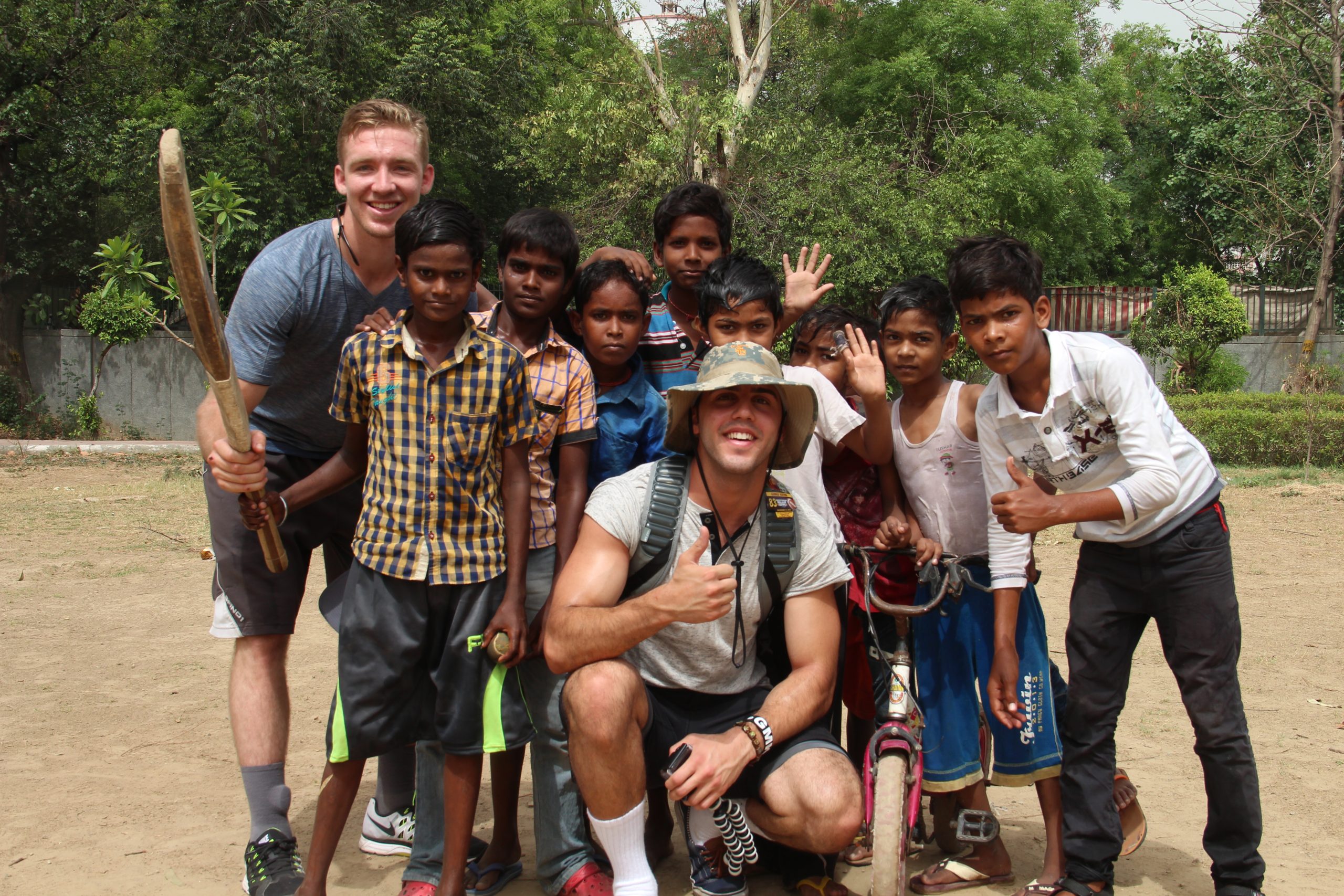
Back from a whirlwind trip to Europe, Sullivan is now planning his next visit to India.
In an exclusive interview, Sullivan tells us why despite travel vlogging not looking like a traditional business setup, it remains a highly entrepreneurial endeavor. He also talks about India — a travel destination that has not only been close to his heart but has also meaningfully pivoted the business side of his journey.
The American Bazaar: Would you agree that travel vloggers today are not just nomadic adventurers but they’re business owners, marketers, and financial planners? What is the essential business acumen required to make it a viable business platform?
Conner Sullivan: Yes, if travel vloggers are indeed making a living with their travels, then they are definitely business owners who must look out for their brand and ensure that the trajectory of the business is in line with the mission they are seeking to accomplish. I would say that travel vlogging is much the same as running a travel television show. The content is the same, it is just hosted on a different platform. However, the same planning, preparation, financial understanding, and marketing are still at play. Vlogging also comes with some investment costs just like a startup — good quality equipment and funds required to travel which always come with the risk of market outreach and scalability.
READ: Automating healthcare administration: In conversation with Eden’s Naomi Rajput and Evan Smith (January 2, 2025)
Vlogging can be a completely viable way to make a living now. I have many friends and know many others who have built entire careers through YouTube. Some have built clothing brands or used YouTube as a way to sell their own products, such as books or paintings. The internet, and specifically social media, is definitely a new frontier with many opportunities for aspiring entrepreneurs.
Talking about investments, do you recall any incidents where you have invested a lot in a travel? How were the returns from your travels?
The nice thing about social media is that the initial overhead is much less that what is necessary to create content for a show on television or other larger platforms, like Netflix for example. The main financial investments involve camera equipment — vlogging camera, drone, GoPro for action shots, cell phone and data plan, etc. The other costs include flights, hotel or AirBnB stays, and local transport in taxis or Uber — not to mention food or expenses necessary to pay for certain experiences. Most of my investments have been well calculated and because of the straightforward nature of the business, I have had great success in turning my investments into profit.
The biggest thing that I would say might be underestimated is the frequency in which equipment may break, malfunction or be lost. Traveling has a certain degree of unpredictability and depending on how a certain person travels, these things are bound to happen. The biggest problem I have encountered in this regard is when equipment malfunctions while I am on the road filming; sometimes camera SD cards will malfunction or break (resulting in lost footage) or a battery may die in the middle of an important moment. But the great thing is that you will learn to prepare for and adjust as these things happen — it makes the adventure a great learning experience, every time you travel to a new place.
Tell us about your career as a YouTuber. When you first started vlogging, did you think of it as a possible stream of income? At what stage did you think this was profitable?
I started filming videos with the camera owned by my parents at a very young age. I would document family events, such as family vacations and birthday parties by giving personal commentary and interviewing relatives. I continued to use cameras for various school projects and eventually developed and accomplished the dream of attending film school at the University of Southern California. I began spending all my free time meeting artists from around the world and this led to my increasing desire to travel in order to learn more about the world and its cultures.
I started to take trips to Mexico on the weekends, while I was a student at USC, and this exploded my interest in the unknown world (the one I was not born into).
I took my first international trip with a few friends from college in 2015 — we went to Japan, Thailand and Singapore. From there the rest is history as they say!
I was given the opportunity to play professional football (the American version) in Germany in 2017, and this is where my YouTube channel took off. I would film my experience in Germany, as an American football player, from the perspective of a foreigner; commenting on normal life and events I would attend — this is where I started to gain a large audience of German speaking people.
In 2019 I took a trip to Indonesia, Sri Lanka, and India and started to gain a large audience of people from these countries; people who were interested in how their life and culture was viewed from the perspective of an outsider. After my Asia trip in 2019, I had amassed a following of over 900,000 people on my YouTube channel.
When I first started vlogging I knew that there was potential to earn a living, however, I was not expecting the type of growth that I experienced in the coming years.
You have visited India many times and have documented extensively you’re your travels there. During your vlogging journey, what was the response like from an Indian audience? Was there a particular moment that you suddenly saw a spike in followers once you posted from or about India?
In my experience, my videos in India blew up almost instantly. In 2019, my first extensive stay in the country, I gained over 50,000 new followers from India in less than a month. The people there have always been very encouraging to me.
They appreciated my commentary on their country and my willingness to explore and experience everything about it — from the large cricket matches to the slums of the poorer regions of the country.
READ: Perplexity AI CEO Aravind Srinivas stuck in green card backlog (January 31, 2025)
In order to truly understand and explore a country, one must go to every corner and talk to many types of people from every walk of life. Only then can one start to develop a true picture of what a country is.
The same can be said for every country in the world. If someone, who visits the United States, only visits Los Angeles for a week — they will have an inaccurate understanding of the American people. I have a Royal Enfield that I brought in India with my earnings from there and is parked still in India. I plan to take it all over the country — to the mountains of the North, the river delta of the East and the coasts of the West and South. I really feel welcomed in India and I am also humbled that through YouTube I am even able to educate people about their own countries, by going to places that they also may have never been before.
In terms of money, YouTube also has policies in which the audience geography dictates your compensation. What are your discoveries from vlogging in India?
Yes, YouTube ads, which are operated under Google AdSense, pays its creators based on advertisement CPM. CPM means ‘cost per mile,’ or the amount an advertiser pays a website per one thousand visitors who see an advertisement.
READ: Brown University students launch AI startup Kyron Medical to revolutionize medical billing (November 6, 2024)
Every country has a different CPM, based on a variety of factors unknown to me. I do not know how the algorithm works entirely — I do not think any creators do, because it changes so often. For me, I am just happy to be able to make a living doing what I love while educating and inspiring people across the world to be open minded and willing to learn new things from anyone they may encounter along the way.