



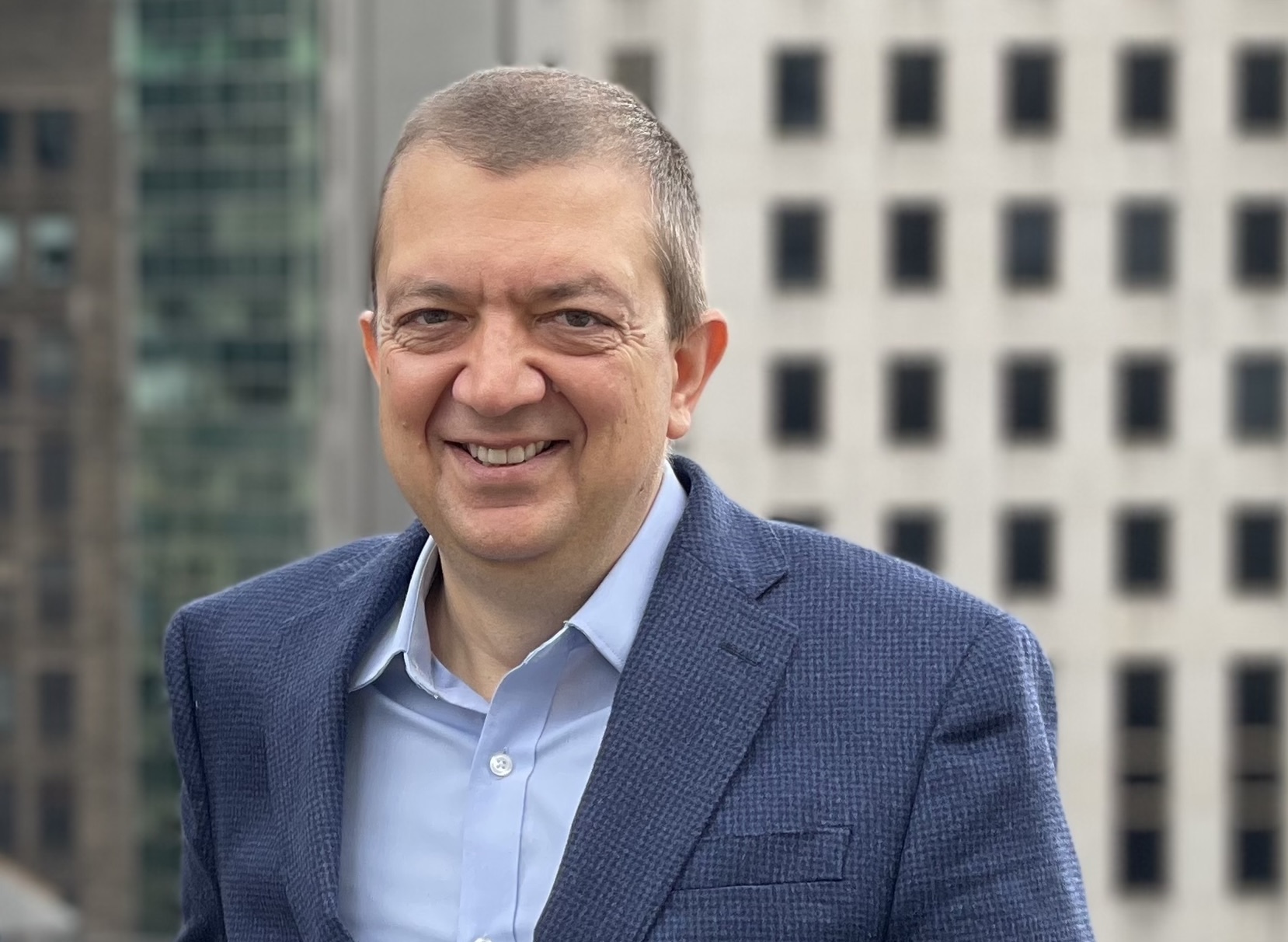
Murat Aktihanoglu is the Co-Founder and Managing Partner of Remarkable Ventures and Remarkable Ventures Climate, where he has been investing in technology and climate-focused startups since 2011. Over the past decade, he has backed more than 375 early-stage companies that now collectively have a market capitalization exceeding $10 billion.
A serial entrepreneur and technologist by background, Aktihanoglu founded Centrl, a location-based social networking platform, before transitioning fully into venture capital. In 2007, he launched Entrepreneurs Roundtable (E.R.), a New York-based nonprofit that hosts free monthly pitch events connecting founders with investors. With more than 300 events and 75,000 participants to date, ERA has become a cornerstone of the city’s startup ecosystem, fostering collaboration and mentorship among entrepreneurs and early-stage investors.
Earlier in his career, Aktihanoglu held engineering and leadership roles with major global brands, including AT&T, Sony, Panasonic, Logitech, and Pioneer, and managed teams at Silicon Graphics in Mountain View and Sony Corporation in California and Tokyo. Having founded multiple technology ventures, he brings hands-on experience from both the startup and corporate worlds to his work as a venture capitalist.
Aktihanoglu, who now divides his time between New York City and Tokyo, holds a master’s degree in computer science and a bachelor’s degree in electrical and electronics engineering from Bilkent University in Ankara, Turkey.
In this exclusive interview with Kesav Dama, Aktihanoglu reflects on building a support system for early-stage entrepreneurs and shares his thoughts on what sets successful founders apart. This is the first part of a two-part series. The interview has been edited for clarity.
Kesav Dama: Tell us how ERA, the Entrepreneur Roundtable Accelerator, got started.
Murat Aktihanoglu: I studied computer science in Turkey and moved to Silicon Valley in 1993, where I worked at Silicon Graphics. In 1998, I moved to New York and started two companies. In 2003, I moved to Japan and stayed there for two years before returning to New York in 2005 to start another company.
New York City was not like this back then. There were fewer angel investors, fewer VC funds, and not much capital available. There really wasn’t a startup community. I was running my company, and we raised some money, but when I tried to meet more VCs and angels, it was difficult. I wanted to find a lawyer who understood things like convertible notes, or an accountant who could help me with tax credits — and I couldn’t.
READ: Inside the mind of an angel investor: Lessons from the frontlines of startup investing (July 17, 2025)
I knew a few other founders, so in 2007, I reached out to 10 or 15 people and said, “Hey, let’s gather at this law firm around this roundtable and talk to each other.” People came, and they were saying, “I can’t meet angel investors or VCs. How do I make these connections?” And we were like, “Okay,” and then people just started trying to help each other.
So, the idea was that during the meeting, you would talk about what you could do for other people. Like, “I can help you do a code review,” or “I can connect you to a server company.” At the time, I was friends with Albert Wenger from Union Square Ventures. I said to him, “Tonight we had this meeting, Entrepreneurs Roundtable. We just gather a bunch of founders and talk.” And Albert said, “Oh, that sounds interesting, I’ll come to it.”
He joined us. There were about 20 people there, and everyone was amazed because Union Square Ventures—Fred Wilson is one of the top VCs in the world—was in the room. People were like, “Union Square Ventures is here!” They started pitching to Albert, and he gave them feedback, engaged with them, and everyone was happy. The founders were saying, “Murat, this was amazing. We pitched to a real VC, we got feedback.” And when Albert was leaving, he said to me, “Murat, this is so great. You should invite an investor every month.” He then introduced me to Howard Morgan, Esther Dyson, and a bunch of other VCs.
In 2009, I sold my company but kept running those events. My co-founder, Jon Axelrod — who I met around 2007 — was organizing these free nonprofit Entrepreneurs Roundtable events with me. He sold his company too, and we were both angel investing. Then people started asking us, “Hey, can you take our money? Because you know all the startups.” And I was like, “No, I’m a software engineer, I’m a computer science guy.” But eventually we said yes.
At that time, there were no tech accelerators in New York City. So, at the end of 2010, Jon Axelrod and I decided to start ERA. We built a mentor network of about 250 mentors, raised a small fund, and launched ERA in June 2011. We picked 10 companies and got lucky — our second class had a unicorn, TripleLift. Our initial investment returned 1,242x. So, we kept going. Now we are running ERA 29 and have invested in 375 companies.
So just, just for the people who don’t know, explain what accelerator do…
An accelerator provides very early-stage funding, cash, and a structured program where companies meet mentors and partners who offer free services and help improve every aspect of the business — the technology, product, go-to-market strategy, sales, fundraising, everything.
It’s a hands-on mentorship program with daily programming and regular mentor meetings. It’s a very intense process for us. Not every accelerator operates this way, but what we do is bring in around a thousand mentors. The companies enter the program, and after four months, when they go through demo day, we get their feedback.
READ: Tapping into India’s growth engine, Monsoon Pabrai launches NSE investment vehicle (June 13, 2025)
Every cohort, we conduct exit interviews, and founders consistently tell us that the program transformed their company. They change their go-to-market approach, their product, their ideal customer profile—everything. So, in summary, an accelerator helps startups improve all aspects of their company while also providing a cash investment.
There are other accelerators like Y Combinator and the Founders Institute. What makes your accelerator stand out?
This is like asking what the difference is between Sequoia and Index Ventures. They’ll both say, “We provide cash.” But the difference lies in the mentor networks and the program structure.
What we do is provide free office space to 15 companies at our office in Midtown, near Madison Square Park. We bring in a lot of mentors and run a lot of programming—there’s pitch practice, KPI sessions, speaker sessions, and fundraising sessions.
What I recommend to founders is this: ask the graduates of an accelerator program, “Hey, are you happy you went through this accelerator? Do you wish you hadn’t?” That’s going to give you the real answer. Because some programs don’t really add value, so you need to ask the graduates to truly assess a program.
How many cohorts do you have in a year, and what is the application process like?
We run one program in January and one in June—each lasting four months. Applications are ongoing almost year-round, and we typically accept them over a three- to four-month period. Anyone from anywhere in the world can apply, and we select 15 companies for each program.
It’s a residency program, so participants have to come to New York. During COVID it was optional, but now it’s mandatory to be in New York City for the full four months. The deadline for the January cohort is at the end of October, and we’ll open applications for it in about a month, around the end of August.
And what are the financial terms of your program?
We invest $150,000 on a 6% post-money SAFE. Meaning, we invest and give you the money, and then when you raise an equity round, we receive 6% of the company under that agreement.
We provide the cash, plus free office space, free programming, everything free—including demo day. And one more thing: we’re a little different because we also have a separate follow-on fund called Remarkable Ventures. When ERA companies raise their Seed, Series A or B rounds, our follow-on fund has the option to invest anywhere from $250,000 up to $1 million, sometimes more.
So, we’re not just a one-time investor. We invest in a company, we help them, we observe their progress, and if they’re doing well when they raise an equity round with a lead investor, we participate and invest more money. We’ve joined many of our portfolio companies in their later rounds this way.
Why do I need to go to an accelerator when I can learn things on YouTube?
Of course, I mean not everybody can come to New York, right. You can learn everything online. Also, now we have online coding. You can do your coding online, you can have a tutor, AI agent. I think still we believe that the in-person mentorship is very valuable. Like meeting a founder that sold four companies and they talk to you and they say to you, oh, if I were you, I would target companies with more than $100 million revenue. Because that’s my experience. Maybe one day AI will replace that. But in person mentorship from someone you trust is very valuable and it transforms companies.
What is a skill or trait in the founder that you think is most important?
We look at every company differently. But from our experience of investing for 15 years into 375 companies and then seeing the results, we invest in people. We do not invest in ideas or businesses or pricing models or go to market plans. We know that founders who are passionate, persistent, will change the business if something doesn’t work.
We are these days investing in founders who are domain experts. They know their space really, really well. They are passionate about building a solution and they listen to other people, they listen to customers, they listen to investors. So, mentorability is one of the top priorities for us. If someone is listening to advice, no matter where the advice is coming from, that’s very valuable to us because our most successful founders-we saw that they listen to people, they don’t give up, and no matter what happens, they keep going. So, we literally invest in repeat ERA founders many times. We believe in them, and they sell the company or the company fails, and they come to us and say, hey, I’m starting another company now. We have invested in 16 different founders more than once.
Is there any other trait that you look at?
Someone can come to us without a fully thought-out idea—they’ll say, “I’m going to do this.” You look at them, and if you believe in them, you know the idea might change, and that’s okay. So, we invest in them. Really, it comes down to persistence, passion, and the ability to listen to other people.
How objectively do you measure mentorability?
You can test people by giving them a test. It’s very easy.
What are the criteria you use to select the 15 companies out of 1,500 applicants?
We invest in teams as much as in ideas. Every six months, we receive around 1,500 applications. We conduct multiple rounds of interviews, looking closely at the founders’ personality, energy, and passion. Are they genuinely excited about what they’re building? What have they achieved so far? Traction and execution matter, but they’re not strict requirements—we’ve backed teams with what initially seemed like “bad ideas,” simply because we believed in the people. Many of them went on to build great businesses. We’ve seen it happen so many times that we’re confident: if you give the right people funding, support, mentorship, and connections, they will create something amazing.
From the 1,500 applicants, about 10% make it to the first interview. We then conduct a second round, followed by meetings with one of our mentors or venture partners who know the company’s sector well. Finally, we do a longer, in-depth interview where we dig into their execution plan and overall strategy. Ultimately, we make offers to about 15 companies—roughly 1% of applicants.
Tell us about your climate fund and how it came about.
We started investing in climate companies in 2017–18. They started coming to us, and we saw the transition happening. Solar is now the cheapest form of energy. We realized the global economic shift is a huge investment opportunity. We talked to our anchor LPs, and they agreed.
Two years ago, we started working on our climate fund, and now it’s functional. We’ve made eight investments so far. We’re investing in energy transition, mobility, built environment, and also climate fintech and insurance.
Climate is a huge segment. It covers everything, from what we eat, how we drive, transport goods, supply chains, to how we create and move energy. In the next five years, every fund will be a climate fund. Just like during the dot-com boom in Silicon Valley, people used to raise Internet funds. Now everything is Internet, and the same will happen with climate and AI.
The transition is happening. In the U.S., heat pumps have outsold gas furnaces since 2021. In Europe, it’s even further ahead. Solar is the cheapest form of energy. Texas installed more solar panels than California last year.
We are investing in companies driving this transition and helping people adapt to the new climate reality.