


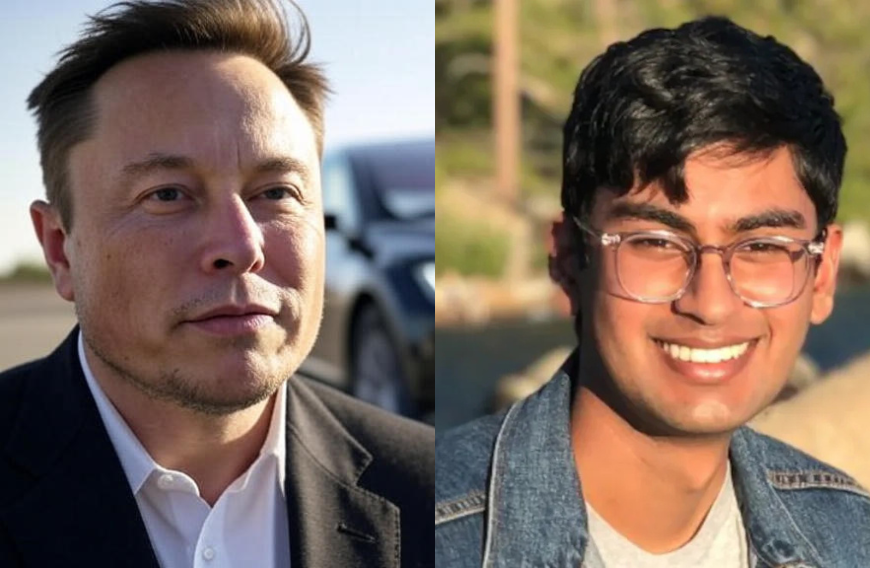
Tesla CEO and one of OpenAI’s most public and high-profile critics, Elon Musk has a lot to say about the Suchir Balaji case. Musk has dropped a bombshell in the Suchir Balaji death case, saying the OpenAI researcher and whistleblower — who was found dead in his San Francisco apartment in December 2024 — “was murdered,” Musk’s claim came after OpenAI CEO Sam Altman, in a television interview, called it a “suicide.”
Altman was speaking to former Fox News anchor Tucker Carlson, who asked, “Do you think he committed suicide?”
To this Altman replied, “I really do. He was like a friend of mine. This is like a guy that, not a close friend, but this is someone that worked at OpenAI for a very long time. I was really shaken by this tragedy. I spent a lot of time trying to, you know, read everything I could as I’m sure you and others did too about what happened. It looks like a suicide to me.”
Carlson then asked: “You had complaints from one programmer who said you guys were basically stealing people’s stuff and not paying them, and then he wound up murdered. What was that?”
READ: Indian American whistleblower alleges security flaws at WhatsApp (
Altman replied, “Also a great tragedy. He committed suicide.”
Musk hit back at Altman’s remarks, writing on X, “He was murdered.”
Suchir Balaji was a 26-year-old artificial intelligence researcher who worked at OpenAI, one of the leading AI research organizations. He contributed significantly to the development of advanced AI models such as GPT-4 and ChatGPT. Balaji graduated from the University of California, Berkeley, with a degree in Computer Science and had prior experience working at tech companies like Scale AI and Quora.
In August 2024, he resigned from OpenAI after raising serious ethical concerns about the company’s use of copyrighted materials in training its AI systems. He argued that this practice could potentially violate copyright laws and harm the broader internet ecosystem. Balaji’s whistleblowing brought attention to important debates around AI ethics and transparency.
Tragically, he was found dead in his San Francisco apartment in November 2024, with authorities ruling his death a suicide. His family disputes this finding, alleging foul play and demanding further investigation, which has sparked widespread public and media interest.
READ: OpenAI’s new marketing campaign trying to bury whistleblower death? (
At the time, police had ruled the death a suicide, stating that “no evidence of foul play” had been found during the initial investigation.
But this ruling was questioned by his family. And now it looks like Musk is joining them. The CEO of Tesla is making it known that he doesn’t trust Sam Altman’s version of events.
Poornima Rao, revealed that her son had grown increasingly disillusioned with artificial intelligence, particularly OpenAI’s shift toward commercializing ChatGPT. “He felt AI is a harm to humanity,” she said.
The Suchir Balaji case highlights deep tensions within the rapidly evolving field of artificial intelligence, raising important questions about ethics, transparency, and corporate accountability. Balaji’s whistleblowing on OpenAI’s use of copyrighted materials sparked critical debates about how AI development impacts creators and society. His tragic death, officially ruled a suicide, remains surrounded by controversy, with family members and public figures like Elon Musk disputing this conclusion and calling for further investigation.