


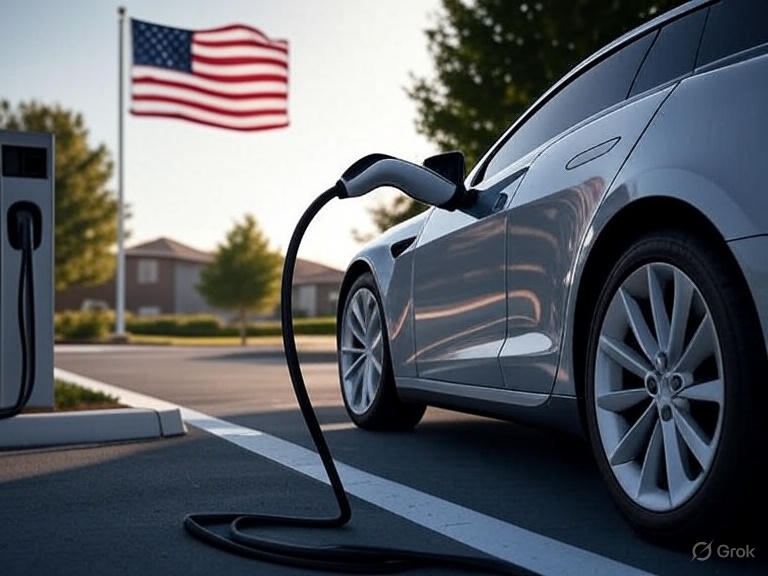
Sales of electric vehicles in the U.S. are likely to go down once the $7,500 EV tax credits expire on Oct. 1. These tax credits were originally passed in 2022 as part of the Biden administration’s efforts to support EVs and green energy. They are being phased out due to President Trump’s “One Big Beautiful Bill Act,” which is also ending a series of other clean energy credits over the next several months.
The end of the tax credits of course, means that EV prices are likely to rise. However, according to CNN, that surge might mean plunging sales in the final three months of the year and could lead to somewhat lower EV prices ahead. Trump’s move came after U.S. EV sales in 2024 rose 7% to 1.6 million, according to the Bureau of Transportation Statistics (BTS).
READ: Are Tesla’s China-built cars losing their edge in sales? (
Automakers are weighing where to set sticker prices and incentive levels to maintain some baseline of demand, as fewer people are expected to buy EVs in upcoming months. However, it is uncertain how much savings that will provide buyers, and it probably wouldn’t make up for the money lost due to the end of the tax credit.
Meanwhile, customers are flocking to dealerships to cash in on their credits before they expire. EV sales reached a record high in August, with new EV sales up 17.7% year over year and used EV sales up 59% for the same period, according to data from Cox Automotive. “As we approach the sunset of the IRA tax credit, we expect September to mirror August’s elevated sales activity, driven by time-sensitive purchase and lease offers,” Cox Automotive said in its report.
READ: Trump ‘unleashes American energy’ on EVs with executive order (
EV sales have been growing steadily over the years, and at a faster pace compared to traditional gas-powered cars. However, the sales have begun to slow down in the U.S. earlier this year, rising only 1.5% over the first six months of the year and actually falling 6.3% in the second quarter compared to a year earlier, according to Cox Automotive. That had prompted automakers to offer attractive deals, especially over lease terms.
With the tax credits expiring, more attractive offers are likely to be on the way, according to Ivan Drury, director of insights at car buying site Edmunds. “If you already can’t sell the vehicles at current prices, there’s no way you are going to sell them at today’s prices with this credit going by the wayside,” he said.
Meanwhile, Cox found that 65% of the people planning to buy an EV in the next two years said they’ll go ahead with those plans, even without the tax credit. Only 20% said they would purchase a hybrid or traditional gas-powered car instead.