


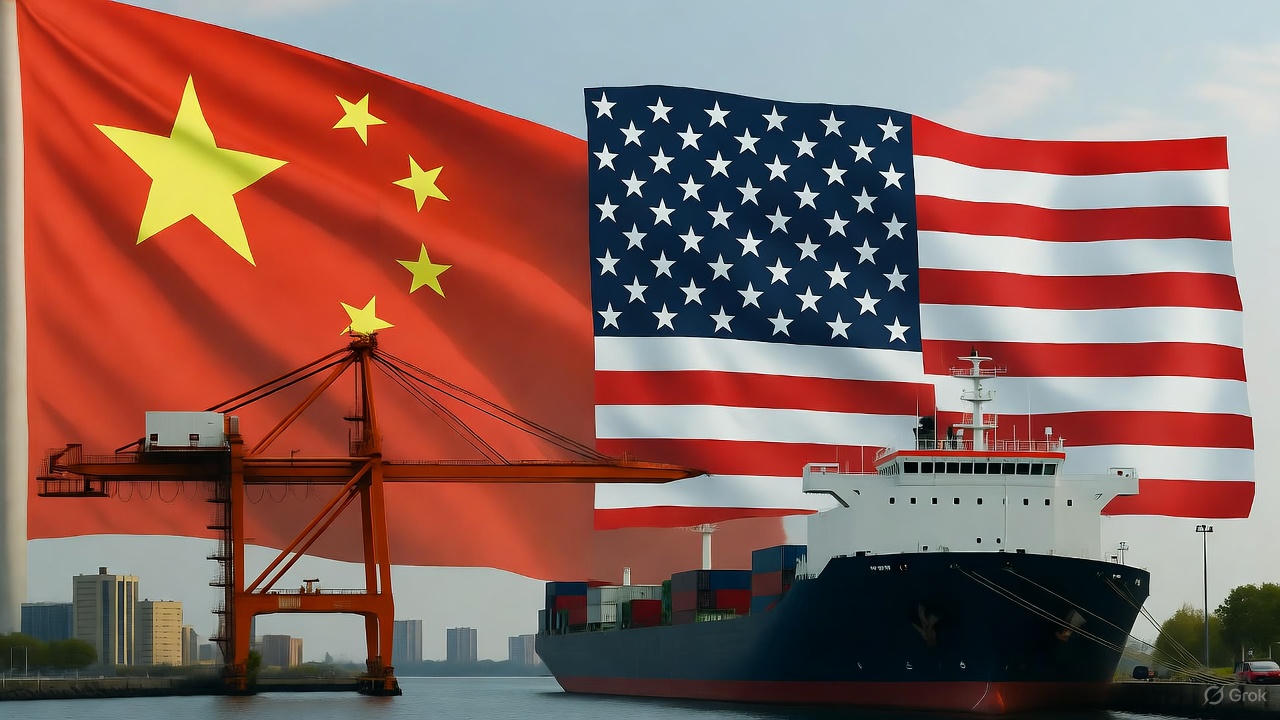
The U.S. and China on Tuesday began charging additional port fees on ocean shipping firms that move everything from holiday toys to crude oil, making the high seas a key front in the trade war between the world’s two largest economies.
Currently, the U.S. and China have imposed retaliatory port fees on each other’s shipping fleets, escalating tensions in global trade. The U.S. is charging fees on vessels linked to Chinese entities, defined by ownership, operation, or construction, aiming to counter China’s dominance in global shipbuilding. In response, China is imposing phased port fees on ships linked to the U.S., including those flagged, owned, or built there, starting at 400 yuan (~$56) per net ton, increasing annually through 2028.
The China-imposed extra port fees would be collected at the first port of entry on a single voyage or for the first five voyages within a year, following an annual billing cycle beginning on April 17.
READ: US moves to widen restrictions on chipmaking tools for China (
These moves represent a significant shift in maritime logistics. By targeting specific national links, both countries aim to protect domestic industries and apply pressure amid broader trade disputes. The fees raise costs for affected vessels, potentially disrupting major trade routes and supply chains, especially for U.S.–China cargo flows. Exemptions, such as for ships built in China or sailing empty, highlight the strategic nature of the measures.
In a related move, Beijing also imposed sanctions on Tuesday against five U.S.-linked subsidiaries of South Korean shipbuilder Hanwha Ocean which it said had “assisted and supported” a U.S. probe into Chinese trade practices.
Hanwha said in a message to Reuters it is aware of the announcement and is closely reviewing the potential business impact on the company. Hanwha Ocean’s shares sank nearly 6%.
Early in 2025, President Donald Trump’s administration announced plans to levy the fees on China-linked ships to loosen the country’s grip on the global maritime industry and bolster U.S. shipbuilding.
READ: China probes Qualcomm amid Trump’s 100% tariff dispute (
Shipping lines may reroute or restructure to avoid fees, while increased operational costs could be passed on to importers and consumers. The long-term effects will depend on whether the fees become permanent or trigger further escalation. For now, global trade stakeholders face rising uncertainty, higher costs, and renewed geopolitical risk in maritime transport.
By turning to maritime policy as a tool of economic pressure, both nations are reshaping the global shipping landscape. These fees not only raise costs for shipping lines but also introduce new layers of complexity for international trade. With potential ripple effects across supply chains, industries, and consumer markets, the high seas have become a strategic battleground.
Exemptions and retaliatory sanctions, such as China’s move against Hanwha Ocean, highlight how deeply intertwined global shipbuilding and logistics have become with political agendas. While some operators may adapt by rerouting or changing fleet ownership structures, the broader uncertainty is likely to weigh on trade flows. Whether this tit-for-tat approach leads to meaningful policy change or simply entrenches long-term division remains to be seen, but for now, global shipping is caught in the crossfire.