


By Carin Isabel Knoop and Sreedhar Potarazu
The worse we feel, the more we seek control and ways to feel better, and there are plenty of things to feel poorly about these days. In a world that feels uncertain, asserting control over others offers a counterfeit sense of stability.
Sadly, bullying, in all its forms, is one of the behaviors that provides a fleeting sense of control in place of uncertainty, superiority in place of anxiety, and power in place of pain. A misguided form of emotional regulation.
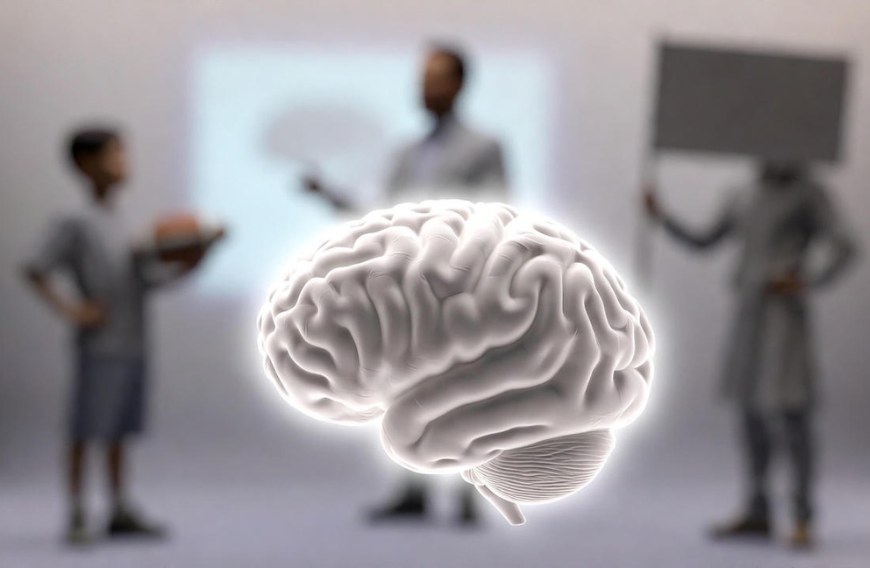
But the more one depends on domination for validation, the more fragile that validation becomes. As we discuss below, the neuroscience of bullying shows that empathy networks weaken, and dominance pathways strengthen — reinforcing the cycle of control and emptiness.
This is as true on playgrounds and in workplaces as it is in politics.
In each of these situations, there is a common theme, which is a person or group using bullying to fill a void or ease a pain. Yet, ironically, in the process, they dig a deeper hole than when they started. A bully stacks others’ confidence beneath his feet like boxes to stand taller. But eventually the boxes topple.
Over the last month, the U.S. held National Stop Bullying Day, UNESCO held Global Day Against Violence and Bullying in Schools, and some countries are holding events and raising awareness around Anti-Bullying Awareness Week this week under the motto “Power for Good.”
Our hope with this piece is to offer context for why, despite our best intentions, we do not always use our power for good. Understanding the forces that distort our empathy and turn insecurity into domination is the first step toward reclaiming power as a force for care rather than control.
The neuroscience of bullying
Why do we engage in bullying? Neuroscience offers unsettling insights. Acts of domination activate the brain’s reward circuitry — the same network stimulated by gambling, risk-taking, and addictive substances. Each act triggers a brief surge of dopamine and adrenaline, providing temporary relief from anxiety or inadequacy. Over time, the brain learns cruelty as a habit, and control becomes the substitute for connection.
Bullying often begins in the silent corridors of personal insecurity. It is an effort to fill an internal void that is hard to name. Bullies spot the vulnerable — the hesitant tone, the uncertain gaze, the subtle signs of self-doubt that mirror their own. The aggression that follows is projection, an attack on what they most fear within themselves.
For the bullied, being mocked or excluded activates the same brain regions as a bodily injury. Prolonged exposure floods the system with cortisol, negatively impacting concentration, memory, and sleep. The nervous system remains in a chronic state of alert. The bullied often internalize the aggression as truth. Every insult, exclusion, or public humiliation deepens the illusion that they are somehow less. They begin to shrink into rooms, speak less, and question their own worth.
What makes bullying uniquely cruel is this inversion. The powerful one feels small and hides it through cruelty; the smaller one is made to feel invisible and believes it. Both are caught in the same tragic loop of fear and validation: both experience biological change — one desensitized to harm, the other hyper-attuned to it.
READ: Climate crisis and the access gap: Mental health as a leadership responsibility (
Yet the feeling fades quickly, and the void remains hungry and unhealed for the “bullier” and the “bullied.” There are no winners. The one with the ego loses as much as the one whose ego has been crushed. Both find themselves defeated.
Beyond the playground
The scientific study of bullying began more than a century ago. In 1897, psychologist Edmund C. Burk published “Teasing and Bullying” in The Pedagogical Seminary, the first systematic description of aggressive behavior among schoolchildren. What Burk observed on playgrounds now infects offices, institutions, and digital spaces.
Bullying is not a mere disagreement, nor is it the friction that accompanies ordinary differences. It is a pattern of behavior marked by repetition, intention, and an imbalance of power. It involves one party exerting control, be it social, professional, or emotional, over another who cannot easily defend themselves. This has profound societal and organizational implications, affecting not just the individuals involved, but also the culture and productivity of the groups they belong to.
Public displays of aggression stimulate sensations of power for both the speaker and their supporters, and that reinforcement increases the likelihood of repetition, normalizing intimidation as a political instrument. It happens in classrooms, offices, dinner parties, and even WhatsApp groups. In Germany, the word “mobbing” captures the collective nature of such behavior and aggression as a group activity, the intersection of conformity and cowardice.
What follows can be “normative drift” — the slow corrosion of empathy when cruelty becomes expected. Institutions adapt, individuals adjust, and soon even well-meaning people participate in emotional or social exclusion because it is easy, expedient, and increasingly technologically enabled.
Cyberbullying has extended these dynamics online. Cruelty becomes easier when we do not have to look the other person in the eye, so over time, we become desensitized to what is happening to them. According to UNESCO, 58% of girls and young women experience online harassment, and minority or migrant learners face disproportionate exclusion.
The context has evolved, but the pattern remains the same- the repeated use of power to diminish another person under the guise of humor, order, or discipline.
Professional, political, and personal
In professional settings, bullying often wears a mask of legitimacy. It appears as chronic exclusion from meetings, public belittlement, or deliberate withholding of information. What unites these acts is not their form but their effect: silencing, isolating, and diminishing those who are targeted. Global surveys reveal its reach. For instance, an Indian workplace survey reported 55% of Indian employees been bullied at work, while the latest U.S. survey shows 32% adult Americans being bullied.
Digital workspaces have become the new schoolyard. Group chats, message threads, and email loops can become subtle weapons of social control. Exclusion, ridicule, or passive resistance are now transmitted through emojis, silence, or selective omission. In an era of remote work, bullying takes new forms: passive-aggressive messaging, rumor-spreading, and public criticism under the guise of transparency.
READ: Reclaiming agency before becoming semi-conscious humans (
These same dynamics now shape civic life. In politics, bullying becomes both method and message: verbal aggression, humiliation, and public shaming directed at opponents, journalists, civil servants, or people who do not adhere to the dominant orthodoxy of a particular place. The purpose is not persuasion but submission.
Politicians used to have “opponents” – now we feel that people with different political and religious views as our opponents. Most of the time, we and they are being manipulated by those who understand the game of power imbalance and fear.
In all these domains—professional, political, and personal—the pattern remains constant: insecurity disguised as authority, domination masquerading as control. The casualty is empathy and democracy.
Breaking the cycle
Breaking the cycle, or at least reducing its velocity, requires clear definitions, organizational action, and personal resistance.
Understand phenomena
Bullying and harassment often coexist but are not synonymous. Some nations treat both under one law, while others, like the U.S. and India, do not.
Bullying is a behavioral issue; harassment is a legal one. The latter involves unwanted actions related to protected characteristics such as race, sex, religion, or national origin — conduct that creates a hostile or degrading environment. Under Title VII of the U.S. Civil Rights Act of 1964, harassment becomes actionable when it undermines dignity or disrupts a person’s ability to work. In contrast, bullying may not meet the legal threshold but can still cause deep psychological harm. It must be repeated and sustained often weekly for months.
Managerial action
From an organizational perspective, the distinction is less about how harm occurs than about how accountability is enforced. Great managers understand that conflict, when handled constructively, can fuel innovation — but when disagreements become personal and persistent, they evolve into bullying.
Recognizing this distinction allows us to balance performance management with vigilance against genuine abuse. For managers, this means modeling respect and making it safe to speak up, your tone sets the cultural standard. Once incidents or patterns become clear, it is best to act early and intervene before conflict escalates, listen without rushing to judgment, and document behavior in a way that protects everyone. This requires objectivity that comes from self-awareness. How bullying might have looked or felt to us is not relevant to the situation at hand.
It is important to remember that bullying is not always top-down. Managers, too, can be targeted — excluded, undermined, or embarrassed by peers or subordinates. Power dynamics shift in all directions. The central issue is not hierarchy but vulnerability.
READ: Unmasking ourselves: Authenticity in an age of avatars (
Personal resistance
Bullying can be escaped, endured, and ultimately transformed. research “Above all, keep perspective: bullying often stems from insecurity, not superiority, and recognizing that helps you detach your self-worth from their behavior,” advises Assistant Professor Shreya Mishra, an expert in the field. “However, in some instances, self-preservation is not weakness and knowing when to walk away shows more strength than we give it credit for.”
Family obligations, visa status, financial pressures, or professional passion anchor people in difficult workplaces. The goal shifts to strategic endurance: visualize the next few weeks or months and plan how you will build yourself — emotionally, professionally, and reputationally. Strengthen your internal market value by skilling up; the more competent and indispensable you become, the less sway a bully holds.
In a qualitative study in India, Shreya Mishra, Manosi Chaudhuri, and Ajoy Dey (2021) found that those who effectively confronted workplace bullying did so by strengthening their personal identity. Mishra reminds us that “because power is not static, if today it is with the bully, tomorrow it will be with you. Resisting lies means reclaiming — and maybe reforming — your identity. The very identity that the bully aims to destroy.”
Indeed, bullies often attack identities, not tasks — the qualities that make someone visible, valued, or distinct. This is when personal identity work becomes a form of defiance. For every narrative created by your bully, you should have a counter-narrative for yourself. For example, for a narrative “You don’t fit in,” a personal counter narrative could be “I’ve earned my place” or “I contribute meaningfully.”
Individuals can “deflate” this imbalance by enhancing their personal identities by consciously reconnecting with their sense of purpose, competence, and worth.
The paradox of emptiness
Ultimately, bullying is not about strength but emptiness. The bully projects outward the void they cannot face within. In doing so, they mirror the same fear they exploit in others.
If we view bullying through this lens, not simply as bad behavior but as the meeting of two wounded lives, the potential for healing appears. Those who feel diminished must remember that their worth is intact; those who inflict pain should pause and recognize that fear, not power, drives their actions. Power gained through fear is an illusion — a mask worn by those afraid to be seen as they are.
When we confront the void within ourselves, the insecurity, the longing, the need for control, we can begin to dismantle the illusions that sustain cruelty. Only then can we replace domination with empathy and silence with understanding.
Every time we feel powerless, we reach for control somewhere. What if, in our search for certainty, we have all become smaller versions of the same bullies we fear? Democracies, like workplaces, fail when dominance replaces dialogue. Before the next meeting, the next post, the next vote, it is worth asking: am I engaging to solve or prevail?
(Carin-Isabel Knoop founded and leads the Case Research & Writing Group at Harvard Business School and is co-author of several works on human behavior, leadership, and organizational life in the digital age.
Sreedhar Potarazu, MD, MBA, is an ophthalmologist, entrepreneur, and author who writes frequently on the intersection of medicine, technology, and business.)