



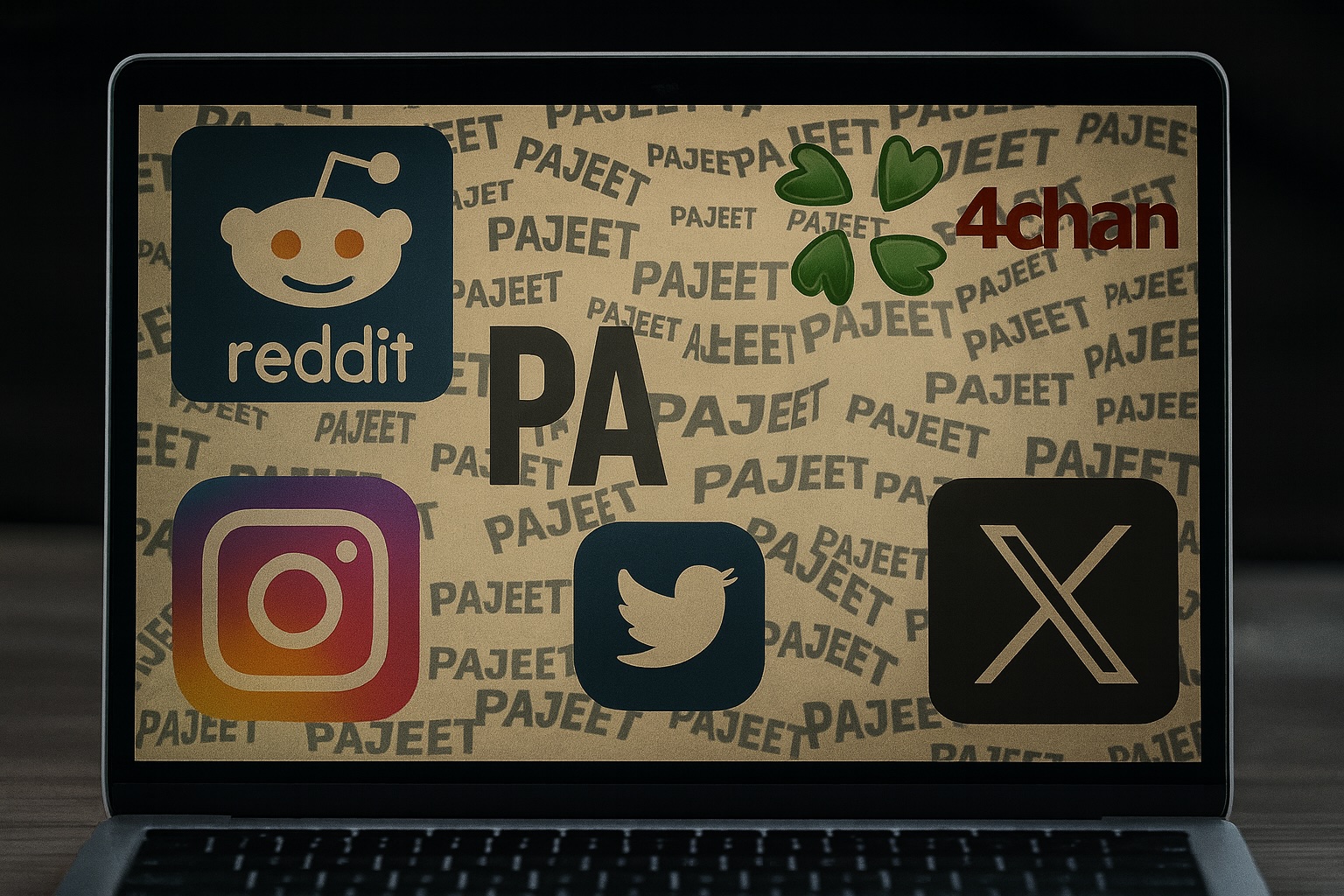
“Pajeet,” a slur rooted in far-right online culture, has gained traction amid the H-1B visa backlash and rising political hostility toward Indian immigrants in the U.S.
In September, shortly after President Trump announced a staggering $100,000 fee for new H-1B visa applicants, a disturbing trend surfaced on 4Chan, an anonymous imageboard forum with scant moderation.
Some users urged Americans to stop Indian H-1B workers who were traveling abroad from returning to the United States before the fee deadline by launching a “Clog the Toilet” campaign — flooding airlines with fake bookings.
But beyond the malicious intent, another detail stood out: far-right commenters repeatedly referred to Indians as “pajeet,” a term unfamiliar to many encountering it for the first time.
Even though it originated in the U.S., the slur is now used by right-wing groups in Canada, the UK, and Australia.
READ: Indian Americans, Indians on H-1B visas confront shifting public perceptions in Trump’s America (November 15, 2025)
For Harmeet Gugni, the discovery felt personal. While visiting her family in the Toronto suburb of Brampton, in Canada, earlier this year, she recalls relatives warning her not to react if anyone used the slur in public.
“I was disturbed,” she says. “A casual walk in Brampton suddenly felt like something I had to prepare for. Thankfully, nothing happened, but it stayed with me.”
The term evokes painful parallels for many South Asians who grew up hearing the slur “Paki” used in the UK against Indians, Pakistanis, and Bangladeshis. Now, amid heightened political rhetoric targeting immigrants and Indian H-1B workers in particular, the word “pajeet” has surged across Reddit, X, Instagram, and other online spaces.
Sangay Mishra, a professor at Drew University who researches immigrant political incorporation and racial politics, says the slur has circulated in far-right circles in the U.S. for years.
“I’ve been hearing about it for a while,” he notes. “It doesn’t make logical sense, but racial slurs rarely do. People have tried to trace its origins, but there’s no single definitive answer.”
Know Your Meme, a widely used digital encyclopedia of internet culture, traces the term to 4Chan’s international board, where it began appearing around 2015. It describes “Pajeet” as a fabricated Indian name used online to mock Indian men, typically Hindu or Sikh. A female variant, “Pajeeta,” emerged later, and both terms began spreading beyond 4Chan in the early 2020s. Variations such as “Pajeet Kumar” are also commonly used.
Some origin stories veer into internet folklore. One theory connects it to the Turkish meme “Mehmet My Son,” suggesting that “Pajeet” evolved as a parody name used to mock Indians through exaggerated stereotypes, including outdated images of open defecation.
Another explanation points to how the suffix “–jeet” is common in Sikh names, while “Kumar” is widely used among Hindus making the slur an indiscriminate catch-all for Indians, regardless of community. As one internet theorist notes, “White racists coined the term without understanding cultural differences; they lumped Sikh and Hindu names together and used it against all Indians.”
The association with open defecation has fueled additional memes. One infamous 4Chan thread from July 2015 mocked an Indian user defending the country against “India smells bad” jokes by saying people only defecate on “designated shitting streets.” The phrase became a viral shorthand that spawned dozens of compilations and racist parodies.
A quick search today on Instagram reveals numerous far-right accounts using “pajeet” alongside images of cow dung, toilets, and degrading caricatures of Indians. “Smelly Pajeets” is another common variation circulating in AI-generated videos and memes.
The dehumanizing theme is consistent: reducing Indians, particularly immigrants, to a single, monolithic stereotype.
What makes “pajeet” particularly insidious is its broad application. Many Americans unfamiliar with South Asian cultures appear to conflate different religions, languages, and regions under the same slur. As political hostility toward immigrants intensifies, especially against Indian tech workers, the term has migrated from fringe forums into more mainstream corners of the internet.
1 Comment
“While visiting her family in the Toronto suburb of Brampton”
because of course they live in Brampton.