


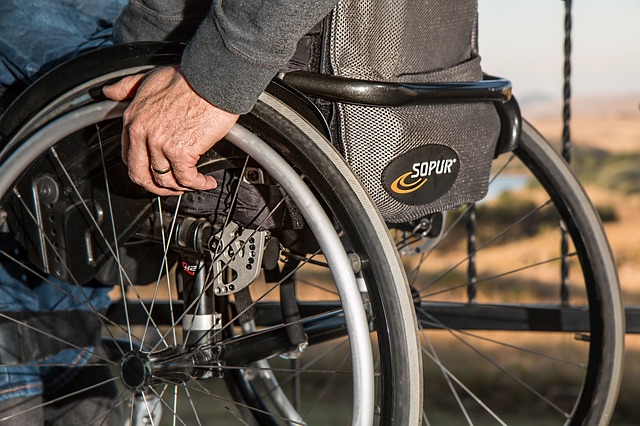
A widely circulated video has reignited debate over the misuse of airport wheelchair services, after showing a long line of India-bound and Indian American travelers being escorted to priority lanes despite appearing able-bodied.
The clip, filmed at an international terminal, suggests that some passengers on India-U.S. routes are requesting wheelchairs not out of need but to secure faster check-ins, early boarding and additional assistance, a trend airline staff say is increasingly straining an already stretched service.
“The departure lounge for U.S.-India routes is filled with Indians in wheelchairs. Because disabled passengers enjoy priority boarding and full-service transportation, the proportion of disabled passengers on some routes is as high as 80%,” as per the post on X.
The video was soon reposted by another user, helping it gain traction in India, where it sparked fresh scrutiny of travel habits on long-haul routes. Citing Air India, the post claimed that roughly 30% of passengers on India-U.S. flights now request wheelchair assistance, a number that has raised questions about whether the service is being used far beyond its intended purpose.
“Air India says 30% of passengers on India-U.S. flights ask for wheelchairs. Most are able bodied travelers scamming the priority boarding system. Real disabled passengers get left short,” the post read.
Biocon founder Kiran Mazumdar-Shaw also joined the conversation, calling attention to the surge in wheelchair requests. Responding to the viral clip of Indian travellers lined up for assistance, she noted that the trend reflects a deeper issue in how priority services are being used, and in some cases, overused at airports.
In her response, Mazumdar-Shaw went a step further and proposed a fix. Sharing the video on social media, she argued that airlines should consider introducing a fee for wheelchair requests, saying a paid system could deter non-essential use and ensure the service remains available for travelers who genuinely need it. “They should charge an additional ₹5000 per airport n then they will see how many genuine passengers there are,” Shaw wrote.
Her remark quickly drew a divided response online, with some users agreeing that tighter controls are necessary, while others argued that introducing fees could disadvantage certain passengers.
READ: Congress faces growing calls to release Epstein files (
“It is not about walking it is about the process. Most Indian parents don’t know English and don’t know where to go so their children book wheelchair so they can go to security clearance, terminal change and baggage collection area without tension. See all the people above are old (sic),” a user wrote to her in the comments.
“It’s the doting children in the U.S. and India organizing this for their parents so they do not have to deal with transfers. The chair is meant for the disabled. Some are aged parents with real problems. But most are fit. But when do rules come in the way?! Disabled is just a word! And it’s only $100. Maybe, the parents might say, ‘this is shameful, I am only 55 and can walk.’ But convenience, however shameful, cannot go unused is the general approach (sic),” added another.
While another commented, “The only reason it is free right now is that you can’t charge money for a wheelchair to genuinely disabled people and make air travel permanently more expensive especially for them. Solution needs to be on the lines of making a distinction on eligibility.”