


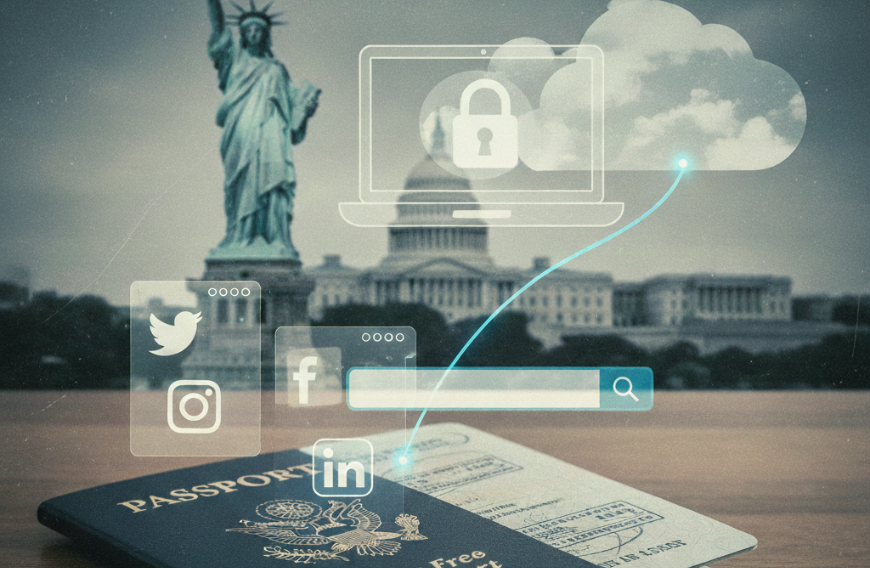
The United States is considering a new rule that would require foreign travellers to share their social media activity from the past five years before entering the country. The proposal would also apply to visitors from nations like Australia, Germany, Japan and the UK, who currently qualify for visa-free entry.
According to a notice from the Department of Homeland Security posted on Wednesday, U.S. Customs and Border Protection plan to make social media details a required part of the screening process for travelers entering under the Visa Waiver Program. The proposal has been opened for a 60-day public comment period before moving forward.
The requirement would cover travelers from roughly 40 eligible countries who are allowed to visit the U.S. for up to 90 days without a visa. These visitors are already vetted in advance through the electronic ESTA system, which clears them for entry before they board their flights.
READ: Trump administration moves to deny visas for fact-checkers, content moderators (
The shift in screening rules comes as the U.S. faces a steep drop in international arrivals and tourism spending. Figures released in May show the country is projected to forfeit about $12.5 billion in travel revenue in 2025, with total visitor spending expected to slip below $169 billion by the end of the year.
The United States is also bracing for its first decline in international tourists in five years. The U.S. Travel Association estimates about 67.9 million foreign visitors will arrive this year, a drop from 72.4 million in 2024.
A May analysis by the World Travel & Tourism Council and Oxford Economics found the U.S. was the only one among 184 global economies expected to see a loss in tourism revenue this year.
The social media screening proposal is part of a broader tightening of entry rules under the Trump administration. It follows a recently announced plan for a travel ban affecting about 30 countries, introduced earlier this month after the fatal shooting of two National Guard members in Washington.
READ: State Department expands online vetting for H-1B, H-4 visas: What applicants should know (
Federal officials have named the suspect as an Afghan national who previously worked with U.S. forces and the CIA before coming to the United States in 2021. The case has quickly become a political flashpoint, with President Donald Trump and his allies arguing that the Biden administration’s policies allowed him to enter and using the incident to renew calls for stricter limits on immigration.
After the shooting, Trump wrote in a social media post that he would move to “permanently” pause migration from “all Third World Countries.”
The State Department has also widened its scrutiny of social media to other visa categories. In December, officials said they would extend social media review requirements to H-1B applicants and their dependents, advising them “to adjust the privacy settings on all of their social media profiles to ‘public.’” Earlier in June, the department directed consular staff to examine the online activity of student visa applicants as part of their screening process.
U.S. Citizenship and Immigration Services said in a policy memo that the government will begin a “comprehensive re-review” of cases involving individuals from those countries who were approved to enter the United States on or after the start of former President Joe Biden’s term in 2021.