


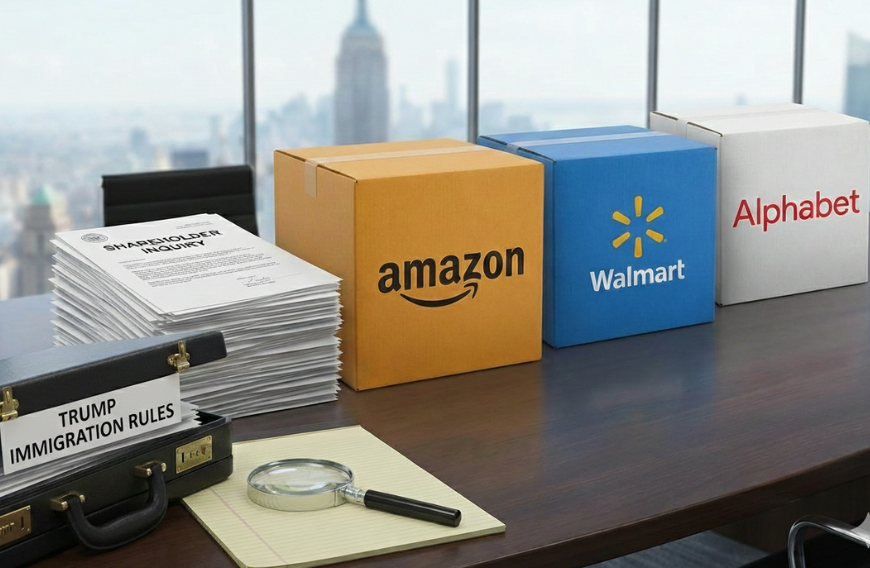
A labor-backed investment group has reached out to major U.S. corporations, including Amazon, Walmart and Alphabet, seeking clarity on how President Donald Trump’s immigration policies are affecting their financial performance and supply chain operations. The letters, sent on Wednesday, asked the companies to detail any business disruptions or cost pressures linked to the administration’s approach to immigration, as per Reuters.
SOC Investment Group holds less than one percent stake in each of these companies, many of which are among the largest recipients of H-1B visa approvals for highly skilled foreign workers. The group is now asking them to explain how they plan to adapt to President Trump’s proposed $100,000 fee structure for new visa approvals. In the past, SOC has used similar shareholder resolutions to push companies to conduct racial equity audits and be more transparent about their lobbying activities.
READ: Visa free countries face new US requirements on social media history (
“The availability of labor that’s skilled in the area … is really critical to the long term performance of a company,” the group’s Executive Director Tejal Patel shared with Reuters. “If they’re not able to keep up with consumer demand or competition because they’re not able to hire the right people, it poses a threat to the company’s value over the long term.”
SOC is also pressing Amazon and Walmart to spell out how the Trump administration’s immigration actions, including enforcement raids on farms, are impacting the trucking and agricultural sectors that keep supermarket shelves stocked, according to the letters.
According to the firm, SOC Investment Group and the funds it advises collectively hold around 17 million shares in Walmart, 31 million shares in Amazon, and about 41 million shares in Alphabet, the parent company of Google.
READ: 10 things every H-1B holder should know about the latest Trump visa rules (
The H-1B rule changes that took effect in September triggered anxiety in hubs such as New York and California’s Silicon Valley, where large numbers of immigrants, particularly Asian professionals, work for major technology and financial firms. The uncertainty also revived concerns about jobs being shifted outside the United States. In response, lawmakers wrote to companies seeking detailed data on how many of their employees are on H-1B visas.
The letters arrive shortly after President Trump signed an executive order instructing U.S. regulator to review rules for proxy advisors, a move that could make it easier for companies to disregard shareholder proposals like those from SOC. While SOC’s resolutions, scheduled for votes at next year’s annual meetings, are advisory, companies often take action when a measure receives strong backing, typically over 30% support.
While SOC hopes for a “productive engagement” with the three companies to secure more disclosures, Patel said the group was “considering all options, which includes litigation” if the resolution is not included on their proxy statements.