



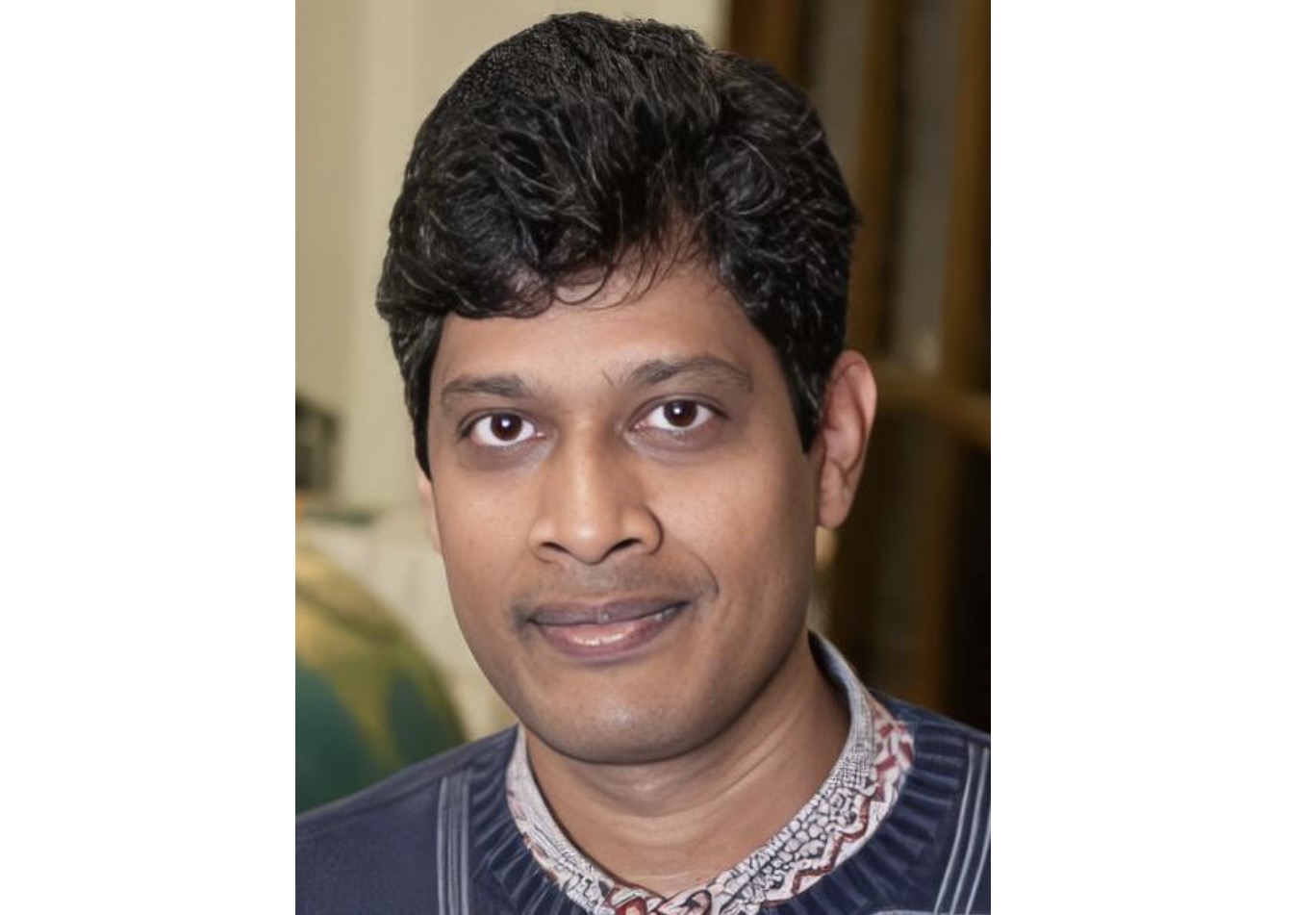
Satish Myneni, an Indian American professor of geosciences at Princeton University is getting funding through the Eric and Wendy Schmidt Transformative Technology Fund for a research project to speed up natural hydrogen generation for clean energy.
Myneni has won the funding with two colleagues, Catherine Peters, director of the Program in Geological Engineering and Emily Carter, director for applied materials and sustainability sciences at the Princeton Plasma Physics Laboratory, according to a Princeton release.
Natural hydrogen (H2) gas, which can be harvested without an electric power source, presents a promising renewable alternative to fossil fuels.
READ: Krishna Veeraraghavan and Sejal Shah endow Princeton professorship (
Myneni’s team aims to study mineral-driven H2 generation and to test strategies to accelerate this process. They propose research in three areas, with the first focused on identifying reaction conditions and cascading pathways to achieve near 100% iron oxidation, which would lead to an order of magnitude increase in H2 generation.
The second project area will examine molecular-level processes that control macroscale kinetic and thermodynamic properties of H2-generating mineral reactions.
Third, the researchers will investigate the conditions necessary for H2generation with simultaneous carbon dioxide mineralization. Discovering how to couple and control these processes could make natural H2 production carbon-negative rather than simply carbon-neutral.
Overall, this project has enormous potential for generating knowledge to help scale the production of sustainable H2 gas — a key step toward decarbonizing the nation’s energy system.
READ: Indian American professors Abhishek Bhattacharjee, Ravi Nath to join Princeton faculty (
The goal of the Schmidt fund is to enable researchers to make leaps rather than incremental advances in the natural sciences and engineering. It supports projects that lead to the invention of a disruptive new technology that can have a major impact on a field of research, or to the development of equipment or an enabling technology that will transform research in a field.
The fund was created in 2009 through a gift from Eric and Wendy Schmidt, co-founders of Schmidt Sciences, The Schmidt Family Foundation, and Schmidt Ocean Institute.
“Across engineering, computer science, chemistry and geosciences, the research teams supported by the Schmidt fund are developing novel solutions to persistent, thorny problems,” said Princeton University Dean for Research Peter Schiffer, vice president for the Princeton Plasma Physics Laboratory.
“Their work holds great promise to spark transformative change that will make a meaningful difference in people’s lives and for our collective future.”