


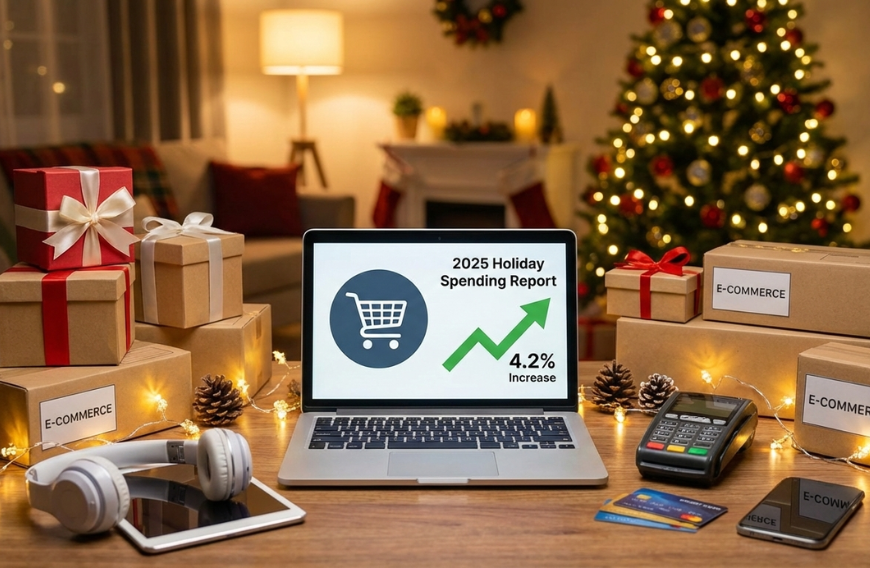
A report released on Tuesday by Visa Consulting and Analytics showed that retail spending has gone up by 4% this holiday season, despite lingering economic headwinds. Shoppers were spending the most on electronics and personal goods.
The findings come from payments tracked over a period of seven weeks beginning on Nov. 1 using a subset of Visa payments network data in the U.S. and cover core retail categories, excluding spending on automotive, gasoline and restaurants. The figures have not been adjusted for inflation.
In-store shopping constituted 73% of total retail payment volume, while the remaining 27% consisted of online transactions. However, despite in-store shopping being responsible for the bulk of spending, e-commerce has been recognized as a driver of growth. Online sales have risen by 7.8% since last year, reflecting a demand for convenience and early-season promotions, according to CNBC.
READ: Halloween spending soars to $13.1 billion, turning holiday into major retail event (
“The underlying surprise here … is that consumer spending is holding up reasonably well in light of softer consumer confidence than we had this time last year and a number of headwinds and concerns about inflation,” Michael Brown, principal U.S. economist at Visa, told CNBC. Brown also noted the shift in consumer behavior due to the influence of artificial intelligence in shopping.
“We are seeing consumers use AI in a big way in comparison shopping and then helping to narrow down that perfect gift,” Brown said. “This is the first holiday shopping season where roughly half of the consumers in that survey responded that they are going to leverage AI for one of those two tasks.”
The breakdown of spending categories indicate a shift towards personal goods and convenience, and away from home renovation projects.
Electronics emerged as the season’s top-performing category, with sales climbing 5.8%. Visa attributed this jump to a refresh cycle driven by “high-performance devices in the AI era.”
READ: Why artificial Christmas tree prices are rising in 2025 (
Apparel and accessories also posted strong numbers, rising 5.3%. General merchandise stores which offer a “one-stop” experience saw a 3.7% rise.
On the other hand, the home improvement sector struggled during the holidays. Spending on building materials and garden equipment fell 1%, suggesting consumers prioritized gift-giving and gadgets over home maintenance as the year closed out.
Furniture and home furnishings remained essentially flat, with a 0.8% gain.
While this indicates an overall positive for the retail sector, the lack of inflation adjustment means the “real” growth volume will be more modest depending on the final Consumer Price Index readings for the period.
Currently, Brown said, real spending growth adjusted for inflation is still up about 2.2% this season. “That’s not too bad in light of a lot of uncertainty this year,” Brown said. “The consumer is uncertain, they’re cautious, but they’re also smart about how they’re spending their money.”