


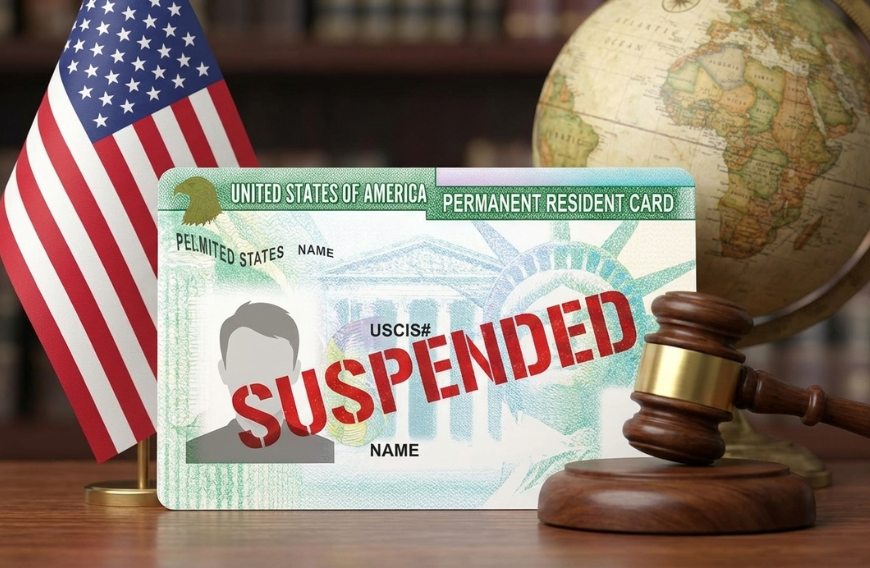
U.S. immigration law permits immediate relatives of American citizens, including spouses, to seek lawful permanent residence. A green card, formally called a Permanent Resident Card, gives foreign nationals the right to live and work in the United States on a long-term basis.
The U.S. Citizenship and Immigration Services notes that a spouse of a U.S. citizen is eligible to apply as an “immediate relative of a U.S. citizen.” However, eligibility does not automatically translate into approval.
Under President Donald Trump’s administration, such petitions are facing heightened scrutiny, with immigration authorities making it clear that a marriage certificate alone is no longer enough to secure permanent residency.
Offering a note of caution, a U.S. immigration attorney outlined what spouses of American citizens should understand before filing a green card application.
“Being in a relationship does not get you a Green Card. Living together gets you a Green Card,” said Bernstein, who says he has more than 30 years of experience and is part of the legal team at the Law Offices of Spar & Bernstein. The immigration lawyer warned that if a married couple is not living together, “then their Green Card case is already going down.”
In a video shared on Facebook, Bernstein stressed that for those seeking a marriage-based green card, “immigration officers do not care why you live apart, and they do not care if it’s for work, school, money, or convenience.”
READ: USCIS cuts work permit validity for green card applicants from 5 years to 18 months (
Bernstein said the focus of immigration authorities is narrow and uncompromising. U.S. officials, he noted, “only care whether you actually live together as husband and wife.” He added that under existing regulations, a bona fide or genuine marriage is defined by daily cohabitation.
He cautioned that any deviation from that standard can quickly raise red flags. “So if you’re not living in the same house every day, immigration is going to start questioning the marriage. And once they question it, they’re investigating, and once they come knocking on your door, they’re looking to deny you. So if you want a marriage green card, you live together. Period,” Bernstein said.
“If you’re married and not living together full-time, you need legal guidance before you file anything,” Bernstein added.
While living together carries significant weight, USCIS makes it clear that cohabitation alone is not the only factor under review. Immigration officers examine the relationship as a whole to determine whether the marriage was entered into in good faith, rather than solely to obtain immigration benefits.
USCIS has stated that a marriage may meet all legal and procedural requirements, “but where the parties entered into the marriage with no good faith, intent to live together as spouses and intended to circumvent immigration laws, is not a bona fide marriage.” As part of this process, the department closely evaluates the “intent of the parties at the time of the marriage.”
READ: US green card crisis deepens, costing leadership roles (
USCIS guidelines also cover common-law marriages, which may be recognized if certain conditions are met. The couple must live together, present themselves publicly as married—such as sharing a last name, referring to each other as husband and wife, or filing joint tax returns—and intend to be married.
An official USCIS document further clarifies that a spousal relationship qualifies as a marriage if it is legally valid where it was celebrated, aligns with U.S. public policy, is bona fide or entered into in good faith, and shows that both parties were legally free and able to marry.
In cases where a legally valid marriage exists but the spouses live apart without a formal legal separation, USCIS may still approve a petition. The agency does not assess the overall viability of the marriage, focusing instead on its legitimacy under the law.
The U.S. Department of Homeland Security notes that if a U.S. citizen spouse has passed away and you have not remarried, you might still qualify under the “Keeping Families Together” program.
Green cards come in multiple categories, each tailored to different situations. The most common types include:
Family-Based Green Cards
- Employment-Based Green Cards
- Special Immigrant Green Cards
- Green Cards for Refugees or Asylees
- Green Cards for Victims of Human Trafficking or Crime
- Green Cards for Victims of Abuse
- Other Special Categories
- Green Cards Through Registry