


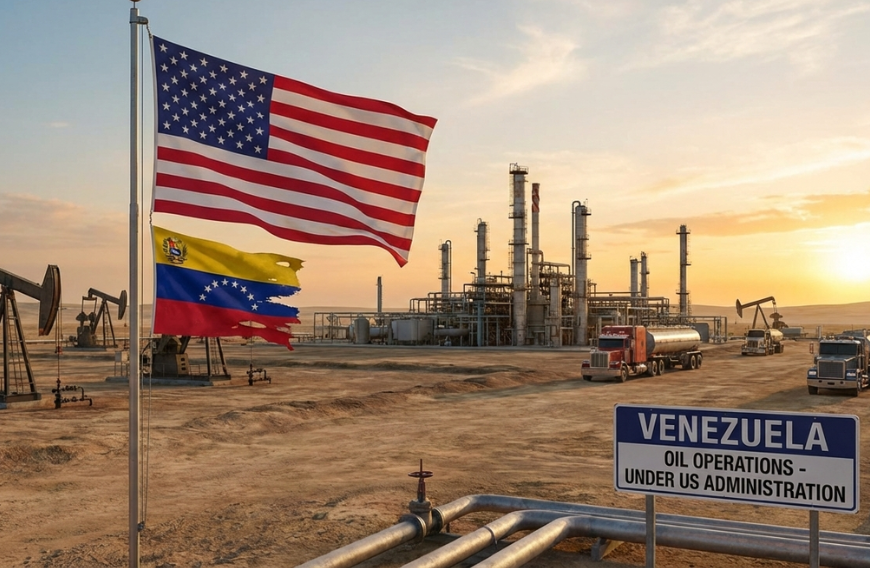
Ali Moshiri, a former Chevron executive, is raising $2 billion for Venezuelan oil projects after the U.S. captured its leader, Nicholas Maduro. President Donald Trump had said the U.S. will tap into Venezuela’s oil reserves and “run” the country until a “safe” transition.
Moshiri’s investment fund, Amos Global Energy Management, has identified multiple Venezuelan assets and was talking to institutional investors about a private placement to kick-start investment, according to a Financial Times Report.
“I’ve had a dozen calls over the past 24 hours from potential investors. Interest in Venezuela has gone from zero to 99 percent,” Moshiri told the FT. Hours after the capture of Maduro, Trump said American oil companies were prepared to spend billions to restore Venezuela’s crude production, something that could give global growth a lift as greater supply lowers energy prices.
READ: Trump says US will ‘run’ Venezuela, tap oil after Maduro’s capture (January 5, 2025)
While the U.S. assault on Caracas and raised the prospect of a corporate rush into the oil rich country. However, major U.S. oil companies have greeted this prospect with caution, due to concerns about political instability, a history of expropriated assets in Venezuela and the vast sums required to boost production.
An industry insider said the chief executives of ExxonMobil, Chevron and ConocoPhillips were blindsided by the U.S. military action.
“None of the industry players that have the capital and the expertise to invest in Venezuela were advised or consulted prior to either the removal of Maduro or the president making his statements yesterday,” the insider said.
READ: Can Venezuelans in the US apply for refugee status? (January 5, 2025)
Harold Hamm, the U.S. shale tycoon and a prominent donor to Trump, told the FT his company Continental Resources would consider investing in Venezuela under the right circumstances.
“While we do not have any immediate plans with respect to Venezuela, we believe the country has significant resource potential and with improved regulatory and governmental stability we would definitely consider future investment,” he said.
While Trump had explicitly called on U.S. companies to invest, his secretary of state Marco Rubio said he was open to investment from U.S. allies, though not from the country’s adversaries. China is Venezuela’s biggest oil customer and its companies, as well as Russian companies, have been investors in its upstream.
“What we’re not going to allow is for the oil industry in Venezuela to be controlled by adversaries of the United States,” he told NBC News “Meet the Press.” “Why does China need their oil, why does Russia need their oil, why does Iran need their oil? . . This is the western hemisphere, this is where we live.”
Moshiri has attempted to buy Venezuelan assets in the past. In 2022 he signed a joint venture with Gramercy Funds Management to invest in the offshore Gulf of Paria. Amos later agreed to buy some Venezuelan oil and gas assets owned by China’s Sinopec. He states that the deals fell through because of lack of support from the Biden administration. “Now with Trump administration, which is more commercially friendly and economically driven, we are starting a new fund and are very confident,” he U.S. assault on Caracas.