


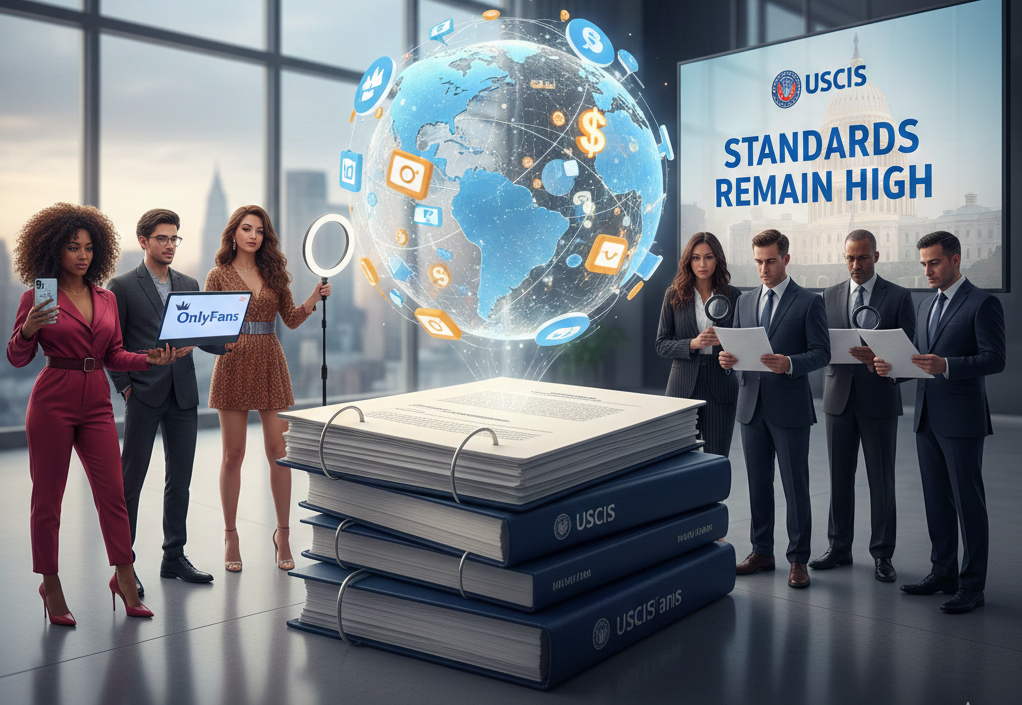
“USCIS is not approving the cases because of follower counts or making judgments about the platform itself. These cases are approved when the evidence shows sustained success, independent recognition, and market demand tied to the individual. Media has shifted from print to digital, and now we rely on data from platforms like YouTube, Instagram, and TikTok as probative evidence for these petitions—the same way we relied on print media in the past.” – Andre Matias, Immigration Attorney
A recent Financial Times article stirred debate among readers by reporting that a growing number of O-1B visa applicants now include social media influencers and OnlyFans creators, a platform widely associated with adult content.
The reaction was swift and predictable. The O-1B is a prestigious U.S. work visa reserved for individuals with “extraordinary ability” in the arts and has long been associated with performers, musicians, artists and other elite creatives. Like other merit-based visas, O-1B petitions are adjudicated on a case-by-case basis, relying on documented evidence of distinction and achievement.
For many highly skilled professionals and visa aspirants, the report came as a surprise. As often happens when unconventional cases surface in immigration circles, it triggered debate across visa and expatriate forums: are standards quietly slipping, or is the definition of artistic excellence simply evolving in the digital age?
Immigration attorneys, however, view the issue through a legal lens. Andre Matias, managing attorney at Washington, D.C.-based Altius Immigration Law, said, “Influencers and OnlyFans creators qualifying for O-1 visas can make some eyes roll, but legally, it makes sense.”
For many professionals who have spent decades building portfolios marked by international recognition, recommendations, awards and other documentary evidence, the idea that individuals can now obtain a coveted visa based on audience engagement and commission-driven income can feel unsettling.
One high-net-worth professional, who has developed two apps and is seeking a patent under his name, said on condition of anonymity, “This seems surreal and, well, maybe unfair.” Another visa holder, reacting with humor, commented in a social media group, “Newest visa for the oldest profession.”

Much of the broader debate among visa holders centers on a core question: can social media followers, online engagement and post “likes” outweigh traditional measures such as awards, publications and institutional recognition?
READ: US immigration’s contrasts: Green card holder battles deportation as O-1 visa opens doors for AI talent (September 18, 2025)
Matias said, “I don’t think followers, engagements, or likes should outweigh traditional metrics like awards, major publications, or institutional recognition.” He added, however, “Immigration law also doesn’t require those metrics to look identical across every field. The O-1 standard is regulatory and evidence-based. USCIS is asking whether the petitioner has met the criteria set out in the regulations and shown sustained acclaim in the relevant field through credible, objective evidence. The analysis is about how that evidence maps onto the criteria, not whether it fits a traditional or familiar mold.”
When it comes to growth metrics, few dispute the scale of the creator-economy boom that platforms such as OnlyFans represent. An October 2025 report by Barchart highlights the contrast: OnlyFans generates $37.6 million in revenue per employee, far exceeding figures reported by major technology companies including Nvidia ($3.6 million), Apple ($2.4 million), Meta ($2.2 million) and Google ($1.9 million).
Interestingly, the platform has achieved this with just 42 to 46 full-time employees, making it one of the most revenue-efficient companies in the world.
The influencer marketing economy continues to grow and was projected to surpass $30 billion in 2025. While the shift toward recognizing this rapidly changing work landscape may surprise some, immigration experts note that it is not the first time immigration standards have adapted to evolving fields. Matias pointed to a comparable example. He said, “We’ve seen this before with e-sports. Competitive gaming was once viewed as novel or fringe, yet USCIS ultimately recognized e-sports achievements as valid evidence of extraordinary ability. The standard didn’t change, the field did. The same applies to influencers and creators, including OnlyFans creators.”
In a digital-first creative economy, success and credibility are often measured differently than in traditional professions. While major publications, record labels or gallery exhibitions continue to strengthen a case for demonstrated excellence, extraordinary ability today may also be shown through measurable audience reach, sustained engagement, revenue generation and independent recognition across digital platforms—beyond simple likes or paywalled earnings.
Matias agreed, “Of course, follower count in isolation is never enough. What matters is whether the evidence demonstrates real market recognition, sustained acclaim, and distinction from others in the space. These creators and influencers still need to show that they are among the few that have risen to the top of their field. When that showing is made, the system isn’t being watered down; it’s being applied consistently to new facts.”