


By Keerthi Ramesh
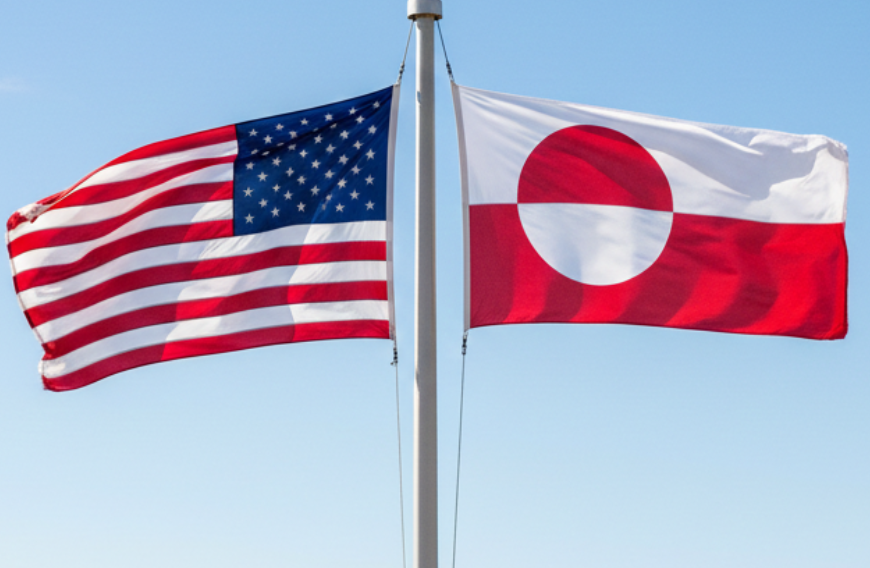
The White House on Tuesday confirmed that the United States is actively considering a range of options including the use of military force to pursue control of Greenland, reigniting a geopolitical flashpoint that has drawn sharp criticism from European allies and raised questions about NATO’s unity.
In a statement delivered to international media, White House Press Secretary Karoline Leavitt said President Donald Trump and his senior advisers view Greenland as a “national security priority” for the United States, pointing out concerns over growing Russian and Chinese activity in the Arctic.
“Utilizing the U.S. military is always an option at the commander-in-chief’s disposal,” Leavitt said, underscoring that the administration has not ruled out forceful measures should diplomatic engagement falter.
Trump’s renewed focus on the vast Arctic island, a semiautonomous territory within the Kingdom of Denmark, comes amid heightened U.S. military activity in Venezuela that led to the capture of President Nicolás Maduro. That action startled global audiences and amplified fears in Copenhagen and Nuuk that similar tactics could be contemplated in the far north.
READ: Trump says US ‘needs Greenland’ after Venezuela shock (January 5, 2025)
Allies warn of fallout for NATO
Danish Prime Minister Mette Frederiksen issued one of the sternest rebukes yet from NATO’s European partners, warning that any attempt by the United States to seize Greenland by force would spell the end of the North Atlantic Treaty Organization. “If the United States decides to militarily attack another NATO country, then everything would stop that includes NATO and therefore post–Second World War security,” Frederiksen told Danish media.
Leaders from France, Britain, Germany, Italy, Poland and Spain rallied behind Denmark in a coordinated statement, affirming that Greenland “belongs to its people” and that “only Denmark and Greenland” should decide the island’s future. The declaration stressed that safeguarding Arctic security should remain a collective effort within NATO rather than precipitating intra-alliance conflict.
Greenland and Denmark reject U.S. claims
Greenland’s own government has definitively rejected the idea of becoming part of the United States, describing Trump’s comments as “disrespectful” and rooted in fantasies of annexation rather than reality. Prime Minister Jens-Frederik Nielsen called for calm but insisted that his nation’s autonomy and aspirations remain non-negotiable.
Much of Greenland’s strategic appeal stems from its geographic position between North America and Europe and its existing defense partnerships, including the U.S.-operated Pituffik Space Base, which forms a key element of Arctic surveillance and ballistic missile defense.
Still, analysts say the provocative language from Washington particularly the public framing of military options, risks jeopardizing decades of diplomatic cooperation and could set a dangerous precedent in a region already transformed by climate-driven shifts in global power dynamics.