


Civil liberties groups and migrant rights activists are organizing demonstrations across the United States this Saturday to protest the fatal shooting of a Minneapolis resident by a U.S. Immigration and Customs Enforcement (ICE) agent. The incident has sparked widespread outrage and prompted state and local officials to call for independent investigations into the circumstances surrounding the shooting.
Activists say more than 1,000 protests are planned over the weekend, as demonstrators demand an end to large-scale ICE deployments ordered by the federal government, particularly in cities led by Democratic officials. Many supporters describe the rallies as a response to what they see as overly aggressive immigration enforcement tactics that harm immigrant communities.
The woman killed in the Minneapolis shooting has been identified as 37-year-old Renee Nicole Good, a mother of three. She was shot by an ICE agent during a federal immigration operation in the city. Good was struck by gunfire and later died from her wounds, reigniting debate over immigration enforcement and the use of lethal force by federal agents.
The shooting occurred amid what the Department of Homeland Security described as the largest ICE deployment in history, with roughly 2,000 officers sent to the Minneapolis–Saint Paul area as part of an aggressive crackdown. Federal officials defended the officer’s actions, saying Good’s vehicle posed a threat. However, local leaders and bystander video footage sharply challenged that account, raising questions about whether lethal force was justified.
Late on Friday, crowds of demonstrators gathered outside a Minneapolis hotel where they believed ICE agents were staying and staged a loud, chaotic protest. Protesters banged on drums, pots, and pans, blew whistles and brass instruments, and yelled through bullhorns to draw attention to their opposition to the federal operation.
Many also aimed flashlight beams at the hotel’s windows in what was widely described as a “noise protest” against the continued presence of immigration enforcement officers in the city. State police eventually declared the assembly unlawful as tensions remained high.
In the days after the shooting, top Trump administration officials defended their characterization of the incident. Homeland Security Secretary Kristi Noem said Good had been “stalking and impeding” ICE agents throughout the day and that the officer fired only in self-defense when she allegedly tried to ram him with her vehicle in what she called an “act of domestic terrorism.”
Local leaders strongly rejected that narrative. Minneapolis Mayor Jacob Frey pointed to multiple videos of the encounter and said they directly contradicted the federal government’s version, dismissing the claims as a “garbage narrative.” Civil liberties advocates argued the footage showed no clear threat that would justify deadly force.
The differing accounts have deepened mistrust and raised questions about accountability. On Friday, Minnesota and Hennepin County authorities announced they were launching a criminal inquiry into the shooting, separate from the federal investigation led by the FBI.
At the same time, figures in the Trump administration, including Vice President JD Vance, argued that state prosecutors lack the authority to charge a federal officer for actions taken in the line of duty, asserting broad legal protections. Legal experts, however, note that federal immunity in such cases is not automatic and remains a contested issue.
Portland Mayor Keith Wilson, echoing concerns raised by Frey, said he could not be certain the federal government’s account was accurate without an independent investigation.
The deployment of ICE agents to Minneapolis follows President Trump’s recent criticism of Governor Walz and Minnesota’s Somali community, citing allegations of fraud dating back to 2020 involving some nonprofits that run childcare and social-service programs.
READ: Who is Jonathan Ross? ICE officer who fatally shot Minneapolis women identified (January 9, 2026)
Good was shot just a few blocks from the site where George Floyd died after a Minneapolis police officer pressed his knee into Floyd’s neck during a videotaped arrest in May 2020—a killing that sparked months of nationwide racial justice protests.
Bystander footage of the shooting shows masked ICE officers approaching Good’s Honda SUV, which was stopped at an angle that partially blocked traffic. One agent is seen ordering her out of the vehicle and grabbing the driver-side front door handle as the car pulls forward. Another officer jumps back and fires three shots into the front of the SUV as it rolls past.
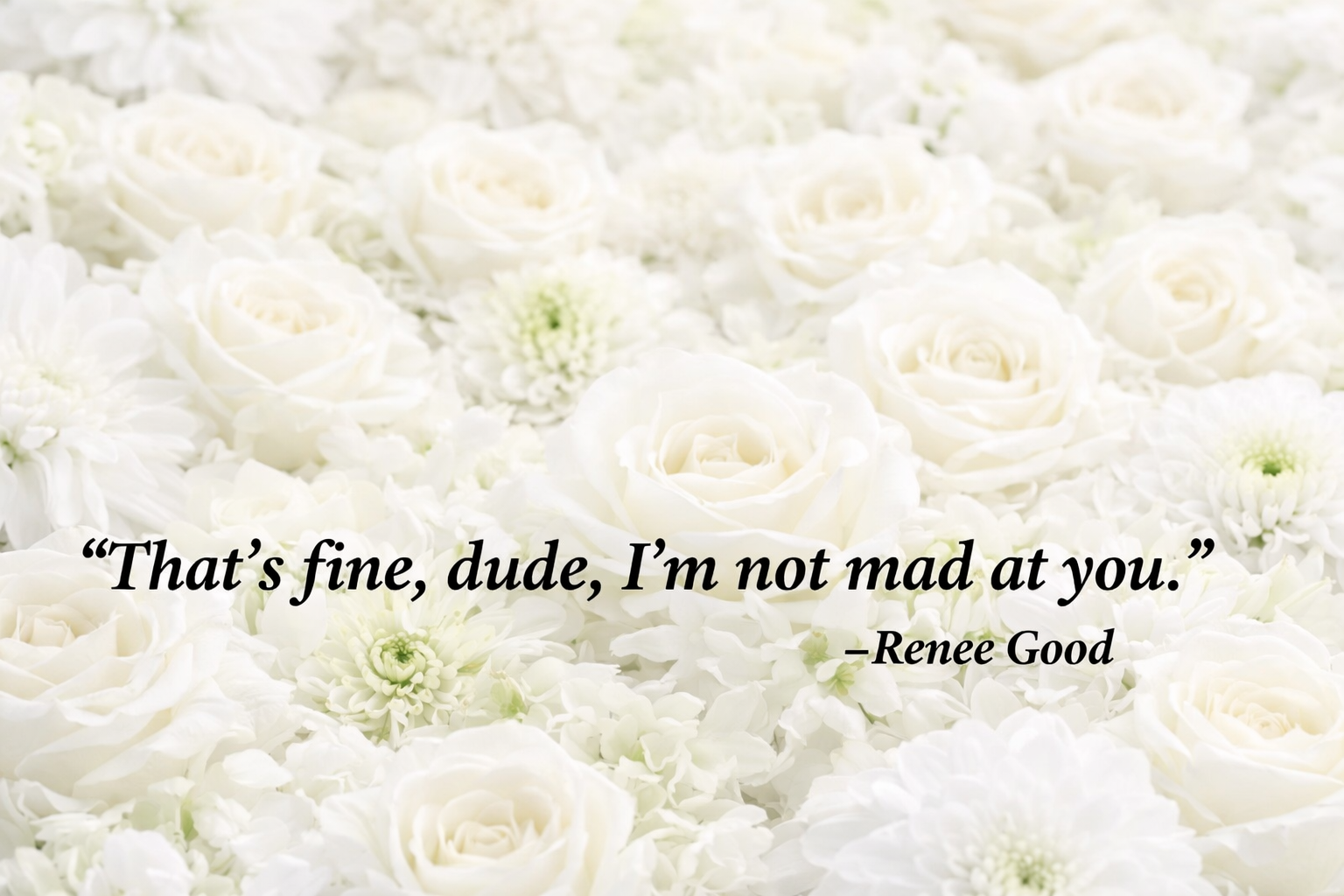
Bodycam footage from the officer who fired, later identified as Jonathan Ross, shows Good appearing calm and saying, “That’s fine, dude, I’m not mad at you,” as quoted by Reuters, just moments before Ross fired while she drove forward, steering the car away from him.
In bystander video of the Minneapolis incident, the car’s front bumper appears to pass in front of Ross just before he fired at Good, but none of the available footage clearly shows whether the vehicle actually made contact with him.
Regardless, Ross is seen on his feet and walking after the encounter, which contradicts former President Trump’s social media claim that the woman “ran over the ICE officer.”
These shootings connected to Department of Homeland Security enforcement actions have sparked large protests in Minneapolis, Portland and other U.S. cities, with many more demonstrations planned under the slogan “ICE Out For Good” on Saturday and Sunday.