


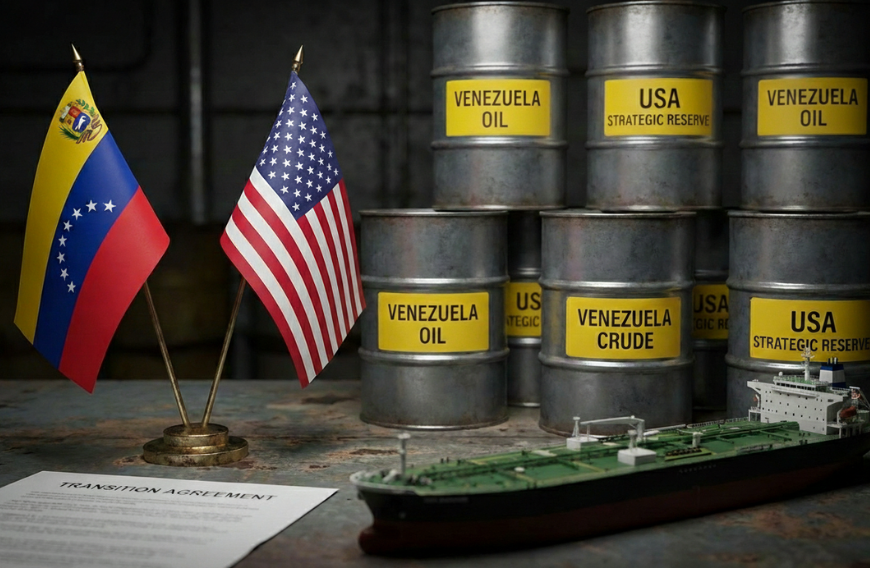
Venezuela may remain in Organization of the Petroleum Exporting Countries (OPEC) thanks to US President Donald Trump. Trump said on Wednesday that he believes it would be better for Venezuela to remain in OPEC, but added he was unsure if that would be a better situation for the United States.
“Well, I think it’s better for them if they do it,” Trump said in a Reuters interview, when asked if the administration supports Venezuela remaining in the oil cartel.
“I don’t know that it’s better for us … but they are a member of OPEC, and we haven’t discussed that with them at all,” Trump added.
READ: Former Chevron executive seeks $2 billion for oil projects in Venezuela (
Venezuela, a founding member of the oil cartel, sits atop some of the world’s largest crude reserves but has seen output collapse in recent years amid economic turmoil and sanctions.
What is Organization of the Petroleum Exporting Countries (OPEC)?
The Organization of the Petroleum Exporting Countries (OPEC) is an intergovernmental organization founded in 1960 to coordinate and unify petroleum policies among its member countries.
Its primary goal is to stabilize global oil markets, ensure a steady supply of oil to consumers, and secure a fair return for producers. OPEC’s founding members included Iran, Iraq, Kuwait, Saudi Arabia, and Venezuela, and the organization has since expanded to include additional oil-producing nations across the Middle East, Africa, and South America.
OPEC members meet regularly to set production targets and adjust output levels. By controlling a significant portion of the world’s crude oil supply, OPEC can influence global oil prices, though supposedly the exact impact depends on global demand, geopolitical events, and cooperation with non-member producers like in OPEC+ agreements. OPEC also conducts research, publishes statistics, and provides guidance on the oil industry’s long-term trends.
Trump’s administration has said it would need to control Venezuela’s oil resources indefinitely as it seeks to rebuild the country’s oil industry and exert pressure on the Caracas government.
Trump’s comments on Venezuela’s continued membership in the Organization of the Petroleum Exporting Countries reflect broader strategic and economic complexities in U.S. foreign policy and global energy markets.
His suggestion that it could be “better for them” if Venezuela stays in the oil cartel underscores the geopolitical significance of the South American nation’s vast crude reserves, even as its production has declined sharply.
The situation also illustrates how national interests can diverge within multinational groups like OPEC, where collective decisions about production and quotas may not always align with U.S. policy objectives or Venezuelan economic needs.
As policymakers weigh geopolitical stability against market influence, the question of Venezuela’s role in OPEC remains uncertain. The evolving relationship between Washington, Caracas, and other oil producers will continue to shape global supply strategies, energy prices, and diplomatic engagements in the months ahead.
READ: Trump says US will ‘run’ Venezuela, tap oil after Maduro’s capture (
International energy markets, like many complex systems, are shaped by economic trends, technological changes, political pressures, and shifting consumer demand, all of which introduce a degree of unpredictability.
How nations navigate these dynamics, through diplomacy, policy adjustments, or coordinated actions, can influence not only oil prices but also broader economic stability, regional security, and global energy transitions.