


In the 1993 film “Indecent Proposal,” billionaire John Gage, played by Robert Redford with glacial charisma, offers a struggling couple one million dollars for a single night with the wife. The proposition initially appalls them. The husband, played by Woody Harrelson, blusters with moral indignation. But financial reality gnaws at their resolve. The money would solve everything. Eventually, the couple sits across from Redford, hands trembling as they sign papers that commodify what they swore was priceless. The audience watches, simultaneously scandalized and riveted, wondering what price tag they’d accept for their own principles.
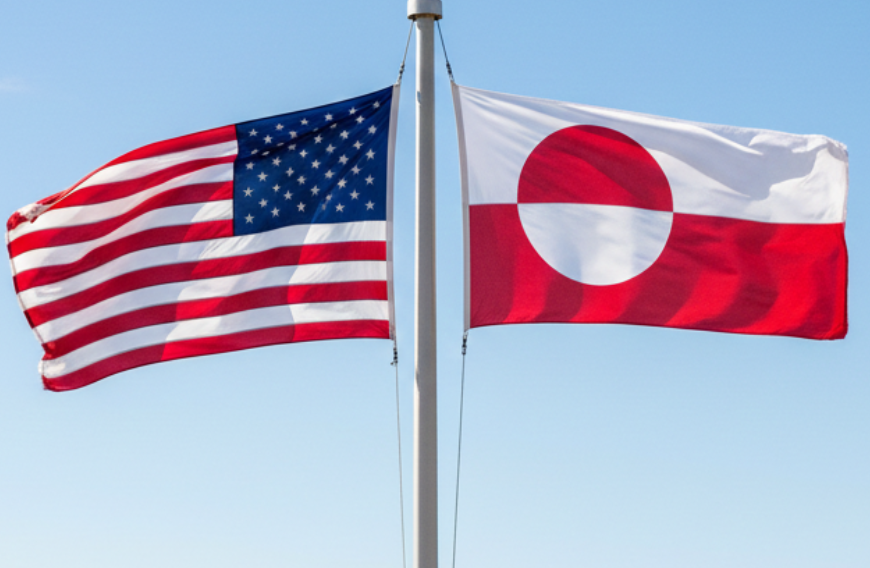
A similar uncomfortable drama has been unfolding on the Arctic stage. President Trump’s America is Redford, confident, resource-hungry, making an offer framed as mutually beneficial despite its inherent asymmetry. Greenland, with its 57,000 inhabitants and crushing debt burden, becomes Demi Moore’s character, possessing something profoundly valuable yet economically vulnerable. Denmark plays Woody Harrelson, the protective partner asserting nominal control while watching his authority dissolve under the weight of financial realism. And Europe? Europe is the audience in the theater, shifting uncomfortably, judging the transaction while secretly calculating whether they’d take a similar deal.

On Jan. 22, 2025, a potential framework for this transaction emerged from the Alpine heights of Davos. President Trump announced he had secured “total and permanent” U.S. access to Greenland through a NATO arrangement; not quite the sovereignty transfer he initially floated, but something perhaps more revealing about how power actually operates in the twenty-first century. Sovereignty remains nominally Danish, a fig leaf preserving diplomatic propriety. But access, investment control, and strategic dominance? Those have shifted decisively westward across the Atlantic.
The mineral proposition
The Tanbreez deposit in southern Greenland contains large reserves of rare earth oxides, making it one of the world’s largest undeveloped heavy rare earth resources. Unlike many competing deposits globally, Tanbreez is virtually uranium-free, eliminating the radioactive waste complications that plague rare earth processing facilities and make them political pariahs in developed nations. The deposit is particularly rich in dysprosium, terbium, and yttrium, the heavy rare earths essential for permanent magnets in precision-guided munitions, F-35 fighter jets, Virginia-class submarines, and next-generation hypersonic weapons systems.
As of January 2025, China controls approximately 85% of global rare earth processing capacity, according to the U.S. Geological Survey. America’s rare earth mine, Mountain Pass in California (with a new magnet factory in Texas), ships most of its ore to China for processing because the United States lacks the separation facilities, environmental risk tolerance, and technical expertise to complete the supply chain domestically. The Department of Defense’s 2024 Industrial Base Assessment identified rare earth dependence as a “critical vulnerability” in weapons production, noting that a disruption in Chinese supply could halt production of advanced missiles within six months.
This isn’t hypothetical gamesmanship. In 2010, China temporarily banned rare earth exports to Japan during a territorial dispute, sending prices soaring 750% within months. In 2023, China imposed export controls on gallium and germanium, metals crucial for semiconductors and infrared technology, as tensions rose over Taiwan. The message was clear: supply chains are weapons, and China holds the trigger.
The Tanbreez deposit offers something beyond the minerals themselves. It offers optionality. Military planners think in terms of redundancy and resilience. A functional rare earth supply chain outside Chinese control doesn’t necessarily need to meet 100% of American demand; it merely needs to exist as a credible alternative, reducing Beijing’s leverage from absolute to negotiable. Trump’s instinct, honed in real estate where controlling scarce assets provides negotiating power regardless of immediate use, recognizes that possession of Tanbreez fundamentally rebalances the geopolitical chessboard.
Pressure psychology
In the film, Redford doesn’t begin by offering money. He begins by establishing presence, appearing in the couple’s orbit, demonstrating resources, creating a sense of inevitability. Only after he’s dominated the psychological landscape does the financial offer arrive, framed not as coercion but as “solving your problems.”
Trump’s approach followed a similar architecture. First came the invocation of the Monroe Doctrine, that 1823 declaration asserting American primacy in the Western Hemisphere, warning European powers against interference in the Americas. Greenland, geographically part of North America, falls within this conceptual sphere. By resurrecting this doctrine, Trump signaled that the Arctic isn’t some distant neutral territory but America’s strategic backyard, where other powers operate at our sufferance.
Then came the threat sequence: potential military action, tariff threats against Denmark if it obstructed American interests, and suggestions that Greenland’s relationship with Denmark constituted a form of colonialism that America might “liberate.” This last maneuver represented moral reframing that made intervention seem righteous rather than rapacious.
Each escalation served a purpose beyond its literal threat. Military force against Denmark, a NATO ally, was geopolitically impossible without destroying the entire Atlantic alliance structure. Trump surely knew this. But the mere mention established a negotiating range: if military action was one extreme, then a framework agreement securing permanent access suddenly became the “reasonable middle ground.”
The Review by Ajay Raju: Warning: Contains upsetting comments (about Philadelphia’s leaders) (
The tariff threats against Denmark carried more credibility. As of January 2025, the United States maintained a $4.2 billion trade surplus with Denmark, heavily weighted toward American pharmaceutical exports and Danish agricultural machinery imports. Denmark’s economy, while prosperous, operates at a scale where a 20-30% tariff on key exports would inflict real pain, perhaps $800 million to $1.2 billion in annual losses. For a nation of 5.9 million people, that’s politically unsustainable. Woody Harrelson may bluster about principles, but when the mortgage payment comes due, principles become negotiable.
The framework
What Trump actually secured in Davos reveals the sophistication beneath the bluster. NATO Secretary General Mark Rutte and Trump agreed on a framework that updates the 1951 agreement governing U.S. military access to Greenland. The new arrangement provides “total and permanent” American presence, a phrase that carries weight beyond its diplomatic packaging.
Critically, the framework prohibits Chinese and Russian investment in Greenland. This isn’t merely symbolic. It means that Greenland’s rare earth deposits, its Arctic shipping lanes, its potential telecommunications infrastructure, all become exclusively Western domains. Beijing spent the past decade attempting to establish commercial footholds in Greenland through mining investments and infrastructure projects. That door has now closed, locked from the inside by an agreement between Copenhagen, Nuuk, and Washington.
Greenland’s Premier Múte Egede insisted that “sovereignty is a red line,” a statement dutifully reported as evidence of Danish-Greenlandic resistance. But examine what sovereignty actually means in this arrangement. Denmark retains nominal political authority, the flag, the passport, the UN representation. America gains strategic access, investment control, and the power to exclude rivals. In practical terms, who secured the more valuable elements of sovereignty?
This is the moment in “Indecent Proposal” when the couple signs the paperwork while insisting they’re maintaining their dignity. The transaction proceeds, but everyone agrees to describe it in language that preserves self-respect. Sovereignty remains technically intact, much like the marriage in the film remains technically intact after Redford’s night with the wife. What’s changed is everything beneath the formal label.
Greenland and Denmark
Greenland’s Home Rule government carries approximately $650 million in debt, a staggering burden for an economy with a GDP of roughly $3 billion. The island receives annual subsidies from Denmark totaling approximately $600 million, representing about 20% of Greenland’s GDP and funding everything from hospitals to education to infrastructure. Youth unemployment exceeds 15%, suicide rates rank among the world’s highest, and alcohol abuse affects an estimated 20% of the adult population. These aren’t merely statistics; they’re the grinding human cost of geographic isolation, limited economic opportunities, and cultural dislocation.
The framework agreement doesn’t explicitly address Greenland’s economic distress, but the implications are clear. Permanent U.S. military presence means infrastructure investment, ports, airfields, telecommunications, housing for personnel. Exclusive Western investment rights mean American and European capital flowing toward rare earth development, creating employment and revenue. The prohibition on Chinese and Russian investment eliminates Greenland’s ability to play competing powers against each other, but it also eliminates the uncertainty that has paralyzed major Western investment for years.
Premier Egede can declare sovereignty non-negotiable because sovereignty wasn’t negotiated — access was. But access, over decades, shapes sovereignty more powerfully than constitutional documents. American military bases become economic anchors. American capital becomes developmental infrastructure. American strategic priorities become local employment realities. Greenland retains the formal right to chart its own course while losing the practical ability to choose directions Washington opposes.
The Review by Ajay Raju: Postcard from Dubai (
This is the psychological breakthrough Redford achieves in the film. He doesn’t force the couple to admit they’re selling their marriage. He structures a transaction that allows them to believe they’re making a temporary, bounded decision while knowing the psychological consequences will be permanent and unbounded. Trump’s framework operates identically: formal sovereignty preserved, practical autonomy transferred, everyone maintaining the fiction that nothing fundamental has changed.
Transaction psychology
Critics will frame Trump’s Greenland pursuit as neocolonial aggression, and they’re not entirely wrong. But focusing solely on the moral dimension misses the transactional psychology at play, the same psychology that makes “Indecent Proposal” compelling rather than merely offensive.
Robert Redford’s character doesn’t succeed through pure coercion. He succeeds by making the transaction feel inevitable, by creating a psychological environment where rejection requires more emotional energy than acceptance. The couple in the film doesn’t lose their agency; they exercise it by accepting terms they once found unconscionable. The genius of the proposition is making them choose the transaction rather than having it imposed.
Trump’s escalation sequence, military threats, tariff pressure, moral reframing, created a similar sense of inevitability. Each escalation made the eventual framework agreement seem increasingly reasonable by comparison. By the time NATO announced the arrangement in Davos, Greenland’s and Denmark’s leadership had been psychologically prepared to view this not as surrender but as savvy negotiation, extracting maximum preservation of formal sovereignty from an outcome that American pressure had made unavoidable anyway.
The Davos announcement even included Trump backing off tariff threats against Europe, a concession framed as American reasonableness rather than what it actually was: the pressure valve being released once the objective was secured. Denmark avoids the tariffs. Greenland preserves sovereignty’s appearance. America gains permanent strategic access and exclusive investment rights. Everyone declares victory. Everyone has sold something they insisted was non-negotiable.
This approach proved particularly effective because it exploited a fundamental asymmetry: Greenland needs economic transformation; America merely wants rare earth supply chain diversification and Arctic strategic dominance. When desire meets necessity, the party with necessity holds far less negotiating power than sovereignty treaties suggest. Denmark can assert legal ownership over Greenland, but Denmark cannot make Greenland’s debt disappear or create economic opportunities that justify remaining in Copenhagen’s orbit. America can offer both, making the transaction not coercive in the crude sense but rather transactional, paying for something the seller has overwhelming incentive to provide.
The NATO wrapper
The brilliance of the framework lies in its institutional packaging. By routing the arrangement through NATO rather than negotiating a bilateral U.S.-Denmark treaty, Trump transformed a potential colonial acquisition into a collective Western security initiative. NATO Secretary General Rutte’s involvement provides multilateral legitimacy. The prohibition on Chinese and Russian investment becomes a defensive measure rather than American exclusivity. The permanent U.S. presence becomes allied Arctic security rather than unilateral expansion.
This institutional architecture serves everyone’s interests. Denmark can tell its citizens that Greenland remains within the NATO family rather than being sold to America specifically. Greenland can frame increased Western investment as diversified European engagement rather than American domination. The United States secures everything it actually wanted, access, exclusivity, strategic control, while sharing the diplomatic burden across the alliance.
It’s the equivalent of Redford offering the million dollars through a trust fund that makes the transaction appear more respectable than cash in a briefcase. The money is identical. The moral complexity is identical. But the packaging allows everyone to maintain psychological distance from what they’re actually doing.
European allies will grumble about American unilateralism, then quietly calculate how their defense contractors can secure Greenland infrastructure contracts now that Chinese competition is prohibited. Beijing will protest neocolonial encirclement, then redouble efforts to secure rare earth deposits in Africa and Central Asia. Moscow will denounce NATO expansion, then acknowledge that Greenland was always beyond Russian reach anyway.
The framework succeeds because it gives everyone a narrative they can live with. The transaction proceeds. The Arctic strategic balance shifts decisively. And everyone agrees to describe it in language that avoids the uncomfortable precision of what actually occurred.
The math
Let’s walk through the likely arithmetic of what America actually secured. The updated framework doesn’t require direct purchase, eliminating the potential $50-70 billion acquisition cost. Instead, the investment flows through normal infrastructure and development channels: expanded military base construction (perhaps $5-10 billion over a decade), rare earth extraction partnerships with Western mining firms (private capital with U.S. government loan guarantees), Arctic research and telecommunications infrastructure (dual-use civilian-military projects totaling $3-5 billion).
Total U.S. government outlay: perhaps $15-25 billion over ten to fifteen years, most of it defense spending that would occur elsewhere if not in Greenland. In exchange, America secures permanent military access, exclusive Western investment rights, rare earth supply chain diversification, and Arctic strategic dominance that positions the U.S. to control emerging Northern Sea shipping routes as climate change makes them commercially viable.
Compare this to the F-35 fighter program ($412 billion lifetime cost) or the Afghanistan war ($2.3 trillion). For roughly 1% of the Afghanistan expenditure, America fundamentally alters North American security geography and breaks Chinese rare earth monopoly leverage.
From Greenland’s perspective, the benefits flow less directly but no less substantially. Infrastructure investment creates immediate employment. Rare earth development generates long-term revenue through royalties and taxation. Expanded military presence stimulates local economies through contractor spending and personnel consumption. The prohibition on Chinese and Russian investment eliminates competitive uncertainty that has frozen Western capital commitments for years.
Denmark’s arithmetic is more complex. Copenhagen loses the ability to leverage Greenland strategically but escapes the escalating subsidy burden as Western investment reduces Greenland’s fiscal dependence. The $600 million annual subsidy likely continues in the near term but decreases over time as rare earth revenues increase. Most importantly, Denmark avoids the political catastrophe of Greenland voting for full independence and then negotiating directly with Washington without Danish involvement.
These are hypothetical numbers, but represent the credible arithmetic of a transaction both sides accepted once the psychological groundwork was complete. Demi Moore and Woody Harrelson eventually sign because the money is real, the debt is crushing, and the alternative is foreclosure without compensation.
Greenland’s and Denmark’s ledgers look remarkably similar.
The indecent question
What price would you accept for your sovereignty?
European elites recoil from this question because it exposes the gap between theoretical principles and practical constraints. Sovereignty sounds absolute until you’re the leader of Greenland explaining to citizens why they should refuse Western investment that would transform the economy. Self-determination sounds sacred until you’re the Danish prime minister explaining why Copenhagen should continue subsidizing Greenland’s independence from American integration that Greenlanders themselves increasingly see as inevitable.
The framework agreement works because it allows everyone to avoid explicitly answering this question while implicitly accepting its answer. Sovereignty remains nominally intact, much like the marriage in Indecent Proposal remains nominally intact. What’s changed is the practical meaning of that sovereignty: who invests, who has access, whose strategic priorities dominate decision-making.
Trump’s strategy, characteristically, stripped away the diplomatic language that allows nations to avoid this calculus. By making the threat explicit and the alternatives stark, he forced everyone, Greenland, Denmark, European observers, to calculate their price point. It’s crude theater, but it’s also clarifying. The comfortable fiction that sovereignty cannot be negotiated dissolves when the ledger shows crushing debt and limited options on one side and investment, access, and strategic security on the other.
History will likely view Trump’s Greenland pursuit as a case study in modern great power politics, where formal sovereignty becomes increasingly detached from practical autonomy, where institutional packaging transforms unilateral actions into multilateral initiatives, where economic necessity creates strategic openings that military force cannot.
Trump’s innovation wasn’t the strategy; great powers have always secured access to strategic resources through economic and security arrangements. His innovation was the transparency: announcing intentions explicitly, establishing stakes clearly, and daring parties to refuse terms that would eventually seem reasonable by comparison to the alternatives.
The framework agreement represents Trump’s strategic patience wrapped in his characteristic impatience. He demanded Greenland’s purchase, threatened military action, invoked colonial liberation rhetoric, then accepted a NATO-brokered access arrangement that achieves his core objectives while allowing everyone else to claim victory. The final agreement looks nothing like his initial demand yet delivers everything he actually needed.
It’s the negotiating equivalent of flipping the table to see what cards everyone is holding, then quietly picking up the cards and dealing a hand that gives you the pot while letting everyone else leave with their dignity.
NATO Secretary General Rutte’s comment that “it’s now up to NATO’s senior commanders to work through the details” reveals the true nature of what was agreed. The framework is skeletal, principles and exclusions rather than specifications. The details will be negotiated over months and years, each incremental agreement expanding American presence and Western investment while Greenland’s formal sovereignty remains unchanged. By the time the framework is fully implemented, the transformation will be complete, but it will have occurred so gradually that no single decision can be identified as the moment sovereignty was traded.
The Review by Ajay Raju: Hero wanted: Paging Dr. Fajgenbaum (
This is how power actually operates in the twenty-first century. Not through colonial annexation or military conquest, but through framework agreements and investment partnerships and security arrangements that gradually transfer practical authority while preserving formal independence. It’s more sophisticated than nineteenth-century imperialism, more sustainable than twentieth-century Cold War influence, and more difficult to resist because it arrives wrapped in economic opportunity and security guarantees rather than gunboat diplomacy.
The ending
“Indecent Proposal” concludes ambiguously. The couple takes the money, endures the night with Redford, and then watches their relationship disintegrate under the weight of what they’ve traded. The final scenes show them separated, contemplating whether the transaction was worth the psychological cost. The money solved their immediate problems but created deeper ones, questions about value, dignity, and what remains non-negotiable in a world where everything has a price.
The Greenland framework agreement will likely follow a similar arc. The immediate economics will be transformative. Debt service becomes manageable. Infrastructure appears. Investment flows. American military presence expands. Chinese and Russian ambitions are foreclosed. NATO declares success. Denmark maintains sovereignty. Greenland’s leadership insists they’ve preserved autonomy while gaining partnership.
But deeper questions will linger: What did Greenlanders trade beyond formal sovereignty? What happens when American strategic priorities conflict with Greenlandic preferences, and the framework gives Washington the leverage to prevail? What cultural elements erode when isolated communities integrate into American and European economic networks? What occurs when the rare earths are extracted and Greenland’s strategic value shifts from potential to exploited resource?
These questions can’t be answered in advance, which is precisely why they haunt. Trump’s gambit forced them into consciousness whether or not full sovereignty transfer occurs. The audience, Europe, China, the global south, future historians, will continue debating whether this represents evolution of sovereignty in an era of resource competition or simply old imperialism wearing new institutional clothes.
Perhaps the most honest answer is: both. Sovereignty has always been contingent on power and viability. International law has always yielded when dominant nations perceived existential interests. The innovation here is merely the explicitness, the willingness to state clearly what previous generations obfuscated through diplomatic language, followed by the sophistication to wrap the final agreement in institutional legitimacy that allows everyone to avoid acknowledging what actually occurred.
Is this crazy? Only if you believe the fiction that sovereignty operates independently of power, that international law constrains great powers when security is threatened, and that territories cannot trade political autonomy for economic transformation. If you recognize these as comfortable illusions rather than operational realities, Trump’s Greenland strategy looks less like madness and more like clarity.
Somewhere in Nuuk, Greenland’s capital, political leaders are studying the framework details, calculating what permanent American access actually means, preparing to negotiate implementation knowing that each successive agreement will further constrain their practical autonomy while preserving their formal sovereignty. The proposal, indecent or otherwise, has been accepted in principle.
The details will determine whether they maintain the fiction indefinitely or whether, years from now, they’ll sit like the couple in the film’s final scene, separated, contemplative, wondering whether what they gained was worth what they lost, unable to answer with certainty.