



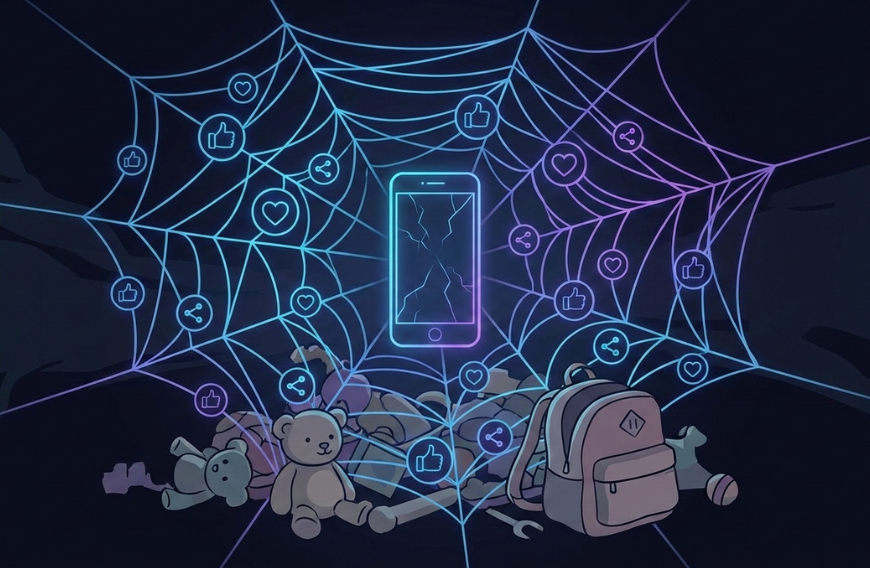
In 2015, I wrote that social media was quietly reshaping childhood in ways we did not yet have the language or courage to confront, warning that what looked like harmless engagement was actually an uncontrolled experiment on developing minds that would take years to fully reveal its damage. In that CNN opinion piece, I argued that we were confusing connection with emotional health and mistaking constant interaction for well-being, while ignoring early signs that something was going wrong long before it could be labeled a disorder. That article was published at a time when questioning social media’s impact on children was still treated as fearmongering rather than foresight.
Eleven years later, lawsuits are now surfacing accusing social media companies of harming children by not exposing new ideas but confirming old ones that were repeatedly dismissed.
What has remained constant is the response from the leaders of these companies, who deny responsibility by pretending mental health is a switch that flips from healthy to broken, rather than a slow buildup of stress, anxiety, loneliness, and emotional fragility that often goes unnoticed until it becomes impossible to ignore. Their defense rests on the claim that not every child is harmed, as if harm must be universal and catastrophic to count, while sidestepping the reality that most psychological suffering begins quietly, long before it shows up in a diagnosis or a crisis.
Sreedhar Potarazu: What it will take for doctors to transform US healthcare in a widening gap (
What we are seeing now in Gen Z is not a sudden collapse but the outcome of years spent inside systems that reward comparison over connection and performance over presence. In my essay often referred to as “The Fourth Monkey,” I wrote about how young people are talking less, not because they have nothing to say, but because communication itself has become risky, public, and transactional. Social media trains users to curate themselves rather than reveal themselves, to seek validation rather than understanding, and to stay silent rather than be vulnerable.
The companies behind these platforms insist they merely reflect society, but reflection does not explain why anxiety, self-comparison, and insecurity are so reliably amplified. This outcome was not accidental. Facebook did not begin as a tool to build community but as a way to rate girls on campus, turning judgment into entertainment and social ranking into a game. That original act of comparison, which introduced anxiety as a feature rather than a flaw, has since spread across platforms where worth is measured in likes, visibility becomes identity, and attention is constantly up for auction. What began as a small spark of social anxiety has scaled into a global system built on it.
The claim that social media algorithms are not designed to be addictive collapses the moment one understands how digital advertising actually works, because the entire economic model depends on maximizing attention, time spent, and repeated engagement, not on user well-being or moderation. These platforms do not make money by improving mental health outcomes or encouraging people to log off, they make money by keeping users scrolling, clicking, reacting, and returning, since advertising revenue rises in direct proportion to how long a user stays engaged and how precisely their behavior can be predicted and influenced.
Sreedhar Potarazu: The dilemma of destiny as our own prisoners: What MLK would tell us (
To argue that algorithms are neutral or merely responsive is to ignore the basic incentives that govern their design, because if engagement were not aggressively optimized, ad impressions would fall, targeting would weaken, revenue would decline, and the valuations of these companies would collapse. In other words, if social media algorithms were truly not engineered to be compulsive, the business model that sustains the largest technology companies in the world would cease to function, which makes the denial not just implausible but fundamentally dishonest.
The most troubling part is that the warning signs were visible long before the consequences became undeniable. Changes in sleep, attention, mood, and social behavior were treated as normal growing pains rather than signals that something deeper was being disrupted. We would never wait for someone to have a heart attack before taking years of chest pain seriously, yet that is exactly how we have approached children’s mental health in the age of social media, dismissing early symptoms until the damage became impossible to explain away.
We are now living through an addiction crisis that hides behind the language of innovation and choice. Platforms designed to keep users scrolling do not accidentally exploit vulnerability; they depend on it. The question is no longer whether social media has benefits, because that debate misses the point entirely. The real question is whether we are willing to demand responsibility for how these systems are designed and defended, or whether we will continue to pretend that harm only counts once it becomes irreversible. The experiment has gone on long enough, the evidence is piling up, and denial is no longer a neutral position.