


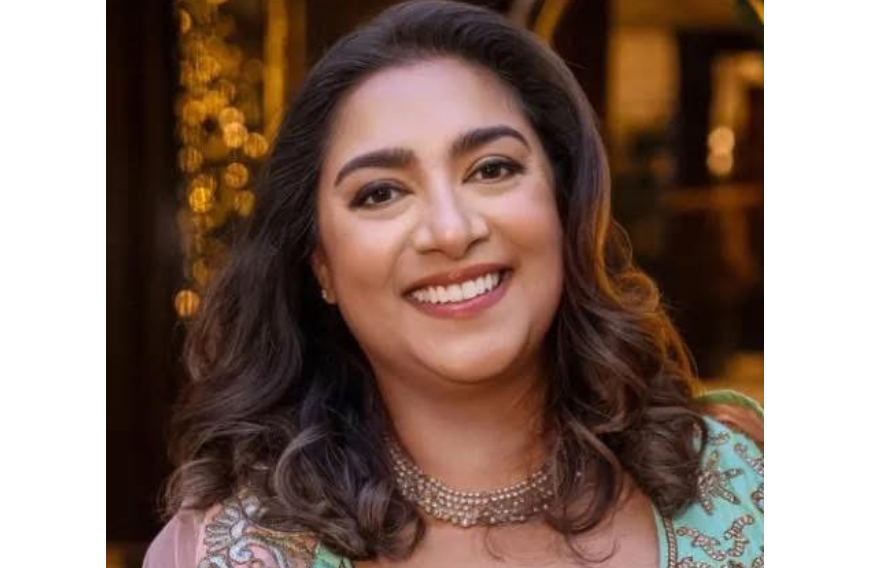
Former Washington State Senator Mona Das says that for women of color in America, there are more barriers to cross than just racism and sexism. Often, she feels that the struggle to prove that anything is possible begins inwards. Sometimes women doubt themselves because they are not made to believe that they can break the systemic barriers because other times there is subtle discouragement from families and communities. Her award-winning documentary, lays bare the reality on this layered struggle, that women of color in America face, whether they are running for office or trying to break into a role not traditionally believed to be tailormade for them.
Das, a first-generation immigrant began her career as an entrepreneur running a mortgage business, with no family history in politics it was almost fanciful for her to think about public leadership journey. She has an interesting story behind her will to pivot her career. She says, “On an unremarkable evening in suburban Seattle, I was walking my dog when I noticed a campaign sign: ‘Pramila Jayapal for Senate.’
“In that moment,” Das recalls, “I understood that it is possible to dream the impossible.” To have a woman political candidate that looked like her marked a rare moment of validation for her. “Growing up as an immigrant in small-town America, I had never seen women who looked like me occupying political power. The absence of role models made ambition feel abstract,” Das notes.
Motivated by that sign, Das decided to run for the Washington State Senate from the 47th District. She knew that the journey was too ambitious but what she says she didn’t know yet was how the obstacles in her way would come from unexpected places. But Das worked very hard and flipped the seat, making history and entering the State Senate in 2019.
READ: Trump stages a triumphant return to power (
But then began the real challenge. She recalls, “In the first few days of taking office, I was advised by four white male colleagues to ‘stay quiet’ during my first year. The message I read was that political newcomers, especially women of color were expected to follow the line.”
But this did not deter her. While in office, Das passed more than two dozen bills, including the Senate Bill 5022, which positioned Washington as one of the earliest states to restrict certain single-use plastics.
After completing her term from 2019 until 2023, she decided not to seek re-election and began her new journey as a political strategist, speaker, advisor, and filmmaker. Das has also produced an important documentary titled “Bad Ass Women Doing Kick Ass Shit.” The feature follows the journey of eight BIPOC women running for political office. The movie gives a ringside view – from identifying fundraising bias to unpacking media stereotyping and political gatekeeping, the documentary lays bare the compounded challenges women of color face while seeking leadership roles.
The film earned two Telly Awards and recognition at multiple international festivals but more importantly, it ignited conversations in spaces that had long sidelined voices of women of color.
“As women of color start chasing big dreams, they often lose support from close friends and family,” Das observes. “Strangers step in. Loved ones step back. That’s why I tell young women to look outward for support. In America, when you ask, people often show up.”
READ: Indian American Impact Fund endorses 7 South Asians for 2025 elections (
As the journey continues, the barriers compound. Das believes this is why individual success is not enough. “We don’t need to just extend a helping hand,” she says. “We need to send the elevator down and bring as many women up as possible.”
One of the most persistent barriers for women of color in politics is fundraising. “For many of us, asking for money feels uncomfortable,” Das explains. “In Indian culture especially, fundraising is taboo. The same holds true in many Black communities, where self-reliance is deeply ingrained.”
“Marginalized communities often don’t have access to large donor networks,” she says.
Historical distrust of political systems among immigrant communities, shaped by corruption back home, also plays a role.
Her message to the next generation of women of color is unapologetically bold: America doesn’t just need more representation, it needs disruptors with a plan.