


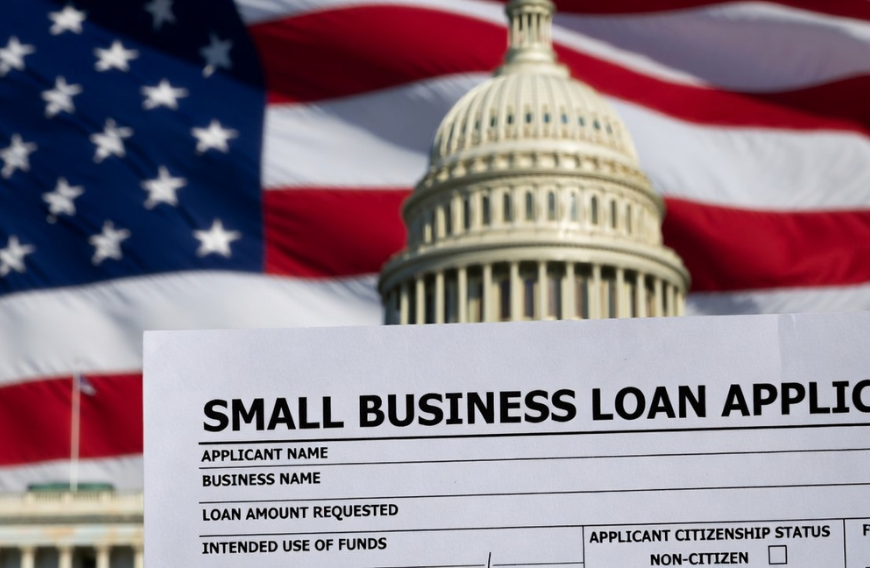
It looks like small businesses in the US will not receive any small business loans if their ownership has even an iota of foreign investment.
The Small Business Administration on Monday issued new policy guidance requiring 100 percent of all owners of a small business applying for the agency’s primary 7(a) loan program to be U.S. citizens or U.S. nationals with their principal residences within the US.
“We’ve been too loosey-goosey for too long. There’s a tremendous amount of money missing at the SBA back from the Biden administration and so forth,” House Small Business Chair Roger Williams (R-Texas) said Tuesday.
“Some options aren’t the best. Maybe we need to have one [option] and grow from there,” Williams added.
The policy, which would be effective March 1, rescinds the previous policy issued in December that allowed a 7(a) loan borrower to have up to 5 percent of the business’ ownership held by a foreign national, green card holder or a U.S. national or citizen living outside of the U.S. Now, green card holders who have permanent U.S. residency will no longer be able to own any part of a business applying for the popular small business government loan program.
READ: New rule requires biometric screening for non-citizens, including green card holders (
The new policy signals a significant shift in how the U.S. government approaches support for small businesses, emphasizing a narrow definition of eligibility tied strictly to citizenship and residency. Beyond the immediate impact on individual entrepreneurs, this change could have broader economic implications.
By excluding businesses with any foreign ownership, the policy may inadvertently limit innovation, investment, and competitiveness, as many small enterprises benefit from diverse ownership structures and international connections.
Startups and small businesses often rely on global networks for funding, talent, and market expansion; restricting access to government-backed loans could slow growth and reduce the overall dynamism of the small business sector.
Sen. Ed Markey (D-Mass.) and Rep. Nydia Velázquez (D-N.Y.), ranking members of the Senate and House Small Business Committees, respectively, condemned the move by the SBA.
“The Trump administration is stoking the flames of hatred, spreading fear and confusion among immigrants and small business owners. Rather than support hard-working legal immigrants to start or expand a business, the
Trump SBA is choosing hatred by barring green card holders from receiving an SBA loan,” the lawmakers said in a statement. “The Administration’s message to immigrants is clear: you are not welcome to pursue the American Dream.”
READ: U.S. issues new entry and exit rules for foreigners, including Green Card holders (
Socially and politically, the policy reflects ongoing tensions over immigration and economic nationalism. It sends a message that legal immigrants, even those fully integrated and contributing to the economy, face barriers to accessing resources that were previously available.
This could discourage entrepreneurship among immigrant communities and reduce the inclusivity of the U.S. business landscape.
From a policy perspective, this move underscores the balancing act between safeguarding public funds and fostering economic growth.
While there may be concerns about accountability and oversight in loan programs, overly restrictive rules risk creating unintended consequences that stifle opportunity rather than promote it.
Ultimately, the change highlights the intersection of economic policy and social values, raising questions about how best to support small businesses while maintaining fairness, competitiveness, and openness in a globalized economy.
The long-term effects will likely depend on how these restrictions influence entrepreneurial behavior, investment patterns, and perceptions of the U.S. as a place for innovation and business development.