


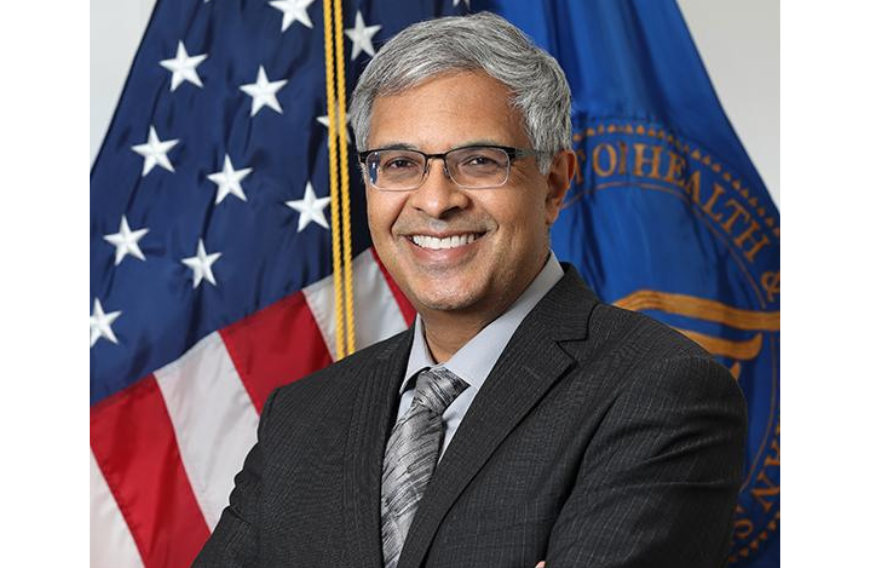
The misinformation that has long been doing the rounds that vaccines cause autism has seemingly been debunked by the director of the National Institutes of Health (NIH).
Jay Bhattacharya, director of the National Institutes of Health (NIH), said in a Senate hearing Tuesday that he has not seen any studies supporting the theory that any vaccines cause autism, a break from Health and Human Services Secretary Robert F. Kennedy Jr., who has long speculated on a potential connection and has not discounted the possibility.
“I have not seen a study that suggests any single vaccine causes autism,” Bhattacharya said.
Bhattacharya’s statement contrasts with Health and Human Services Secretary Robert F. Kennedy Jr., who has long speculated about a potential vaccine-autism link.
Bhattacharya emphasized the extensive research supporting vaccine safety, including studies of the MMR (measles, mumps, rubella) vaccine and other routine childhood vaccines, all of which have failed to demonstrate a causal relationship with autism.
READ: Gutting of USAID causes ‘devastating’ global health void: Atul Gawande (
The NIH director reiterated that he hasn’t seen evidence that vaccines cause autism, adding, “When you’re studying anything like this, you can’t just say vaccines. You have to say vaccine-by-vaccine.”
By clarifying the lack of evidence linking vaccines to autism, Bhattacharya seemingly reinforced the importance of evidence-based policymaking and public health communication.
He stated that several studies have established there is “no link” between MMR vaccinations and autism but said other vaccines are “less well studied.”
“That theory has been debunked by a broad set of studies with over a million children,” Sen. Maggie Hassan (D-N.H.) said. “And relitigating debunked theories about vaccines doesn’t get us closer to the answer of what causes autism.”
The exchange underscores a broader tension between scientific consensus and persistent public debate in health policy.
Despite decades of research and repeated findings, misinformation around vaccines continues to resurface, often driven by political narratives or public mistrust rather than evidence.
Statements from senior scientific leaders play a critical role in reaffirming established knowledge and clarifying where the weight of research actually lies.
READ: Indian American-led research team gets $2.7 million NIH grant to develop synthetic blood (
This moment also highlights the challenge of communicating scientific certainty in a way that is both precise and accessible. Science advances through careful study, replication, and nuance, which can sometimes be misinterpreted as doubt by the public.
When officials emphasize methodological rigor or gaps in research coverage, those statements can be misconstrued as reopening settled questions, even when the overarching conclusions remain unchanged.
The discussion further reflects the importance of maintaining clear boundaries between evidence-based policymaking and speculative claims. Public health decisions rely on trust in institutions and confidence that guidance is grounded in data rather than ideology.
When misinformation is repeatedly revisited, it risks diverting attention and resources away from more productive efforts, such as understanding the true causes of complex conditions like autism and improving support for affected individuals and families.
The episode reinforces the need for consistent, transparent communication from health authorities.
Reaffirming scientific consensus, correcting false narratives, and focusing on forward-looking research are essential to preserving public confidence.
How effectively these messages shape long-term public trust and policy debates remains uncertain, but the importance of evidence-based leadership is clear.