


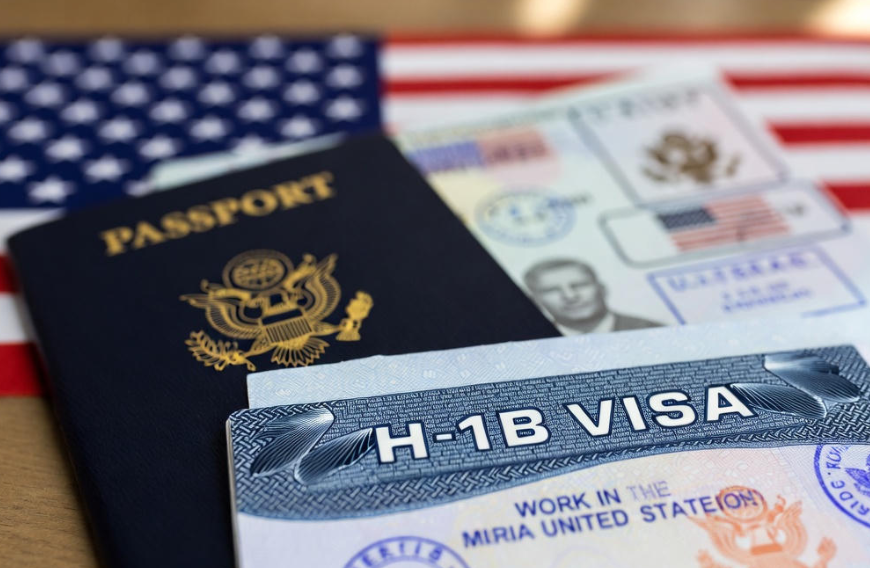
A Reddit post describing the alleged cancellation of an H-1B visa at Abu Dhabi International Airport has sparked widespread debate online. While the original post has been taken down, screenshots of it are still being shared across social media platforms, keeping the conversation alive.
In the version of events shared online, a woman, who works full time in the United States, had traveled to India in November 2025 to mark her daughter’s first birthday. She and her husband completed their visa stamping process in December of the same year.
The situation reportedly unfolded in January when the couple was flying back to the United States and had to pass through Abu Dhabi’s preclearance facility. Her husband was cleared to board without issue. She, however, was pulled aside for secondary inspection.
According to the account, during questioning she told officials that she had remained in India for close to two months and had worked part time during that period while using her Paid Time Off (PTO). That disclosure appears to have raised red flags.
READ: H-1B visa appointment crisis worsens, with mass cancellations pushing dates to late 2026 (
Officers allegedly determined that she had spent too long outside the United States and questioned the fact that she continued to receive pay from her U.S. employer while working remotely from India. Her visa stamp was reportedly marked “Cancelled and Withdrawn,” and she was told she would need to apply again.
Since then, she has been unable to book a fresh visa appointment because no interview slots are currently available. The company’s immigration attorney, as cited in the post, maintains that working remotely from India is not prohibited under U.S. law. For now, the episode has left her in limbo, unsure of what steps to take next.
U.S.-based entrepreneur James Blunt also weighed in on the controversy. He characterized the episode as a 221(i) visa cancellation carried out at a preclearance facility.
He noted that Customs and Border Protection (CBP) officers exercise wide discretionary powers at ports of entry. Unlike U.S. Citizenship and Immigration Services (USCIS), he pointed out, CBP officers are not bound to conduct the same depth of documentation review when making determinations at the border.
Blunt went on to suggest that a lengthy stay outside the United States, coupled with remote work, may have prompted closer scrutiny from officers. He observed that even if the legal basis seems debatable, CBP still has the power to cancel a visa stamp at the port of entry.
He clarified that such a cancellation does not automatically invalidate the underlying approved H-1B petition. It does, however, require the individual to go through the visa stamping process all over again.
READ: Another round of mass H-1B, H-4 visa cancellations begin (
Blunt also raised a broader concern. He questioned why many H-1B visa holders continue to travel internationally at a time when inspections at ports of entry have become increasingly unpredictable. His message was straightforward. If travel is not essential, it may be wiser to postpone it until the climate feels more stable.
Hany Girgis, co-founder of SkillStorm, offered another angle. He suggested the problem could be linked to compliance with the Labor Condition Application (LCA). The H-1B program is tied to a specific employer, a defined position and an approved work location. If remote work from a location not listed on the LCA is not properly documented, that discrepancy can invite scrutiny during inspection.
Under H-1B rules, employers must clearly state the job location in their filings. Working from a different location without the necessary paperwork can create complications during travel and re-entry.
The episode has once again unsettled many within the H-1B community. For foreign professionals who depend on consistent travel norms to balance work and family obligations, situations like this serve as a reminder of the wide discretion exercised at preclearance facilities and ports of entry.