


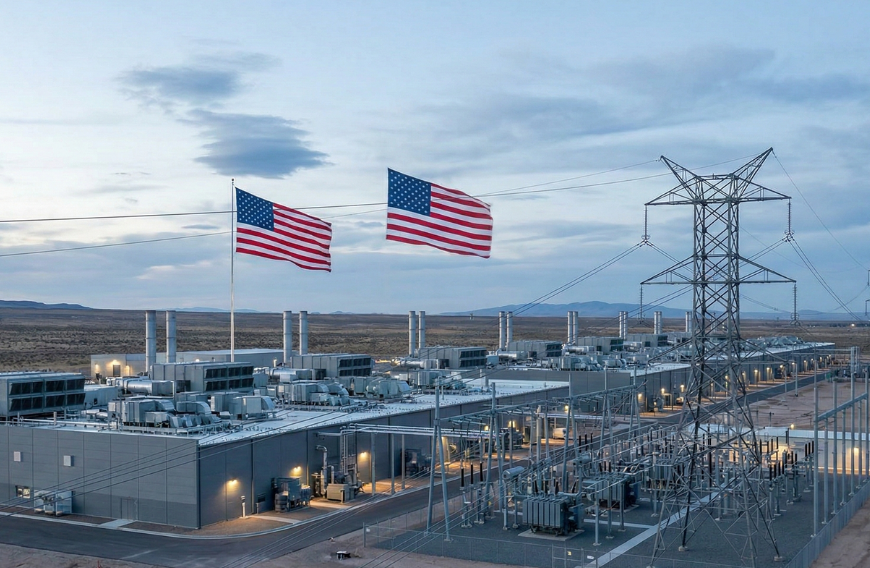
President Donald Trump is asking AI companies to foot the bill for the increase in electricity prices. The proliferation of AI data centers plugging into the national electrical grid has helped increase consumer electricity prices, driving up the average national electricity price by more than 6% in the last year.
“We’re telling the major tech companies that they have the obligation to provide for their own power needs,” Trump said in his State of the Union address. “They can build their own power plants as part of their factory, so that no one’s prices will go up.”
On Jan. 11, Microsoft announced its policy “to ensure that the electricity cost of serving our datacenters is not passed on to residential customers,” on Jan. 26, OpenAI committed to “paying its own way on energy, so that our operations don’t increase your energy prices” and on Feb. 11, Anthropic made the same pledge to “cover electricity price increases that consumers face from our data centers.”
READ: OpenAI to cover rising power costs for touted Stargate data centers (
“We’re telling the major tech companies that they have the obligation to provide for their own power needs,” Trump said in his State of the Union address. “They can build their own power plants as part of their factory, so that no one’s prices will go up.”
Even if tech companies commit to taking on electricity costs, on-site power plants may not be a panacea — they can still have adverse impacts on the surrounding environment, and will stress supply chains for natural gas, turbines, photovoltaics, and batteries, depending on how companies aim to power their compute.
The debate over who should bear the costs of powering advanced technologies highlights broader questions about responsibility, sustainability, and the allocation of resources in a rapidly evolving economy.
READ: Rising data center growth could send electricity bills soaring, study finds (
As industries with high energy demands expand, policymakers and companies alike are grappling with how to balance innovation with equitable energy distribution. Decisions about infrastructure, energy sourcing, and operational scale have consequences not just for corporations, but for communities, consumers, and the environment.
There is also a wider implication for governance: how governments shape regulations, incentives, and accountability frameworks will influence whether the energy demands of emerging technologies are integrated smoothly into existing systems or create broader societal tension.
Likewise, industry responses — whether through self-generation, efficiency measures, or policy engagement — could determine the pace and impact of technological growth on public resources, though outcomes remain uncertain.