


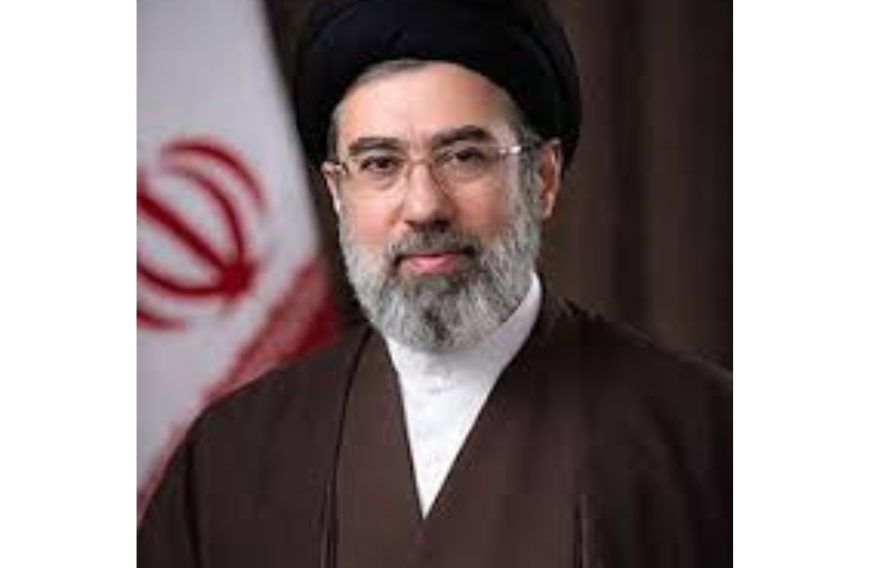
Amid the U.S.-Israel and Iran war, the latter has named Mojtaba Khamenei, son of Ayatollah Ali Khamenei as their new Supreme Leader. President Donald Trump previously said Mojtaba would be an “unacceptable” choice and Israel vowed to target any successor.
Trump has also stated that Iran would need the United States’ “approval” Trump said Sunday that Iran’s next leader “is not going to last long” without Washington’s approval, as the Islamic Republic prepared for the succession of its slain supreme leader.
“He’s going to have to get approval from us,” Trump told ABC News, a week after Israel killed Ali Khamenei in the opening strikes of the ongoing war with the U.S. against the regime.
Who is Mojtaba Khamenei?
Mojtaba Khamenei (born Sept. 8, 1969 in Mashhad, Iran) is an Iranian Shiite cleric and political figure. He is the second son of Ali Khamenei, who served as the Supreme Leader of Iran for more than three decades. Mojtaba grew up in a prominent religious and political family during the period following the Iranian Revolution of 1979. He later studied Islamic theology in the seminaries of Qom, one of the most important centers of Shia Islamic scholarship.
READ: Trader ‘Magamyman’ makes $553,000 betting on Ayatollah Ali Khamenei’s death (
Although Mojtaba Khamenei has not held major elected political offices, he has long been considered an influential figure within Iran’s political establishment. Analysts and journalists have often described him as a behind-the-scenes political actor who developed connections with conservative political groups and members of the Islamic Revolutionary Guard Corps (IRGC). Because he generally avoided public political roles, much of his influence has been described indirectly through reports and political analysis.
He reportedly volunteered during the Iran-Iraq War (1980–1988) when he was young. After the war, he continued his religious education and became involved in clerical and political networks within Iran’s leadership circles.
The recent developments surrounding Iran’s leadership and regional conflict point to a period of profound political and strategic uncertainty for the country. Iran now faces the challenge of maintaining internal cohesion and stability at a time when economic pressures from international sanctions, rising energy prices, and global market volatility are already weighing heavily on its population.
Asian markets closed with steep losses as oil surged past $100 per barrel, a four-year high with the IMF chief warning of global inflation risks.
READ: Trump suggests US could turn attention to Cuba after Iran war (
Different political and religious factions within Iran’s ruling establishment will be under pressure to manage these economic strains while projecting authority and unity.
The shift in leadership coincides with ongoing tensions involving other major powers in the Middle East. The reported appointment of a new supreme leader amid this conflict introduces questions about how Iran’s foreign policy and regional relationships will evolve, and how external actors will respond to these changes. Decisions taken by Iran’s leaders in the coming months will influence whether the country moves toward greater confrontation or seeks diplomatic engagement with its neighbors and global powers. These choices could have lasting effects on regional security dynamics.
The country’s ability to maintain energy production, trade relationships, and diplomatic channels will play a critical role in shaping both domestic stability and its international standing. These overlapping challenges underscore that Iran’s political, economic, and security decisions are likely to have ripple effects across the Middle East and beyond, influencing global markets, regional diplomacy, and the strategic calculations of other major powers.