



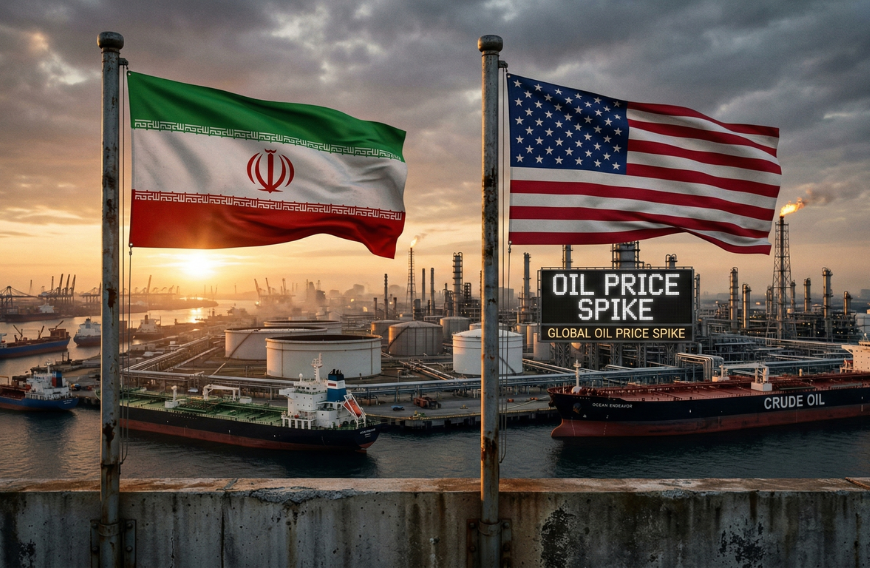
President Donald Trump is reviewing a wide range of emergency measures to curb skyrocketing energy prices as the expanding conflict between the United States, Israel, and Iran continues to paralyze global oil markets.
With crude prices surging past $100 a barrel and briefly touching $119, administration officials are racing to provide relief to American consumers and businesses.
The price spike follows more than a week of military action, dubbed “Operation Epic Fury,” which has effectively shuttered the Strait of Hormuz a vital maritime artery carrying 20% of the world’s daily oil supply.
The President signaled a potential shift in foreign policy on Monday, suggesting that his administration might lift energy-related sanctions on certain countries to inject more supply into the system. While he did not name specific nations, the move has sparked speculation regarding a temporary thaw in restrictions on Russian oil.
“We have sanctions on some countries. We’re going to take those sanctions off until the Strait is up,” Trump told reporters in Florida, emphasizing that the current volatility is a “temporary” situation.
Inside the West Wing, Chief of Staff Susie Wiles and adviser Stephen Miller are reportedly spearheading a task force to evaluate domestic levers. Options on the table include a federal gasoline tax holiday, which could lower costs at the pump by roughly 18 cents per gallon, and the suspension of the Jones Act to allow cheaper foreign vessels to transport fuel between U.S. ports.
Read: Oil and gold prices rise amid heightening US-Iran tensions
The administration is also in talks with G7 partners to coordinate a massive release from the Strategic Petroleum Reserve. However, with the reserve already at its lowest level since the 1980s, analysts warn that such a move may offer only symbolic relief if the regional war persists.
The economic stakes are compounded by political pressure.
With the November midterm elections approaching, Republicans are wary that sustained inflation and high cost-of-living concerns could erode their standing with voters.
While Trump has dismissed the price hikes as a “very small price to pay” for national security objectives, his team is moving with urgency to prevent a prolonged energy crisis reminiscent of the 1970s.
Industry experts remain skeptical of quick fixes. “The problem is that the options range from marginal to deeply unwise,” said one source familiar with the White House deliberations. Analysts note that until tanker traffic can safely resume through the Persian Gulf, the global market will remain in a state of high-alert, leaving the administration with few tools to bridge the supply gap.