



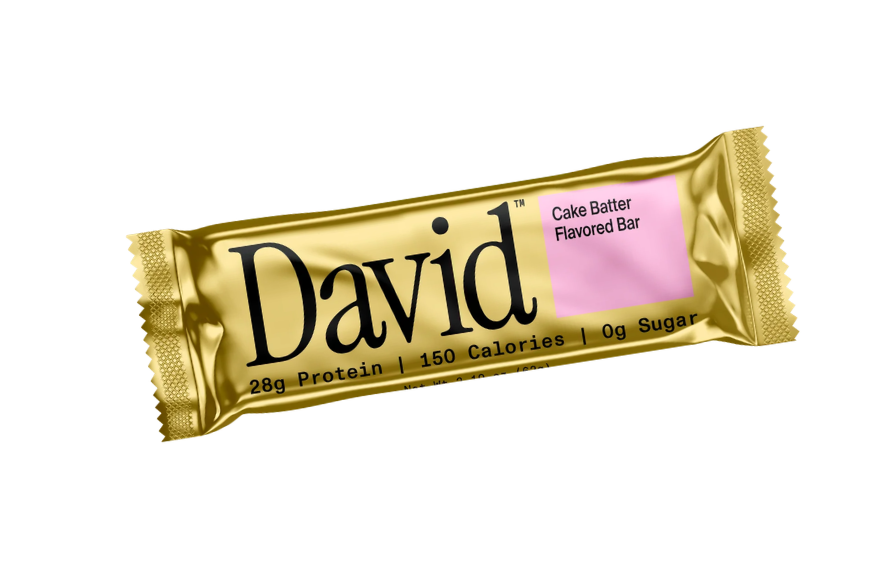
The promise of a “guilt-free” snack is facing a legal lawsuit a legal snag as David, a buzzy new entrant in the protein bar market, faces intense scrutiny over its nutritional claims. A recently filed class-action lawsuit alleges that the company’s flagship bars contain significantly more calories and fewer grams of protein than the bold lettering on its packaging suggests.
Founded by Peter Rahal the entrepreneur behind the RXBar brand David was marketed as a breakthrough in food science, claiming to offer a superior protein-to-calorie ratio. However, a legal complaint filed in federal court suggests these metrics may be more marketing fiction than biological fact. Independent laboratory testing cited in the suit revealed discrepancies that allegedly exceed the margins of error allowed by the Food and Drug Administration.
READ: Sony faces $2.7 billion class action lawsuit from UK PlayStation users (
The core of the dispute centers on a specialized ingredient: esterified propoxylated glycerol, or EPG. This is a modified plant-based fat substitute designed to move through the human body without being fully digested. While traditional fats contain approximately 9 calories per gram, EPG is engineered to contribute only 0.7 calories per gram.
Rahal has defended the brand’s labeling by citing this specific science. He contends that the 150-calorie count on the wrapper is an accurate representation of “metabolizable” energy the calories the body actually absorbs.
Rahal suggests that the lawsuit relies on traditional testing methods, like bomb calorimetry, which measure the total energy released when a substance is burned in a lab. He argues that while EPG may burn like a traditional fat in a laboratory setting, it does not provide that same energy to a human because the body lacks the enzymes to break it down.
READ: US states sue Trump administration over stoppage of SNAP (
The legal challenge touches on the “human” element of the breach of trust between a health-conscious public and a founder-led brand. For many consumers, these numbers are the foundation of strict medical or athletic regimens. When a product is sold on the merit of its macro-nutritional profile, any deviation feels like a calculated deception to those counting every gram.
Representatives for David maintain that EPG is “Generally Recognized as Safe” by the FDA and represents an innovation in food engineering. As the case moves forward, it serves as a reminder of the thin line between scientific advancement and transparent marketing. For now, the “world’s most perfect protein bar” must prove its worth in a court of law, as plaintiffs seek both damages and a corrective overhaul of the brand’s labeling practices.