



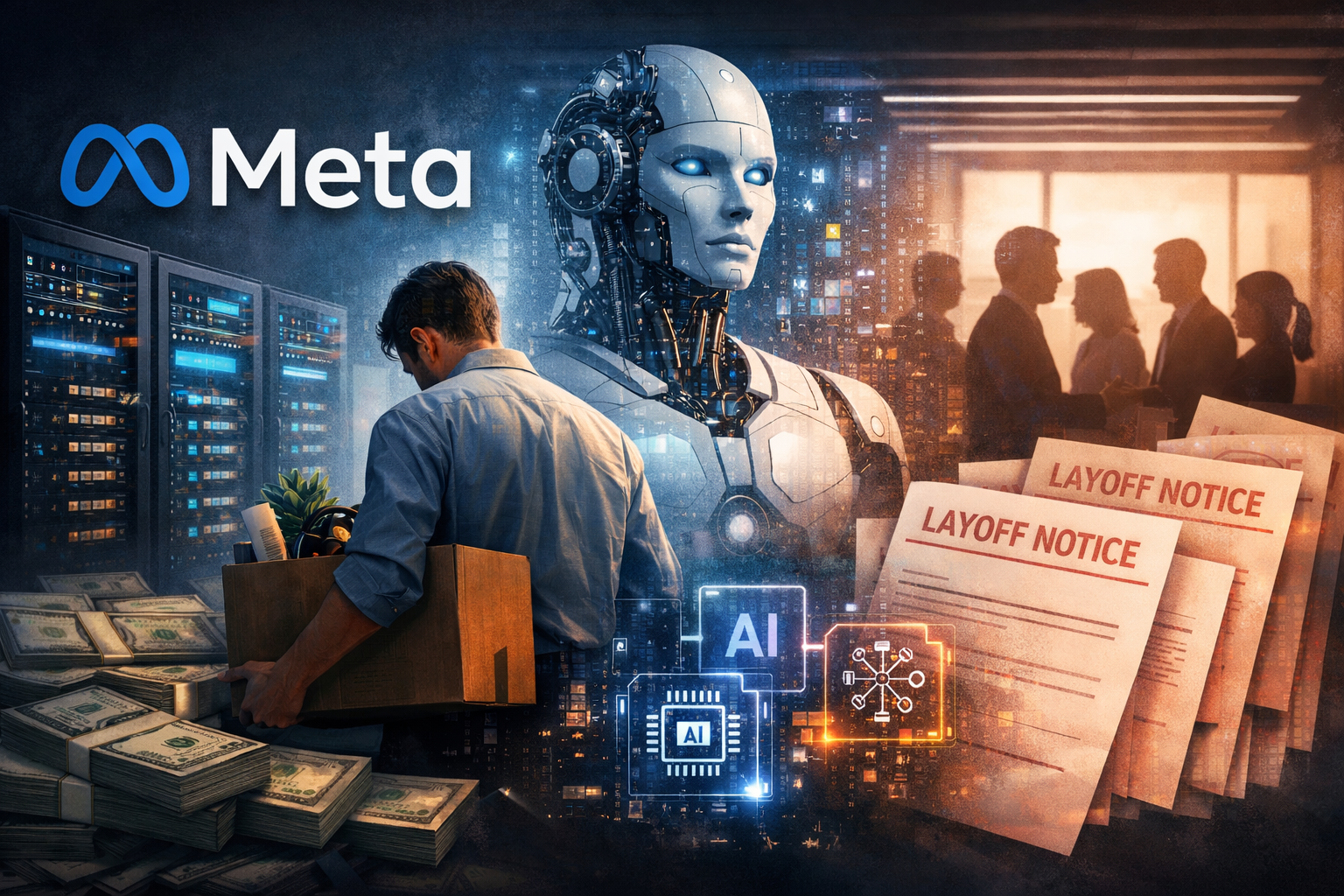
Meta is preparing for another major round of job cuts that could impact more than 20 percent of its workforce, or roughly 16,000 employees. The move is part of the company’s broader effort to manage the growing costs tied to artificial intelligence infrastructure while also pushing deeper into AI-driven operations, according to a Reuters report.
The layoffs reflect the company’s strategy to streamline its workforce as it invests heavily in building and maintaining the computing power needed for advanced AI systems. At the same time, Meta is increasingly relying on AI tools to handle a wider range of internal tasks, a shift the company believes will improve efficiency and reduce operational costs.
However, the report noted that no final timeline has been set for the potential layoffs, and the exact scale of the job cuts is still being debated internally. Citing people familiar with the discussions, the report said senior executives have recently informed other leaders about the possibility of workforce reductions and have asked them to start preparing for potential cuts.
READ: After 16,000 layoffs, Amazon may cut 14,000 more jobs in second phase (
Responding to questions about the report, Meta spokesperson Andy Stone dismissed the claims, saying, “This is speculative reporting about theoretical approaches.”
Earlier this year, in January, Meta had already eliminated over 1000 roles in its Reality Labs division.
READ: Meta layoffs in 2026 hit Reality Labs, spark wave of ‘Open to Work’ posts (
According to Meta’s latest regulatory filing, the company had nearly 79,000 employees as of December 31. If the company were to move ahead with a 20 percent workforce reduction, the cuts could affect roughly 16,000 employees.
Such a move would mark the largest round of layoffs at the company since Mark Zuckerberg announced sweeping restructuring during the company’s “year of efficiency” in 2022 and early 2023.
Meta previously cut about 11,000 jobs in November 2022, a move that eliminated roughly 13 percent of its workforce at the time. About four months later, the company followed up with another round of layoffs that affected nearly 10,000 employees.
Over the past year, CEO Mark Zuckerberg has pushed the company to move more aggressively in the race to develop generative artificial intelligence.
As part of that effort, Meta has been offering unusually large compensation packages to recruit leading AI researchers for its newly formed superintelligence team. Some of these offers are reportedly worth hundreds of millions of dollars spread over four years.
The company has also said it could invest up to $600 billion by 2028 to expand its data center infrastructure, a massive buildout aimed at supporting its growing AI ambitions.
READ: Inside Moltbook: The social platform Meta just acquired (
Meta’s spending on infrastructure is also expected to rise sharply. The company’s capital expenditure for 2026 is projected to reach as much as $135 billion, nearly double the $72 billion it spent the previous year.
At the same time, Meta has been expanding its artificial intelligence footprint through acquisitions and investments. The company recently acquired Moltbook, a social networking platform designed for AI agents, and is reportedly spending at least $2 billion to buy Chinese AI startup Manus.
Earlier, in June last year, Meta also invested $14.3 billion in Scale AI and brought its founder Alexandr Wang on board as chief AI officer, strengthening the company’s leadership as it ramps up its AI push.