



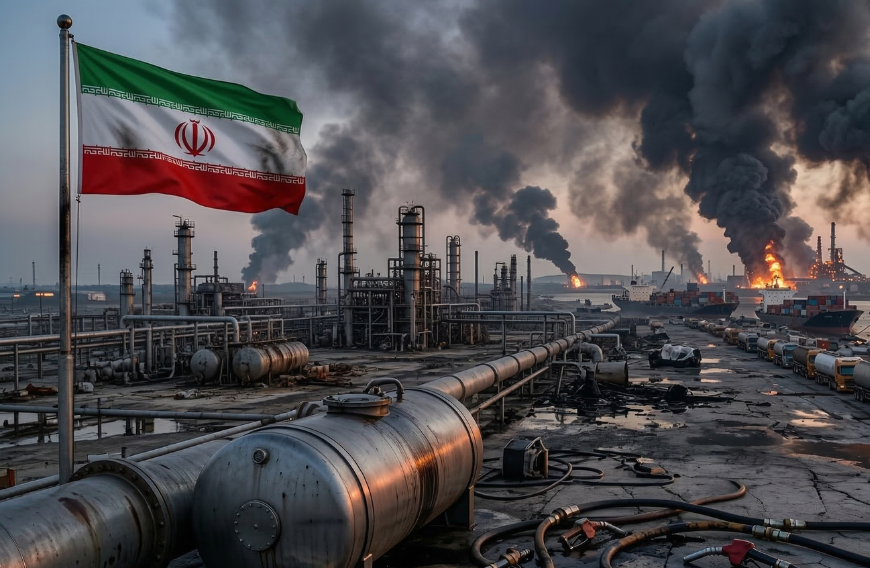
The conflict involving Iran has triggered one of the most significant energy price shocks of 2026, directly affecting global oil and gasoline markets and fueling inflation concerns across major economies.
Sharp increase in oil prices
Since the outbreak of war-related hostilities in late February and early March 2026, global crude oil prices have surged significantly. Reports show that Brent crude has risen above $105 per barrel, while U.S. oil futures have also climbed above $100 a barrel. This marks an increase of more than 40 % since the conflict began, reflecting deepening supply fears.
READ: India faces energy risks as Hormuz closure disrupts global oil flows (
The Strait of Hormuz, one of the world’s most crucial oil transit chokepoints, remains a focal point of the conflict. Attacks and retaliatory strikes have disrupted normal tanker traffic through the waterway, which typically carries roughly 20 % of global oil and LNG supplies. This has compounded market anxiety and propelled benchmark prices higher.
Disruptions to energy infrastructure and supply chains
The war has also affected broader energy infrastructure. In response to Iranian attacks in the Gulf region, including on oil tankers and export facilities, shipping has become riskier and more costly, with some ships delayed or rerouted. Global markets have interpreted these disruptions as potential supply shortages, driving prices higher.
Stock markets have reacted to energy volatility as well. Major indexes, including the S&P 500, have shown signs of weakness, with investors wary of sustained higher energy costs feeding into inflation and dampening economic growth.
Coordinated stockpile releases
In response to rapidly rising prices, the International Energy Agency (IEA) announced a coordinated release of emergency oil reserves, over 400 million barrels of crude and petroleum products, the largest such action since the agency was founded. Member nations from Asia, Europe, and the Americas are contributing to this pool in an effort to alleviate short-term tightness in oil markets.
Despite the scale of the stockpile release, prices remain elevated, underlining how potent the supply disruption fears are compared with past geopolitical shocks.
Economists are warning that the surge in energy prices could spill over into broader price levels. Rising oil costs typically translate into higher gasoline prices at the pump, with consumers already seeing increases in many regions. Higher fuel prices also feed directly into transport costs, freight charges, and even food prices, since agricultural production relies heavily on fuel and fertilizer inputs.
Market analysts have revised growth and inflation forecasts as a result. Major financial institutions, including Goldman Sachs and others, have reassessed long-term oil price expectations for 2026, adjusting for the potential that conflict disruptions could persist and keep crude prices elevated well above earlier projections.
Central banks are also monitoring the situation closely; persistent energy inflation can complicate monetary policy decisions, potentially slowing efforts to reduce overall price pressures in national economies.
The conflict’s effect on oil markets has drawn international political attention. U.S. officials have called on allies to help secure shipping lanes, particularly the Strait of Hormuz, but some major partners have been reluctant or unable to commit naval forces in a sustained way.
READ: Could Iran tensions threaten the Strait of Hormuz again? (
European energy ministers are meeting to discuss ways to curb rising energy costs domestically, including potential interventions or support mechanisms for consumers facing higher prices at the pump and for heating fuels.
Analysts continue to warn that the situation remains highly fluid. If the conflict escalates further, particularly if more energy infrastructure becomes damaged or if export routes are shut down, prices could remain elevated or climb even higher.
Even if strategic reserves and coordinated releases dampen immediate spikes, the fundamental issue — a reduced or threatened flow of oil and liquefied gas from one of the world’s primary producing regions — ensures that energy prices will remain sensitive. Central banks, governments, and consumers are now paying the economic cost of geopolitical instability directly at the pump and in broader cost structures.