



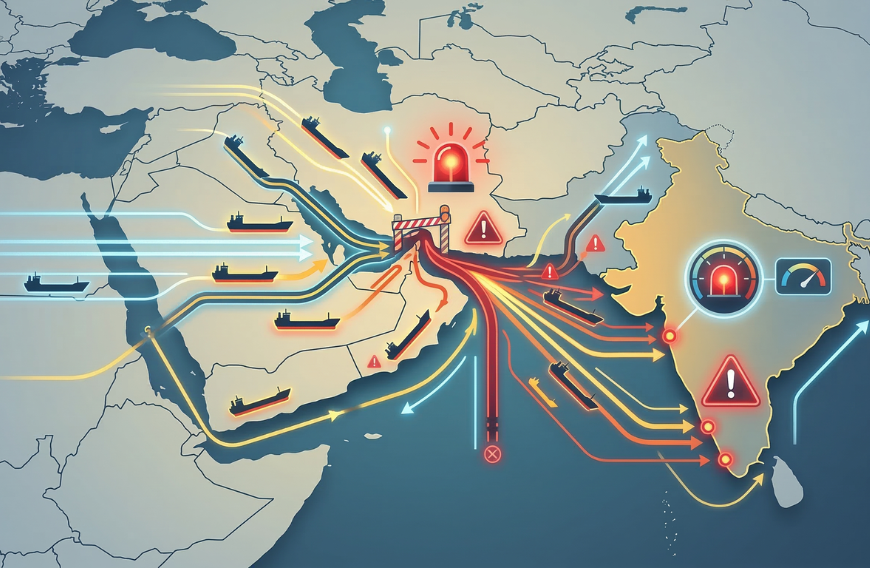
The U.S.-Israel-Iran war began when the United States and Israel attacked Iran on Feb. 28, 2026, triggering Iran to close the Strait of Hormuz — the world’s most critical oil chokepoint. Iran, through the Islamic Revolutionary Guard Corps, declared the strait closed on March 2, attacked vessels and threatened any ships attempting transit, leading to a near-total halt in commercial traffic.
Around March 6, 2026, amid heightened conflict, safe passage through the Strait of Hormuz was heavily restricted. Iran permitted vessels linked to China and Russia and, reportedly, nations that have expelled U.S. or Israeli ambassadors. Although the strait is a critical international waterway, ships from countries deemed hostile — including the United States and Israel — face a high risk of disruption, prompting many major shippers to suspend operations.
As of March 10-11, 2026, tanker traffic had dropped to a trickle — often just two to 13 vessels per day, mostly Iranian-linked “dark” or shadow fleet ships — compared with the normal average of more than 150 daily transits. Hundreds of tankers are anchored outside the strait, insurers have canceled coverage, and international carriers have suspended operations. Iran continues limited exports, including shipments to China, sometimes via the Jask terminal south of the strait, but Gulf exporters are largely blocked.
The Strait of Hormuz, between Iran and Oman, normally handles about 20.9 million barrels per day of crude oil, condensate and petroleum products, according to U.S. Energy Information Administration data for early 2025. That represents roughly 20% of global petroleum liquids consumption and about one-quarter of all seaborne oil trade. Crude oil accounts for about 15 million barrels per day — roughly 34% of global crude trade — with the remainder refined products.
Key exporters include Saudi Arabia, which accounts for about 37% of flows through the strait, followed by Iraq at 23%, along with the United Arab Emirates, Iran and Kuwait. Most shipments head to Asia, with China receiving about 38% of Hormuz exports.
A full or prolonged closure of the Strait of Hormuz would trap large volumes of oil inside the Persian Gulf. Spare export capacity through bypass pipelines is limited. The United Arab Emirates’ Fujairah pipeline can move about 1.8 million barrels per day, while Saudi Arabia’s East-West pipeline has some additional capacity but not enough to offset a major disruption. Regional spare production capacity is estimated at about 2.6 million barrels per day. Gulf producers — including Saudi Arabia, Iraq, the United Arab Emirates and Kuwait — have already begun precautionary output cuts because of storage constraints and blocked exports.
READ: Could Iran tensions threaten the Strait of Hormuz again? (
Impact on world oil supply
Immediate supply shock: About 15 million to 20 million barrels per day of crude oil and petroleum products are at risk, equivalent to roughly 15% to 20% of global supply. Analysts say such a disruption at a single chokepoint would exceed the scale of past crises, including the oil shocks of the 1970s and supply disruptions linked to the 2022 Russia-Ukraine war.
Price response: Brent crude has surged from about $70-$72 per barrel before the war to more than $100. Intraday prices have reached nearly $119, with recent settlements ranging from about $98 to $103. Some analysts warn prices could climb above $135 per barrel if the closure lasts for months, or even exceed $150 in severe scenarios. The disruption could also affect liquefied natural gas markets because Qatar — which accounts for roughly 20% of global LNG exports — ships most cargo through the strait.
Oil prices above $100 per barrel are expected to weigh heavily on global economic growth, particularly in energy-importing countries. Oil-deficit economies such as India are especially vulnerable because a large share of their energy imports moves through the strait.
Broader economic effects: Higher oil prices typically push up global inflation by raising fuel, transportation and goods costs while slowing economic growth. Europe and Asia could face the largest supply pressures, while the United States — now a major oil producer and exporter — is relatively more insulated.
Efforts to reopen the waterway could require U.S.-led naval escorts for commercial vessels, a concept reportedly under discussion as “Operation Epic Escort.” However, the risk of naval mines and continued conflict could complicate such efforts. Short disruptions lasting one to two weeks could likely be managed through existing inventories and rerouted shipments, but a prolonged closure could trigger a global energy crisis and recession-level economic impacts.
Alternative routes and production increases cannot quickly replace the lost supply. Releases from strategic petroleum reserves coordinated by the International Energy Agency, or adjustments by OPEC+, could provide partial relief but would not fully offset the disruption.
In summary, the closure of the Strait of Hormuz — driven by the ongoing conflict — poses one of the largest oil supply threats in modern history. Asian economies, including India, are among the most exposed because a significant portion of their oil and natural gas imports pass through the waterway. While India maintains strategic reserves that could cushion immediate shortages, the main impact would likely come through higher prices. The duration of the closure — and any military effort to reopen the strait — will determine the severity of the global economic fallout. Markets remain highly sensitive to new attacks or signs that shipping could resume.
Impact on India
India, the world’s third-largest crude oil importer and consumer, uses about 5 million to 5.6 million barrels per day of refined petroleum products and imports roughly 88% of its crude oil needs. About 50% to 53% of India’s crude — or roughly 2.5 million to 2.8 million barrels per day as of February 2026 — comes from Middle Eastern suppliers including Iraq, Saudi Arabia, the United Arab Emirates, Kuwait and Qatar, most of which rely on shipments through the Strait of Hormuz. India’s exposure has increased in recent months as imports from Russia have declined.
The potential impact of the current crisis can be assessed in several areas.
Short-term supply: In the near term, India could manage supply disruptions for several weeks using a combination of strategic and commercial inventories. India’s Strategic Petroleum Reserves and commercial stocks together cover about 50 days of demand, including roughly 30 days of onshore inventories and about 9.5 days of net imports in strategic reserves. Oil companies hold additional stocks, with some estimates suggesting total coverage of up to 70 days or more. India has also diversified supplies in recent years. Imports from non-Hormuz sources — including Russia, the United States, West Africa and Venezuela — now account for a significant share of total supply, and India is working to increase those volumes.
Price and economic effects: Higher global oil prices are expected to raise domestic fuel costs. A surge in Brent crude, combined with higher freight and war-risk insurance premiums, could increase prices for petrol, diesel and liquefied petroleum gas. India has already experienced secondary impacts in energy markets, including higher liquefied natural gas prices and rising costs for domestic and commercial LPG cylinders. Higher energy costs could widen India’s current account deficit, push up inflation and increase operating costs in sectors such as transportation and agriculture. Government officials say the country remains “comfortable” with current supply levels and is closely monitoring the situation. Temporary waivers allowing continued purchases of Russian oil could help cushion the impact.
READ: Oil and gold prices rise amid heightening US-Iran tensions (
LNG and LPG vulnerability: India’s dependence on LNG and LPG imports from suppliers such as Qatar, the United Arab Emirates and Oman — most of which ship through the Strait of Hormuz — creates additional vulnerability if the disruption continues for an extended period.
India’s broader energy diversification strategy, including expanded sourcing from about 40 countries and increased purchases from Russia, provides a stronger buffer than in previous crises. However, prolonged disruption could still lead to significantly higher import bills and sustained economic pressure.
Amid the crisis, diplomatic contacts between India and Iran have intensified. Iranian Ambassador to India Mohammad Fathali said Iranian authorities were considering allowing some Indian vessels to pass through the Strait of Hormuz as a goodwill gesture during ongoing discussions between the two countries. Indian officials have pointed to diplomatic outreach, including a phone call between Prime Minister Narendra Modi and Iranian President Masoud Pezeshkian and talks between External Affairs Minister S. Jaishankar and Iran’s foreign minister.
Two Indian-flagged LPG carriers — Shivalik and Nanda Devi — carrying a combined cargo of about 92,700 metric tons of liquefied petroleum gas successfully crossed the Strait of Hormuz early on March 14, 2026.
Limitations
The passage of the two vessels does not represent a full reopening of the strait. Iranian authorities have described the move as a limited exception for Indian ships and a goodwill gesture reflecting the historical relationship and shared interests between the two countries.
More broadly, the closure of the Strait of Hormuz — driven by the ongoing conflict — represents one of the most significant threats to global oil supply in modern history. Asian economies, including India, are among the most exposed. While India’s reserves and diversified supply sources could prevent immediate shortages, the main impact would likely come through higher prices and increased market volatility. The duration of the disruption — and any military effort to reopen the strait — will determine the severity of the economic impact.