



By Jayujyoti Mullick
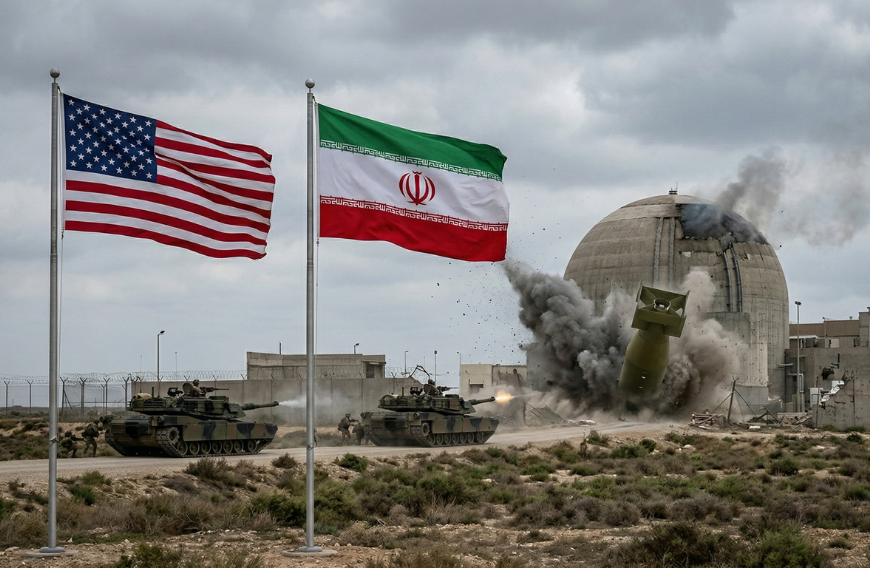
U.S. President Donald Trump issued a stark warning against Iran, saying that the United States could “finish off what’s left” and describing Iran as a “terror state.” Trump also criticized NATO allies for their lack of support in ongoing military actions. The statement comes amid escalating tensions in the Middle East, reflecting a significant intensification in rhetoric surrounding the conflict.
Trump’s remarks appeared to target both Iran and Western allies, particularly members of NATO, many of whom have shown reluctance to engage in direct military involvement. By referring to them as “non-responsive allies,” Trump signaled frustration over what he views as an unequal sharing of responsibilities. His social media post on Truth Social also suggests a willingness by the United States to act independently in the ongoing conflict, while simultaneously attempting to pressure partners into taking a more active role.
READ: OpenAI weighs NATO contract for unclassified networks after Pentagon deal (
The remarks were made as U.S. military forces, alongside Israeli operations, reportedly continue targeting Iranian positions. According to reports, strikes have focused on strategic and military infrastructure, including sites linked to missile capabilities in Iran. These developments point to an active and evolving conflict, rather than a hypothetical scenario, raising concerns about further escalation across the region.
A critical factor in the situation remains the Strait of Hormuz, a vital maritime route through which a significant portion of the world’s oil supply passes. Any disruption in this region carries immediate global economic implications. Iran’s actions in response to U.S. operations, particularly around the Strait, have heightened tensions, with many countries expressing concern over the potential for rising oil prices and disruptions to international trade. Trump’s remarks suggest that securing such a strategic chokepoint could become a key priority for the United States and its allies.
At a broader level, Trump’s rhetoric reflects a strategic approach that combines military pressure with diplomatic signaling. On one hand, the language of “finishing off” Iran indicates a willingness to intensify military operations. On the other, his criticism of allies underscores an effort to reshape coalition dynamics and push for greater participation from partner nations.
READ: US ‘disrespectful’ stance on Greenland alarms NATO allies (
However, responses from European and NATO countries have been cautious. Several governments have expressed concern over the growing risk of a wider regional conflict and the lack of consensus around military intervention. This divergence highlights increasing strain within traditional alliances and raises questions about the future of coordinated Western foreign policy.
Trump’s assertion that the United States does not necessarily require allied support further complicates the situation. While projecting confidence in American military capabilities, it contrasts with his simultaneous calls for greater allied involvement. This dual messaging can be interpreted both as a demonstration of strength and as a negotiating tactic.
Overall, Trump’s warning reflects a convergence of military, political, and economic pressures. It underscores rising tensions with Iran, exposes divisions among Western allies, and signals the possibility of further escalation in an already volatile Middle East.