



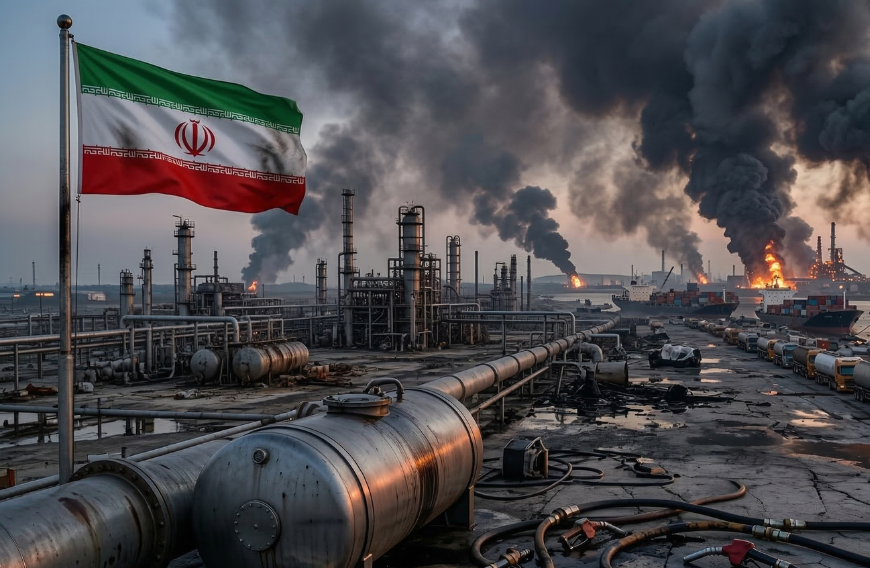
The current state of the global energy markets is precarious, as a string of attacks on vital oil and gas facilities in the Middle East has caused instability. The recent spate of strikes targeting key infrastructure points across the region has sent shockwaves throughout the industry. This upheaval comes at an already volatile time for world economies, with fears mounting over potential ripple effects beyond just energy production.
According to Oil Price, the current price of oil has increased to $111 per barrel following the multiple attacks. The increased number of strikes in one of the world’s major gas and oil reserve regions has spiked the fear of global energy supply disruption. Escalating such conflicts like that in the South Pars gas field of Iran, one of the world’s largest gas fields and Iran responding with retaliatory missiles. Iran carried out drone attacks on gas and oil infrastructure across the Gulf, including reservoirs in Qatar, Saudi Arabia, and the United Arab Emirates.
Earlier, on March 18, President Donald Trump provisionally withdrew the Jones Act to lower the price pressures. In the interim, this 60-day waiver of the statute will pave the way for foreign-flagged vessels to carry in-demand commodities, including coal, crude oil and fertilizer to the United States. According to analysts, this move might have a “limited effect”. However, a JPMorgan Chase estimate suggests it could save the East Coast drivers up to 10 cents per gallon on gas and diesel.
READ: India faces energy risks as Hormuz closure disrupts global oil flows (
Among the ongoing attacks on oil and gas refineries, the most significant incidents show damage to Qatar’s Ras Laffan industrial complex, the largest liquefied natural gas export facility in the world. According to official sources, there has been extensive damage leading to temporary shutdowns, which might further tighten global supply.
The war has already raised global concern due to the ongoing disruption at the Strait of Hormuz, a narrow but major shipping route through which roughly 20 percent of the world’s oil-carrying vessels pass.
Atlantic basic benchmark, Brent Crude went up to above $119 per barrel for a brief period of time during volatile trading and thus later settled lower. On the other hand, the West Texas Intermediate (WTI) crude is hovering near the $100 per barrel rate.
Analysts fear that oil prices could go even higher if the ongoing attacks continue or even expand. Some projections suggest oil could approach $150 per barrel for an out-lasting war scenario in the Middle East.
The economic wave of the war is already becoming visible. The rise in fuel costs is fuelling global inflation concerns and adding further pressure on the global financial market. The stock market has shown signs of instability due to investors weighing on the potential for ongoing disruptions in the energy industry.
In Washington, the administration is finding ways to bring stability to markets and ease the ongoing price pressures. The administration is weighing options such as the release of strategic oil reserves and making adjustments to the shipping regulations to meet the supply flow.
Though these measures are in talks, at present, uncertainty remains high. In the war. Energy infrastructures continue to be a primary target as the risk of further escalation persists. For now, markets remain unstable, and consumers around the world may be affected by higher fuel and energy costs.