



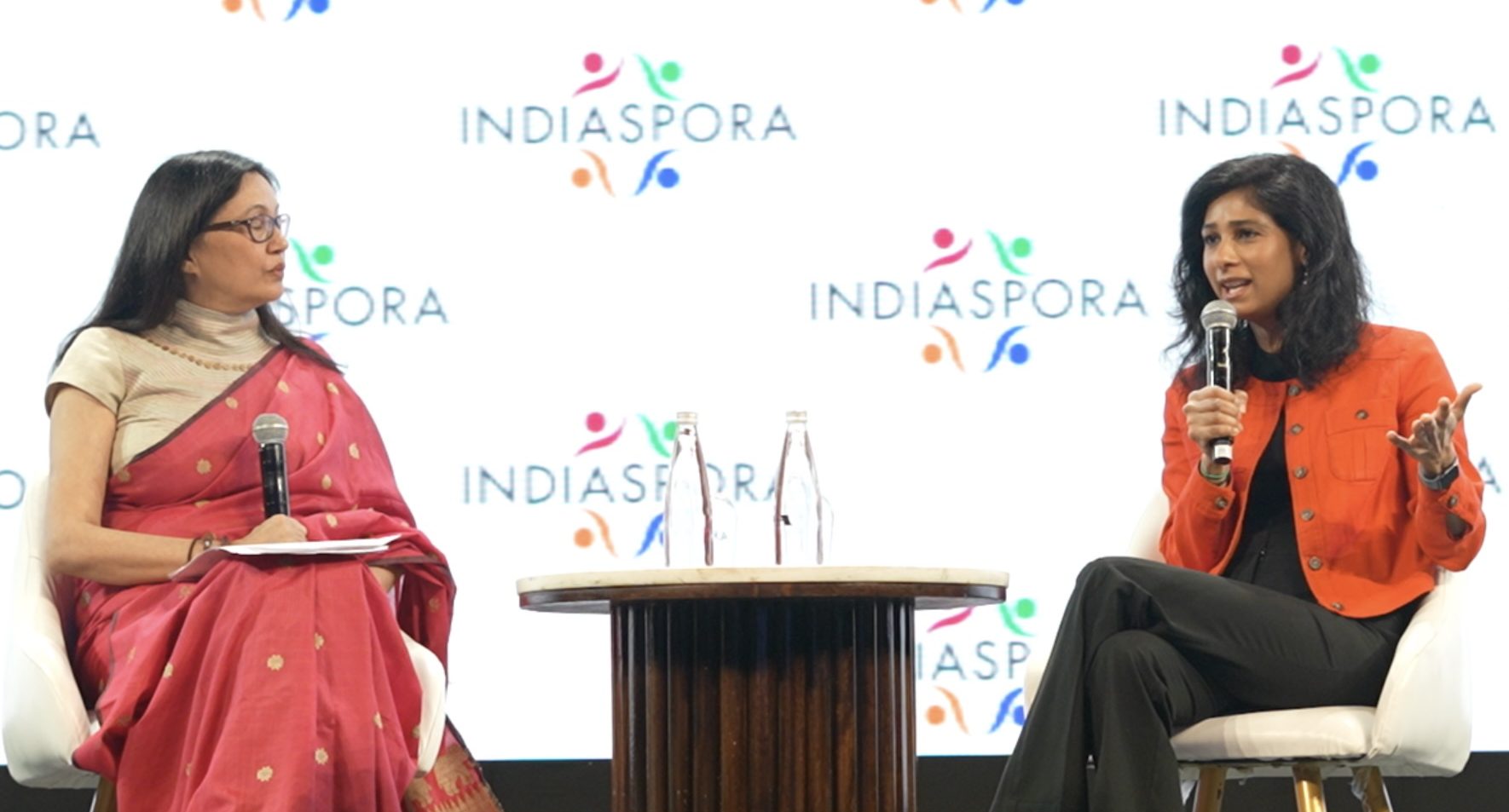
The Indiaspora Forum 2026 officially kicked off on March 22 at the JW Marriott Prestige Golfshire on the outskirts of Bengaluru, marking the second edition of the annual gathering following its successful debut in Abu Dhabi and Dubai. Set against the scenic backdrop of Nandi Hills, the four-day forum is bringing together influential leaders, innovators, and changemakers from across the world to engage in discussions on some of the most pressing global issues.
Organized by the US-based nonprofit Indiaspora, the convening aims to foster collaboration across sectors including artificial intelligence, climate and sustainability, philanthropy and social impact, geopolitics and trade, and the evolving role of the global Indian diaspora. The forum opened with a welcome dinner on Sunday, featuring a 90-minute performance by musical legend Usha Uthup.
It was followed by the start of conference sessions on Monday with curated networking and cultural experiences continuing over the next two days. The momentum is set to carry forward with the Indiaspora Global AI Summit on Wednesday, March 25, at the same venue.
The opening plenary set the tone for the forum, with MR Rangaswami, Founder & Chairman of Indiaspora, delivering a keynote address highlighting the growing influence and significance of the Indian diaspora globally. He noted that in a recent U.S. election cycle, more than 350 Indian-origin candidates ran for public office. He added that the approximately five million-strong Indian diaspora in the United States is increasingly emerging as a political force.
Emphasizing the forum’s core philosophy, Rangaswami said, “We do want this event to be a non-transactional event. This is not about selling to each other. This is not about pitching. It’s really about getting to know and understand and enhance your field of knowledge and enhance more of what you know about other things going on in the world.”
Speaking in the opening panel, moderated by Raleigh, NC, investor Himanshu Shah laid out an optimistic, if unsparing, view of India’s economic future: the country’s greatest opportunity lies not in rhetoric, but in execution.
Shah argued that India’s potential is visible in the industrial and skills infrastructure now taking shape beneath the surface, even if the broader picture can still appear uneven. Pointing to manufacturing clusters and the government’s emerging support for new industrial zones, he said the deeper story is one of capacity building.
RELATED: Indiaspora highlights diaspora’s role in shaping India’s rise (March 23, 2026)
“India is full of ideas. It’s the execution of it. That is going to play a bigger role over here,” Shah said. “You also have just amazing improvement going underneath on the skills improvement. Because again, a lot of manufacturing has not been in India.”
A key highlight of the opening plenary was the release of “India and its Diaspora: Partners in Progress,” a major new report examining the expanding role of the global Indian diaspora. The report emphasizes how a community of more than 35 million people of Indian heritage across over 200 countries, collectively earning an estimated $730 billion annually, is evolving into a powerful force shaping India’s future across business, culture, philanthropy, innovation, and the arts.
Moving beyond its traditional identity as a source of remittances, the diaspora is increasingly contributing investment, knowledge, technology partnerships, and global networks that are strengthening India’s economic growth and international standing. The report also highlights strong optimism among diaspora members, many of whom envision India emerging as a leading global economy by 2047, driving innovation, reducing inequality, and improving quality of life.
However, the report also points to structural barriers that continue to limit deeper engagement. Drawing insights from more than 200 leaders across 24 countries, it outlines practical recommendations for policymakers and diaspora leaders to unlock greater collaboration and long-term impact. Notably, “Partners in Progress” is positioned as the first comprehensive report offering actionable strategies across economic, cultural, social, and philanthropic domains.
The afternoon plenary shifted focus to philanthropy – “The Next Billion in Giving,” with Rohini Nilekani as the keynote speaker. A prominent philanthropist and chairperson of Rohini Nilekani Philanthropies, she underscored the importance of optimism and collective action.
“Hope is my new religion,” she said, adding, “for me, hope is that positive energy that propels right action which allows us to see abundance where other people see only scarcity, which inspires us to make the change we want to see in the world. It gives me the energy personally to do small things which may not make a big difference but make a small difference and it moves me out of stasis, it moves me out of inaction, it moves me out of despair. So, I do believe that if we practice hope together, we can strengthen a societal muscle to build the future that we want. No matter what anybody tells us, the future is not yet written, we all will have to create it together.”
Another highlight on Monday was a fireside chat featuring India-born Gita Gopinath, a Harvard economist and the first deputy managing director of the International Monetary Fund.
The forum, held from March 22 to 25, will continue with a vibrant series of plenary sessions, breakout discussions, and networking opportunities designed to encourage dialogue and collaboration among leaders from technology, business, policy, philanthropy, and the arts.
With its focus on meaningful engagement rather than transactional exchanges, Indiaspora Forum 2026 is positioning itself as a platform to deepen understanding, build connections, and shape conversations that extend far beyond the event itself.
Indiaspora is a nonprofit community of powerful global Indian leaders from diverse backgrounds and professions who are committed to inspiring the diaspora to be a force for positive impact by providing a platform to collaborate, engage, and catalyze social change.