



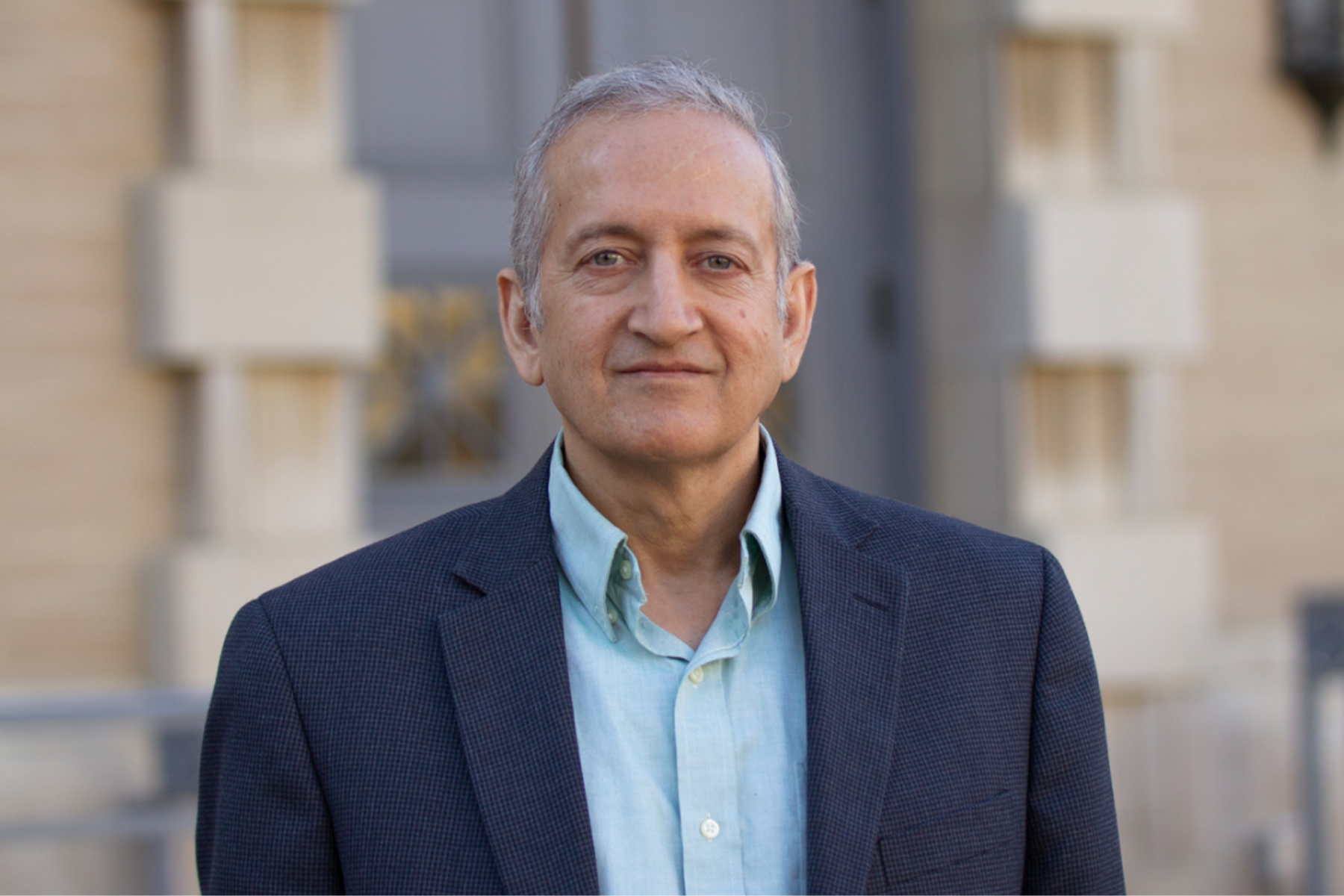
A world renowned Indian American physicist is returning to his academic roots to spearhead a new era of scientific discovery in his home country. Jainendra K. Jain, a distinguished professor at Pennsylvania State University, has been named the founding director of the Lodha Theoretical Physics Institute (LTPI) in India.
The appointment, announced by the Lodha Foundation, marks a full circle moment for Jain, who rose from a rural village in Rajasthan to become a titan of theoretical physics. As director, he will oversee the establishment of a world class research hub designed to foster international collaboration and mentor the next generation of scientific minds.
“This is a very special opportunity for me to educate and nurture a new generation of scientists in my country of birth,” Jain said.
Jain’s journey began in Sambhar, Rajasthan, where he cultivated a passion for physics despite limited resources. He earned his bachelor’s degree from Maharaja College in Jaipur and a master’s from the Indian Institute of Technology (IIT) Kanpur.
His path was nearly stalled by a childhood accident that left him on crutches, but a locally developed “Jaipur Foot” prosthesis allowed him to continue his education and eventually pursue a doctorate at Stony Brook University in the United States.
Read: Indian American researchers join elite class of future science leaders
Now a naturalized U.S. citizen, Jain has spent decades at the forefront of condensed matter physics. He is best known for his 1988 discovery of “composite fermions,” exotic particles that explain the fractional quantum Hall effect.
This work, often referred to as “Jain states,” revolutionized the understanding of quantum matter and earned him the 2025 Wolf Prize in Physics, one of the field’s highest honors.
The new institute in India aims to align with the “Viksit Bharat” initiative, a government vision to transform India into a developed nation by 2047. By creating an ecosystem of innovation, the LTPI intends to bridge the gap between Indian talent and global scientific standards.
While leading the Indian institute, Jain will maintain his faculty position and research program at Penn State, where he has taught since 1998. His dual role highlights the increasing mobility and influence of the Indian American scientific diaspora in strengthening bilateral academic ties.
“We hope to establish India as a leading center for high quality research,” said Ashish Kumar Singh, chief mentor at the Lodha Foundation.
Jain’s appointment is seen as a pivotal step in that mission, blending his deep American academic experience with an intimate understanding of the Indian educational landscape.