



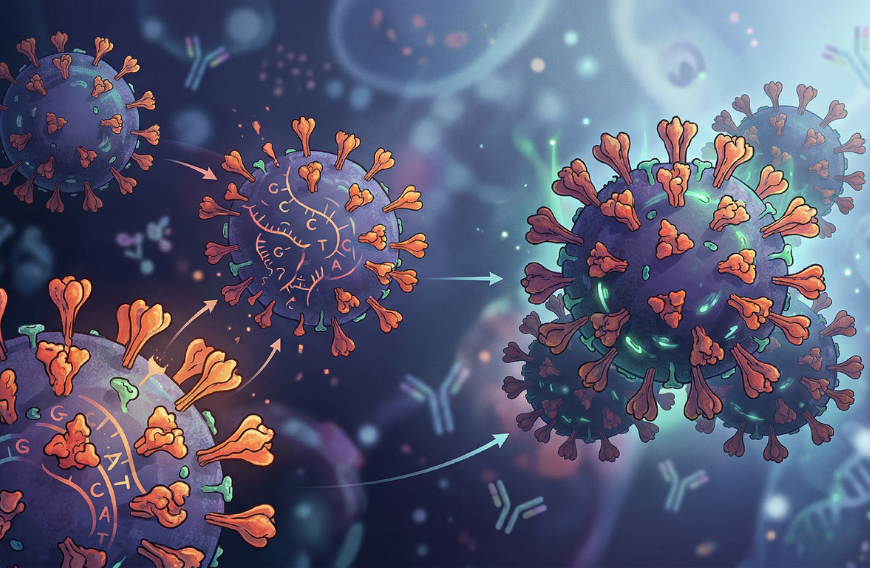
A newly identified, highly mutated coronavirus variant, BA.3.2, informally dubbed “Cicada”, has now been detected in the United States. While overall COVID-19 trends continue to decline nationwide, this variant is drawing attention for how genetically different it is from earlier strains.
Here’s what to know about the Cicada variant and what its emergence could mean for your health in the months ahead.
The BA.3.2 variant appears to spread much like earlier versions of the coronavirus, mainly through inhaling infectious respiratory particles. The risk is highest during close, face-to-face contact, especially over longer periods with someone who is infected.
Though less common, transmission can also happen if you touch a contaminated surface and then touch your eyes, nose, or mouth.
The variant carries more than 70 mutations, which is why it is considered highly contagious. These changes may help it slip past antibodies from prior infections or older vaccines, meaning it could still spread even in populations with relatively high levels of existing immunity.
READ: Rooted, not restricted: How Neha Shah is rewriting diet and wellness for the Indian diaspora (February 26, 2026)
At the same time, some lab studies suggest that BA.3.2 may show lower infectivity in certain cell types compared to other dominant strains such as XFG, also known as Stratus.
“Cicada” is not an official scientific name used by the World Health Organization. It is an informal label that reflects the variant’s unusual emergence pattern, drawing a comparison to the lifecycle of cicadas.
Much like cicadas that stay underground for years before appearing suddenly, BA.3.2 seems to have evolved from an earlier BA.3 lineage that had not been seen in circulation since early 2022. The variant has now been detected across at least 25 to 29 U.S. states, as well as Puerto Rico.
Most of these detections have come through wastewater surveillance and monitoring of international travelers. Some of the earliest signals were picked up through airport screening, including at John F. Kennedy International Airport.
Reported detections so far include:
- West: California, Hawaii, Idaho, Nevada, Utah, Wyoming
- Midwest: Illinois, Michigan, Missouri, Ohio
- South: Florida, Louisiana, Maryland, South Carolina, Texas, Virginia
- Northeast: Connecticut, Maine, Massachusetts, New Hampshire, New Jersey, New York, Pennsylvania, Rhode Island, Vermont
Symptoms linked to BA.3.2 appear broadly similar to those seen with earlier Omicron strains. Common signs may include a very sore throat, mild fever or chills, a runny or blocked nose, dry cough, fatigue, and body aches.
When to seek medical care
You should seek immediate medical attention if you or someone around you develops any of the following:
- Trouble breathing, even at rest, or difficulty speaking in full sentences
- A high fever of 102°F or more that lasts longer than three days
READ: US population growth hits slowest pace since Covid-19 as immigration falls (March 26, 2026)
- Oxygen levels dropping below 94 percent
- Persistent pain or pressure in the chest or upper abdomen
- Sudden confusion, disorientation, or unusual behavior
- Difficulty waking up or staying alert
- Pale, gray, or bluish skin, lips, or nail beds, depending on skin tone
- Inability to keep fluids down due to ongoing vomiting or diarrhea
- For children, urgent care is needed if you notice:
- Dry mouth, crying without tears, or fewer wet diapers than usual
- Unusual drowsiness, difficulty waking, or extreme irritability
- Visible effort while breathing, such as using chest muscles
Precautions to take
To reduce the risk of infection, guidance from the Centers for Disease Control and Prevention and the World Health Organization recommends:
- Improving indoor ventilation by opening windows or using air filtration
- Wearing well-fitting N95 or KN95 masks in crowded indoor spaces
- Washing hands regularly and covering your mouth when coughing