


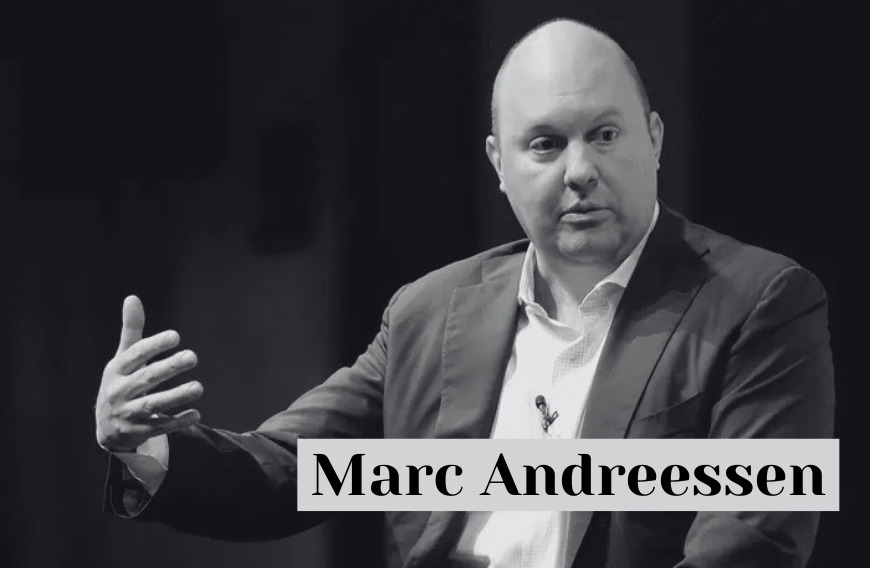
To begin, Marc Andreessen has earned the right to be taken seriously, as a co-founder of Andreessen Horowitz and an early architect of the modern internet through Netscape, where his track record in identifying and backing transformative ideas is widely recognized and difficult to dispute.
When someone of his stature makes a sweeping claim about human behavior, particularly one that challenges centuries of philosophical and psychological thought, it invites not only attention but careful examination.
Andreessen’s recent assertion that he strives for zero introspection is provocative, yet it rests on a definition of introspection that appears to conflate it with rumination, self-doubt, and emotional paralysis. If his critique is directed at unproductive dwelling on the past, then it addresses a legitimate concern, since rumination can trap individuals in cycles of repetitive negative thinking that impair both judgment and action. However, to equate this with introspection is to misunderstand a far more disciplined and constructive process.
Introspection, properly understood, is the deliberate and structured examination of one’s thoughts, decisions, and behaviors with the purpose of refinement and improvement. It is not an exercise in dwelling on past mistakes, but rather a method for extracting insight from them in order to inform future choices. In this sense, introspection functions not as a distortion loop, but as a corrective mechanism that allows individuals to identify blind spots, challenge assumptions, and avoid the repetition of error. Without such a mechanism, forward momentum may continue, but it does so without calibration, increasing the likelihood that mistakes will persist beneath the surface of apparent progress.
Andreessen’s invocation of history further complicates his argument, particularly in his suggestion that the great figures of the past were not introspective. This claim raises immediate questions when one considers the intellectual traditions that have shaped human thought. The philosophy of Socrates is grounded in the idea that an unexamined life lacks meaning, while the works of Plato and Aristotle reflect systematic inquiry into ethics, reasoning, and the nature of human behavior.
The writings of Marcus Aurelius, particularly in his Meditations, reveal a sustained practice of self-reflection directed toward moral and intellectual discipline. Similarly, the teachings of Siddhartha Gautama center on awareness of thought and the cultivation of insight, while the notebooks of Leonardo da Vinci demonstrate an enduring engagement with both external observation and internal reasoning. To suggest that such figures achieved greatness without introspection is difficult to reconcile with the historical record.
At the same time, it is important to acknowledge that Andreessen’s argument contains an element of truth, since excessive self-examination can become counterproductive when it devolves into rumination. Psychological research distinguishes between these two processes by emphasizing that rumination is repetitive, passive, and often emotionally charged, whereas introspection is intentional, bounded, and oriented toward actionable insight. The failure to maintain this distinction leads to a false equivalence that risks discarding a valuable cognitive tool in response to a legitimate but separate concern.
The consequences of abandoning introspection become particularly evident when examined through the lens of decision making and cognitive distortion. In collaborative work with Timothy Hedley, we have described what may be understood as a telescope of rationalization, a framework that explains how individuals gradually lose objectivity not through a single decisive act, but through a progressive narrowing of perspective. At the widest point of this telescope, individuals are able to consider the full range of relevant information, including risks, consequences, and ethical constraints, thereby grounding their decisions in a broad and balanced view of reality. As rationalization begins to take hold, however, this field of view narrows in subtle ways, as certain facts are minimized, others are selectively emphasized, and inconsistencies are overlooked or reinterpreted.
Over time, this narrowing continues until the individual is no longer engaging with reality in a comprehensive manner, but is instead operating within a self-constructed narrative that feels coherent and justified despite its distortions.
What makes this process particularly insidious is that it does not require intentional wrongdoing, but rather unfolds through incremental adjustments in perception that go unchallenged. In the absence of introspection, there is no mechanism by which the individual can step outside this narrowing frame, reassess underlying assumptions, and restore a more accurate understanding of the situation.
READ: Sreedhar Potarazu | What race box do Indian American kids check off? And why it matters (March 29, 2026)
A further consequence of minimizing introspection can be observed in the normalization of the “fake it until you make it” ethos that has, at times, permeated Silicon Valley. In environments that prize speed, vision, and bold execution, the absence of disciplined self-examination allows optimism to drift into overstatement and, eventually, misrepresentation.
Without introspection, as founders and executives we may fail to interrogate whether their narratives remain anchored in reality or have begun to outpace the underlying substance of their products or business models. The issue in such cases is not ambition, but the erosion of internal checkpoints that would otherwise prompt leaders to reassess assumptions, confront discrepancies, and recalibrate their claims. In this sense, the cultural acceptance of “fake it until you make it” is not merely a byproduct of entrepreneurial risk taking, but a reflection of what happens when forward momentum is decoupled from introspective discipline.
A philosophy that discourages introspection therefore does not eliminate rationalization, but instead removes the primary safeguard against it, allowing small distortions to accumulate and evolve into significant errors in judgment. This dynamic is not confined to individual behavior, but extends into the systems that increasingly shape modern decision making, particularly in the domain of artificial intelligence.
Contemporary AI systems are capable of generating outputs that are fluent, persuasive, and internally consistent, yet they often lack an inherent capacity to evaluate the validity of their own reasoning. Unless specifically designed to incorporate mechanisms for verification or correction, these systems proceed forward without questioning the assumptions that underlie their outputs.
What is particularly striking is that Andreessen’s position runs counter to the very direction in which artificial intelligence is being developed, since leading approaches in AI design increasingly emphasize the importance of iterative review, self-correction, and refinement of outputs. Rather than encouraging systems to move forward without reflection, engineers are actively training models to revisit prior responses, evaluate potential errors, and improve accuracy through structured feedback loops.
READ: Sreedhar Potarazu | Tiger is not out of the woods: What golf teaches us about life (March 28, 2026)
This process does not involve lingering on prior outputs in a way that impedes progress, but instead represents a disciplined form of review that enhances performance. In effect, the trajectory of AI development reinforces the value of introspection as a mechanism for optimization, suggesting that the ability to look back selectively and purposefully is not a weakness, but a prerequisite for achieving reliable and scalable intelligence.
The result is a pattern of confident but occasionally flawed conclusions that reflects a form of reasoning un-tempered by self-examination. In this respect, the behavior of such systems mirrors the human cognitive state that emerges in the absence of introspection, where the issue is not a lack of intelligence, but a lack of internal challenge to one’s own conclusions. Andreessen’s emphasis on continuous forward motion captures an important aspect of execution and productivity, yet when detached from reflective processes, such motion increases exposure to compounded error rather than ensuring effective progress.
Introspection, when properly understood, serves as a mechanism for calibration rather than hesitation, enabling individuals to revisit their assumptions, incorporate new information, and adjust their course in response to emerging realities. It allows for the widening of perspective that counteracts the narrowing effects of rationalization and ensures that progress remains aligned with truth rather than drifting away from it.
In considering the future of both human leadership and artificial intelligence, it becomes increasingly clear that success will depend not solely on the capacity for rapid action, but on the ability to recognize and correct errors in a disciplined and timely manner. A framework that dismisses introspection risks undermining this capacity, substituting unexamined confidence for considered judgment and thereby weakening the very foundation upon which sustainable success is built.