


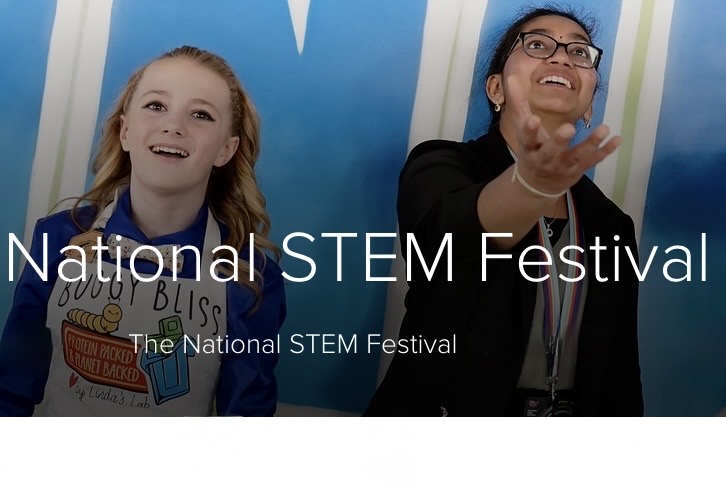
At least 24 Indian American students are among 55 middle and high schoolers named 2026 National STEM Champions, young innovators whose work is not just impressive for their age, but competitive by any standard.
These students will be recognized at the third annual National STEM Festival in Washington, D.C., on June 24-27, the organizers EXPLR, “that builds the future-ready talent pipeline by connecting curiosity to career,” announced.
Each Champion and a guardian will receive an expense-paid trip to showcase their innovations to leaders across business, government, and academia, as well as to the public at the free Build Day expo on June 27.
With an acceptance rate of less than 5%, the National STEM Festival ranks among the most competitive early talent platforms in the world. Their work includes working prototypes, patent-pending inventions, and advanced research focused on urgent needs in industry, healthcare, and government — including AI-powered surgical systems, energy transition, and cancer diagnostics.
“The 2026 Champions have raised the bar for what we thought was possible at this level. They’re already building the technologies, cures, and systems America needs,”said Jenny Buccos, Co-Director of the National STEM Festival and Founder & CEO of EXPLR.
Indian American STEM Champions and their innovations:
Haritaa Ramesh, San Ramon, California, VeinViewer, A Low-Cost Device That Makes Veins Visible;
Read: 3 Indian Americans among New Voices’ STEM leaders
Shripriya Kalbhavi, San Jose, California, Unlocking the Genetic Code Behind ALS — and a Possible Path to Treatment;
Anirudh Rao, Highlands Ranch, Colorado, Mirai, The Water-Powered Sensor That Could Change the World;
Satya Kokonda, Wilmington, Delaware, Teaching AI to Design Better Carbon Capture Materials;
Aasrith Ravulapati, Cumming, Georgia, The AI Navigation System That Guides the Visually Impaired in Real Time;
Antariksha Sharma, Fairfield, Iowa, Detecting Alzheimer’s from a Teardrop;
Sathvik Dasari, Poolesville, Maryland, A $150 Drone That Maps Air Pollution in Real Time;
Nichelle Thinagar, Worcester, Massachusetts, A Snake Robot That Saves Lives in the First Hours After a Disaster;
Diya Ramakrishnan, Saginaw, Michigan, A Mixed Reality App That Guides Surgeons Through Pancreatic Cancer Surgery;
Haneesha Rachumalla, Omaha, Nebraska, A Kombucha-Grown Capsule That Purifies Drinking Water;
Krish Sharma, Las Vegas, Nevada, A Smartphone App That Screens for Pneumonia and Finds You Care;Vedhsai Thiriveedi, Nashua, New Hampshire, An App That Teaches Teens to Spot Deadly Fake Pills;
Read: Indian American students lead in UT Dallas startup awards
Reanna Patel, Princeton, New Jersey, Turning Waste Heat into Clean Energy;
Aryana Adur, Jericho, New York, A New Drug Combination That Could Treat Food Allergies at Their Root;
Gayatri Gautham, Grand Forks, North Dakota, The Mental Wellness App Built by a Teen for Teens;
Anuki Mudalige, Lewis Center, Ohio, A $25 Wearable That Alerts Deaf and Deafblind Users to Danger;
Tushar Mehta, Allentown, Pennsylvania, An AI That Catches Lung Cancer Earlier and Explains Why;
Arjun Jain, Central, South Carolina, How the Media Really Talks About AI — and How ChatGPT Changed Everything;
Shourya Goyal, Rapid City, South Dakota, The Hunt for the World’s Most Accurate Clock;
Arya Gurumukhi, Plano, Texas, A Lab-Grown Leaf That Turns Sunlight into Fuel;
Ani Nishanian, Alexandria, Virginia, Smart Glasses That Detect Disease Before You Feel Sick;
Aadya Syal, Issaquah, Washington, An AI Platform That Brings Mental Health Care to Anyone Who Needs It;
Pavan Subramani, Morgantown, West Virginia, Using AI to Fast-Forward the Science of How Molecules Move; and
Saanvi Muduganti, Onalaska, Wisconsin, An AI That Predicts Whether Breast Cancer Will Come Back.