


In the labyrinthine corridors of India’s judicial system, where over 50 million cases sit in a decades long queue, a new digital ally is emerging from the 2026 Harvard President’s Innovation Challenge.
Adalat AI, a legal technology venture co founded by two Indian scholars, is among the finalists in the contest, placing it among the most promising startups in the university’s global ecosystem.
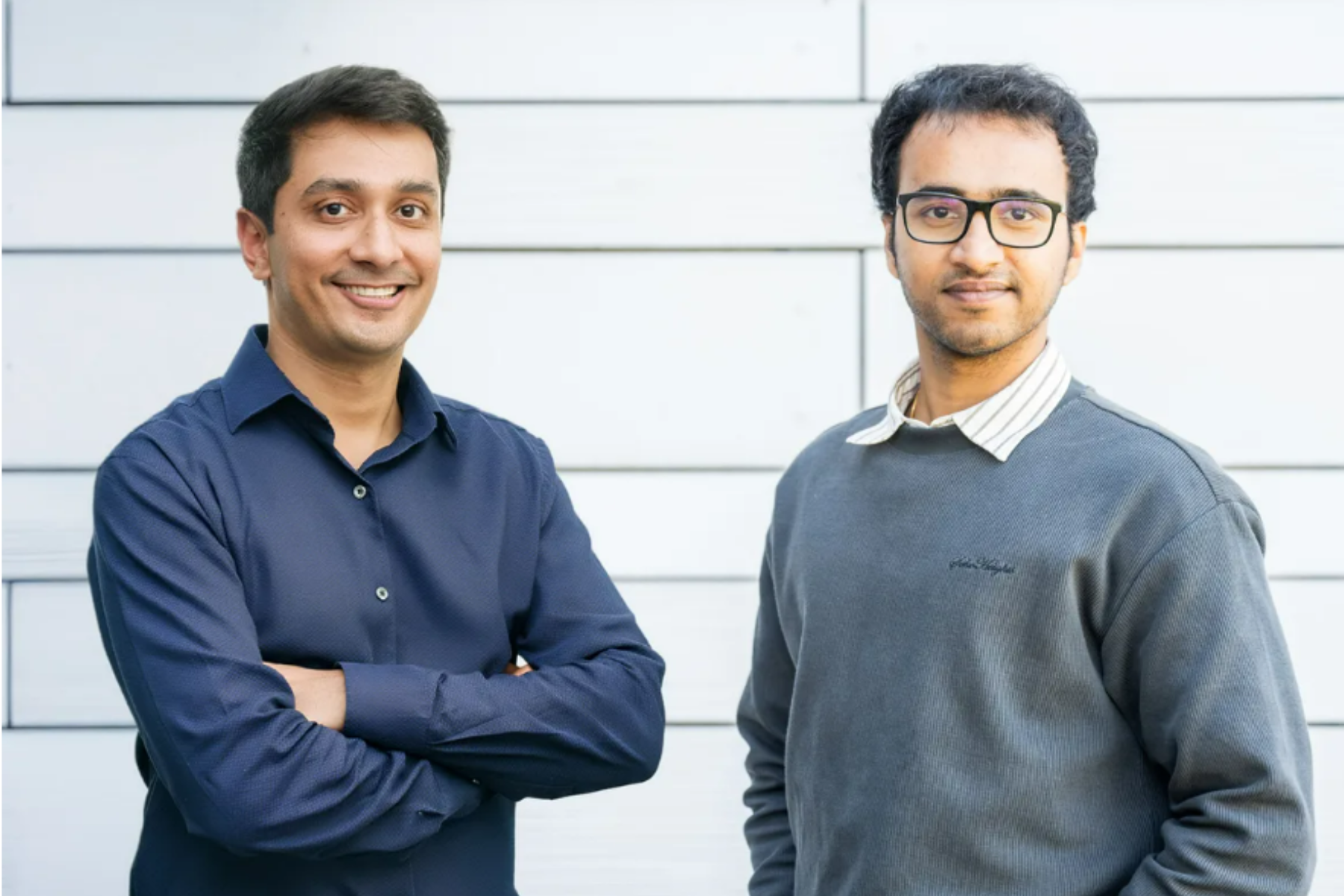
The venture is the brainchild of Utkarsh Saxena and Arghya Bhattacharya, who are leveraging their deep roots in India to solve one of the Global South’s most intractable social issues: the “glacial pace” of the courts.
For Saxena, the mission is personal. A former law clerk at the Supreme Court of India and an alumnus of Harvard Law School and the Harvard Kennedy School, he witnessed firsthand how manual clerical bottlenecks keep nearly 80% of India’s prison population trapped as “undertrials” without a conviction.
Partnering with Bhattacharya, a prolific AI researcher and alumnus of the International Institute of Information Technology (IIIT) Hyderabad, the duo developed a justice tech stack tailored specifically for the Indian context.
Bhattacharya, who was recently named to the Forbes “30 Under 30 Asia” list, brings technical expertise in multilingual and low resource language models.
Read: Indian American researchers developing tool to spot AI‑generated radiology reports
“Our tool isn’t just about transcription, it’s about understanding the complex lexicon of legal jargon and the diverse accents that change every 100 kilometers in India,” Bhattacharya noted in recent research discussions.
The platform’s centerpiece is a specialized voice to text software that allows judges and stenographers to capture testimonies in real time. Unlike generic AI, Adalat AI’s models are grounded in legal citations and can translate witness statements from regional languages into English instantly.
The impact is already measurable. In trials across 4,000 courtrooms in nine Indian states, the technology has reportedly doubled judicial productivity. In Kerala, the system has even become the first judiciary mandated AI tool in the world.
As a finalist in the President’s Innovation Challenge, Adalat AI is competing for a share of $500,000 in prize money. However, the founders view the recognition as a springboard for a broader vision.
They aim to export this “made in India” solution to other former British colonies, such as Ghana and Kenya, which share similar paper-heavy legal structures.
The winners of the challenge will be announced at a global ceremony on May 6, marking a potential turning point for a venture that seeks to ensure that, for millions, justice delayed is no longer justice denied.