


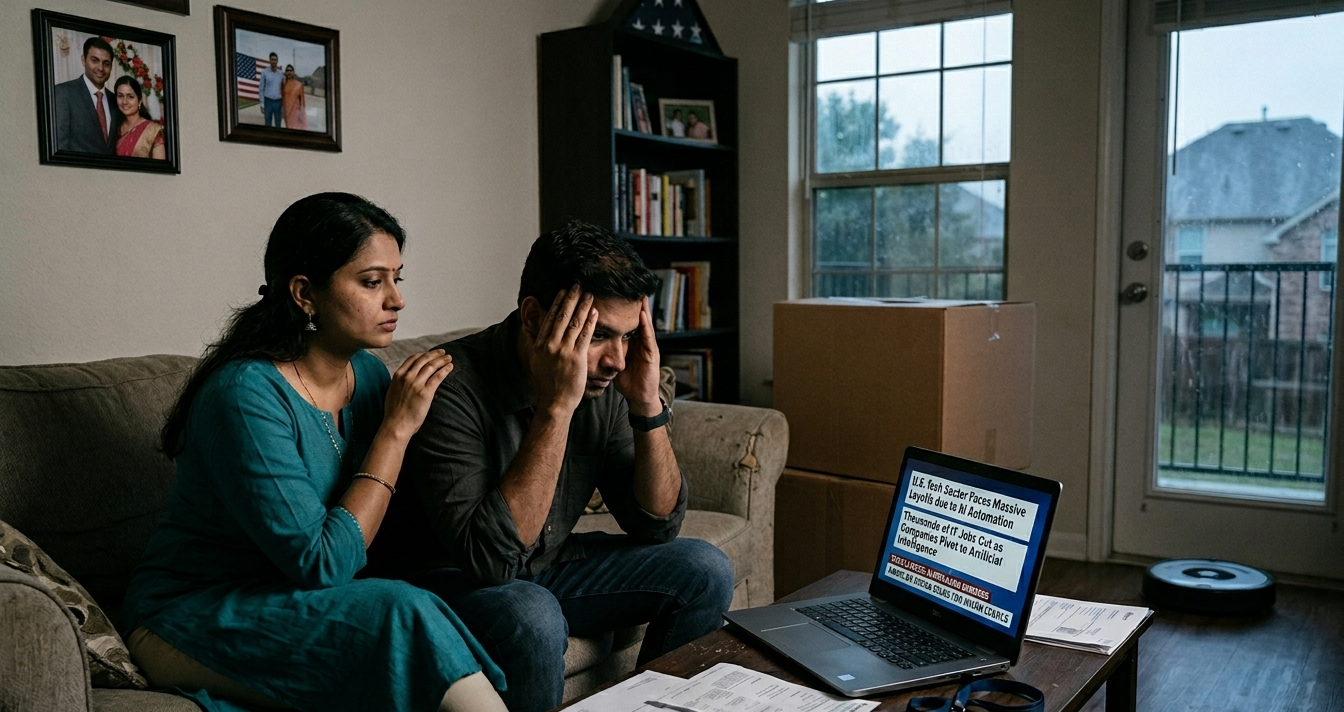
An Indian couple in Bengaluru faced mounting struggles after a job loss in the United States, underscoring the growing crisis of displaced tech workers amid AI-driven layoffs. Their tragic deaths highlight how global job disruptions ripple into India’s urban centers, leaving families vulnerable and unsupported.
Banu Chandra Reddy, 32, originally from Telangana, lost his job in the United States due to AI-driven restructuring. After returning to Bengaluru, he spent nearly a year trying to secure stable employment but was unsuccessful, leading to severe financial strain and emotional distress. His wife, Bibi Shaziya Siraj, who worked at IBM, also carried the burden of navigating personal and professional challenges in an increasingly competitive job market.
According to Indian media reports, Reddy’s prolonged unemployment was directly linked to AI-related job cuts in the US, leaving him without a steady income. The couple’s interfaith marriage further strained family ties, depriving them of both emotional and financial support.
The larger crisis: AI layoffs and worker vulnerability
Insights from a survey by Rest of World suggest that India’s tech sector is experiencing a wave of layoffs and rising distress linked to AI adoption. Reports indicate:
- Thousands of workers are being displaced as companies automate roles once considered secure.
- The mental health toll is rising, with suicides increasingly reported among professionals struggling to cope with sudden unemployment.
- Returnees from abroad, particularly from the US, face unique challenges. Many return with high expectations but struggle to re-enter India’s saturated job market.
This broader context places Reddy and Shaziya’s tragedy within a systemic pattern: AI is reshaping industries faster than workers can adapt, leaving many without adequate safety nets.
READ: ‘Today is your last working day’: Oracle cuts 30,000 jobs globally, 12,000 in India; Another round expected (April 1, 2026)
Human cost of AI-driven disruption
- Financial instability: Reddy’s inability to find work in Bengaluru after his US layoff reflects how global job losses cascade into local economies.
- Isolation: Their interfaith marriage limited family support, compounding stress.
- Mental health crisis: Without institutional or familial backing, many workers are left to navigate despair alone.
The couple’s deaths are not isolated incidents but part of a wider narrative of tech professionals in India grappling with AI-driven displacement.
Why is this important for India and the US
- Global ripple effect: Layoffs in the US directly impact returnees in India, underscoring the interconnected nature of the global tech labor market.
- Policy gap: Neither India nor the US has a robust framework to support displaced workers transitioning into new roles.
- Human stories: Behind the statistics are families like Reddy and Shaziya, whose struggles highlight the urgent need for mental health support and reskilling initiatives.
READ: ‘Not a good time’ for job hunting, over 70% US workers say in latest survey (
The Bengaluru tragedy is a stark reminder that AI-driven job losses are not just about efficiency. They carry profound human costs. As India’s tech sector faces mounting layoffs, the plight of professionals moving back to India, like Reddy, underscores the urgent need for cross-border worker protections, targeted reskilling programs, and stronger mental health support systems.