


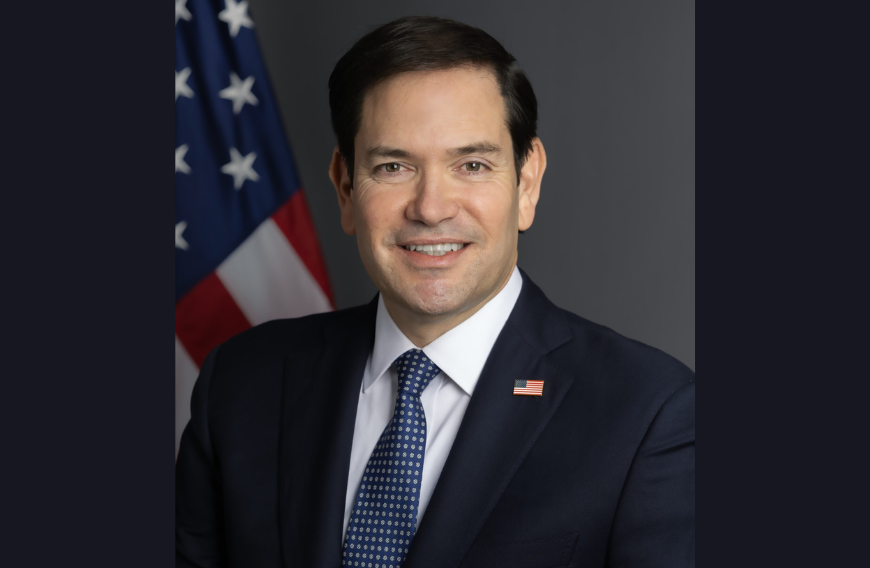
Secretary of State Marco Rubio is urging U.S. diplomats to take a more active role online. U.S. diplomats are being encouraged to use social media platform X to “counter foreign anti-American propaganda” while partnering with military psychological operations units, Secretary of State Marco Rubio said in a cable reviewed by Reuters.
According to Reuters, the cable — whose existence was first reported by The Guardian — outlines ways to expose foreign influence operations and falsehoods that “pose a direct threat to U.S. national security and fuel hostility toward American interests.”
The missive told diplomats to “coordinate with interagency partners as appropriate,” singling out the Pentagon’s Psychological Operations, formerly known as Military Information Support Operations (MISO).
READ: Trump says US may exit Iran war in ‘two’ or ‘three’ weeks (April 1, 2026)
The cable also reportedly urged diplomats to elevate trustworthy information and expose fakes by making use of tools such as the crowdsourced commentary function — dubbed “community notes” — on Elon Musk’s social media platform X, as well as other, unspecified artificial intelligence tools.
The move highlights the challenges democracies face in countering disinformation while upholding commitments to free expression. It underscores the need for credible, fact-based engagement rather than purely reactive messaging. In the long term, such strategies could redefine the role of diplomats, requiring them to operate not only as negotiators and representatives, but also as active participants in coordinated information campaigns at a scale not previously seen, in a fast-moving, highly contested global information landscape where influence is constantly being reshaped.
READ: Marco Rubio explains why India is being tariffed but not China (August 18, 2025)
In a statement, the State Department said it would “continue to take an assertive stance on this pernicious issue” and that it would use “every tool in our diplomatic toolkit” while also protecting Americans’ right to free expression.
This development highlights how the nature of global engagement is evolving in response to rapid technological change. Information now moves faster than formal diplomacy, and narratives can take shape before governments have time to respond through traditional means. This creates an environment where perception often becomes as important as reality, and where influence depends on speed, adaptability, and credibility. Over time, this could reshape how societies interpret international events, with long-term implications for trust in institutions, media, and even the idea of objective facts in global discourse.