


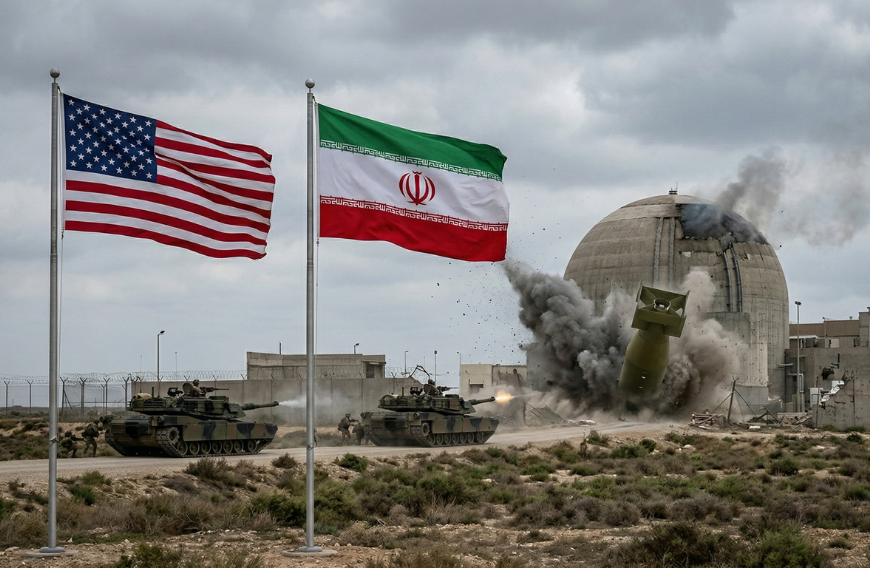
Rising oil prices may have gotten to President Donald Trump after all. Trump and his Secretary of State Marco Rubio said the end of the war on Iran could be near, signaling potential for both direct talks with Tehran’s leadership and a winding down of the conflict even without a deal.
“We’ll be leaving very soon,” Trump told reporters on Tuesday, saying that could be “within two weeks, maybe two weeks, maybe three.”
“Iran doesn’t have to make a deal, no,” he said, when asked if successful diplomacy was a prerequisite for the U.S. to end what it calls “Operation Epic Fury.”
As per Reuters, the remarks underscored Washington’s shifting and at times contradictory statements about when and how a war that has killed thousands, spread across the region and caused unprecedented energy disruption might end.
READ: Impact of the Iran War on the global economy — an energy scarcity (March 17, 2026)
As per a Ipsos poll, higher oil and fuel prices are weighing on U.S. household finances and are a political headache for Trump and his Republican Party before the November midterm elections, with two-thirds of Americans believing the U.S. should work to exit the Iran war quickly.
For Iran, these developments may be interpreted as an opportunity to significantly strengthen its negotiating position without making concessions, or consolidate regional influence without conceding key demands. At the same time, uncertainty around U.S. intentions could reinforce Tehran’s cautious approach, as it weighs the risks of escalation against the potential benefits of diplomatic engagement.
This situation underscores a shift toward pragmatism on both sides. The U.S. appears increasingly sensitive to the domestic and global costs of sustained confrontation, while Iran may see strategic patience as clearly advantageous in the current geopolitical climate. The outcome will likely shape not only bilateral relations but also regional stability, energy markets, and the credibility of U.S. commitments abroad. Ultimately, how both nations navigate this transition could redefine their roles in an already volatile international order.
READ: India faces energy risks as Hormuz closure disrupts global oil flows (
As per Reuters, Rubio told Fox News Channel’s “Hannity” program there was potential for a “direct meeting at some point” and the United States could “see the finish line.”
“It’s not today, it’s not tomorrow, but it is coming,” Rubio added.
For the United States, it highlights the limits of sustained overseas engagement when domestic priorities demand attention, while for Iran, it illustrates the importance of endurance and strategic calculation in dealing with a more powerful adversary. It could potentially mark the beginning of a longer-term shift away from direct confrontation toward more indirect or diplomatic forms of rivalry, even if tensions do not fully disappear. Ultimately, such moments often signal not a clear resolution, but a transition into a different phase of competition, where influence is exercised through alliances, economic tools, and regional positioning rather than open warfare.