


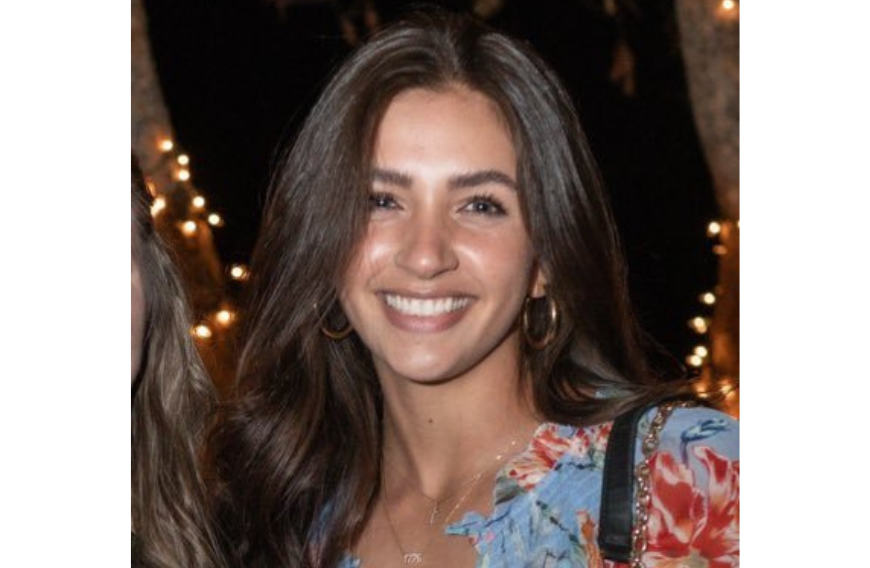
Indian American conservative influencer Priya Patel is once again at the center of a heated debate after her appearance on Piers Morgan Uncensored, where conversations around immigration quickly expanded into a broader clash over culture, identity, and assimilation in the United States.
Host Piers Morgan opened the segment by highlighting Patel’s growing online traction, describing her as “the conservative influencer whose video on immigration has been viewed 30 million times this week so far.” What followed was a pointed exchange that questioned not just policy positions, but the very definition of American culture.
Morgan challenged Patel to define what she believes immigrants should assimilate into. “I’m not sure, as Brian says, why should you feel compelled to abide by a specific culture? I mean, what is the specific American culture, for example? How would you articulate it?” he asked. Patel responded firmly, reiterating her stance on assimilation. “Why would why exactly if you didn’t want to assimilate to American culture and live as an American why exactly would you leave the country that you came from to begin with if you’re only going to bring your cultures customs and norms and implement them here.”
Morgan pushed back by invoking her own family history. “You know maybe the same reason your father left Uganda,” he said, drawing attention to the complexities of migration beyond cultural preference. The remark set off a strong reaction from fellow guest Brian Shapiro, who challenged Patel’s framing of migrants. “Do you not understand that there are people that are seeking asylum that want a better life for themselves and their families that are afraid that they could even lose their lives. Do you understand how many people are seeking asylum and are in fear of their life?”
READ: ‘My father is fully Indian’: Priya Patel faces backlash over roots amid viral immigration video (April 3, 2026)
Patel, however, downplayed that perspective. “For you to make the statement that is a very small percentage of people coming to the United States very large majority of people committing as I’m just saying the large majority of people claiming asylum is are actually economic migrants. They’re not from war torn countries or suffering under one of the other comments.”
The discussion took a sharper turn when Morgan brought up another controversial remark that had gone viral. “Priya you said which did get a lot of attention. You said not all cultures are equal and we shouldn’t be importing the third world. So what did you mean by the third world?” Patel responded, “I mean I think that’s pretty evident. There are a large majority of countries that are still considered third world….. I think there are a lot of parts of India that yes should be considered a third world country still today.”
She went on to expand her argument around cultural compatibility and assimilation. “I mean we’ve had a lot of technological advances and societal advances that a lot of parts of the world have not managed to either keep up with or come to that at this point in time. But to think that people can come from these for lack of better words dated societies and just be placed in in America and they just magically assimilate especially when we bring them here on mass. I think that that is a massive massive issue because of course these people are not prepared for this. I think if we did it on a very small scale that it could be successful. Of course we’ve seen that plenty of times throughout.”
Pressed further, Morgan asked her to clarify which cultures she believes are “inferior.” Patel responded, “the culture that comes from Afghanistan. We can talk about the Muslim culture that comes from the Middle Eastern countries. I would argue that those aren’t particularly equal.” When asked directly, “So you think the Muslim culture is an inferior culture?” she replied, “in a lot of ways yes.”
Shapiro strongly objected to her remarks. “It’s it’s a first of all, it’s extremely offensive. I would ask her how many Muslim people does she know. Number one. Number two, When you take an entire group of people and say they are lesser than us, that is pure bigotry. And I’m not surprised.” He further added, “When you go on her social media page, she echoes a lot of similar things that MAGA Republicans echo… What she does is she caters to MAGA Republicans in her base. It’s why she gets all the views she gets. And I think it’s extremely offensive.”
READ: ‘Not all cultures are equal’: Who is Priya Patel, MAGA influencer behind viral immigration debate? (December 9, 2025)
As the conversation shifted to faith, Morgan highlighted a perceived contradiction in Patel’s argument. “When you say that some cultures are less equal, you’re a Christian. I understand. Is that right?” Patel confirmed, “Correct. Yes, that’s correct.” Morgan followed up, “Where does this sit with? As a fellow Christian, I thought the teachings were quite clear that all men are are created equally. Where does this sit with that?” Patel responded, “Correct. I specifically did state that all people are created equal under the eyes of God and the law. Of course. However, we do have a a society that we’re supposed to uphold here in America.”
The cultural flashpoint Morgan referred to during the debate traces back to a video Patel shared in December 2025, which has since resurfaced and intensified the backlash. In that clip, she said, “Not all cultures are equal. There, I said it. Guess what? All people are created equal under the eyes of God and the law, that not all cultures are equal. This is a simple fact, and I don’t understand why it is now a cardinal sin, according to the left and some on the right, to say this out loud. But it is a fact.
You still have cultures today that embrace things like slavery, underage marriage, polygamy, human sacrifice. And you’re telling me that all cultures are equal and we need to allow them to come into the United States and we just need to embrace them? No, just no. And not all immigration is good.”
The resurfacing of that video has added another layer to the controversy, with critics arguing that her rhetoric closely aligns with MAGA narratives while raising questions about how she positions her own identity within that framework. Many have pointed to her Indian heritage, arguing that her views on culture and assimilation sit uneasily alongside her background.
The debate has since spilled across social media, where the conversation is no longer limited to immigration policy but has widened into a larger reckoning over cultural hierarchy, national identity, and the contradictions that can emerge when personal history intersects with political messaging.