


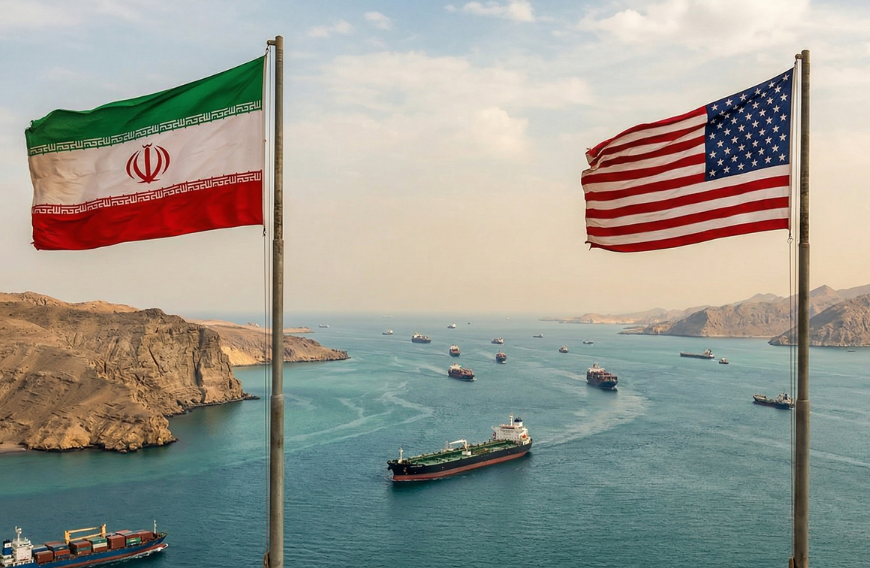
Iran is not backing down amid increasing threats by President Donald Trump. The U.S. and Iran received a framework of a plan to end hostilities, but Iran rejected immediately reopening the Strait of Hormuz, after Trump threatened to rain “hell” on Tehran if it did not make a deal by the end of Tuesday.
As per Reuters, the peace plan involves a two-tier approach with an immediate ceasefire followed by a comprehensive agreement to be finalised within 15-20 days, a source aware of the proposals said on Monday.
Iran has rejected a key part of the latest ceasefire proposal, stating it will not reopen the Strait of Hormuz as part of a temporary deal and will not accept externally imposed deadlines. Iranian officials say they are still reviewing the proposal but insist that negotiations must lead to a meaningful, long-term agreement rather than a short pause in fighting.
READ: Countries turn to Saudi port as Strait of Hormuz closes (March 24, 2026)
The conflict began on Feb. 28, when U.S. and Israeli forces launched major strikes on Iranian nuclear and military targets, triggering retaliation through missiles and drones. Fighting has since expanded across the region, affecting global oil routes, especially through the Strait of Hormuz.
As per Reuters, in a post laden with expletives on his Truth Social platform on Sunday, Trump threatened further strikes on Iranian energy and transport infrastructure if Iran failed to make a deal and reopen the Strait by Tuesday.
Iran appears focused on avoiding short-term concessions that could weaken its strategic position, while the United States, under Donald Trump, is applying pressure through both military posture and public rhetoric to force rapid compliance.
The involvement of external mediators highlights that there is still a pathway. Much will depend on whether both sides can shift from maximalist positions to incremental compromises. The situation also underscores how strategic chokepoints and economic considerations are shaping modern conflict dynamics. Control over critical infrastructure and trade routes is not just a military issue but a powerful negotiating tool.
The trajectory of the conflict will likely hinge on timing, communication, and political calculations on both sides. For now, uncertainty remains high, and the balance between escalation and diplomacy is still unresolved.
READ: Oil prices climb amid Iran war, Hormuz disruption sparks fears of worst crisis since 1970s (March 23, 2026)
The conflict has also highlighted the significant role of regional actors and alliances, though it is unclear how much influence they can exert to stabilize the situation. Countries bordering the Gulf, as well as key global powers, have been monitoring the Strait of Hormuz closely, but the effectiveness of their diplomatic pressure is still uncertain. Economic consequences, particularly rising oil prices and disruptions to global shipping, have added urgency to negotiations, yet it remains speculative whether economic pressures alone will compel either side to compromise.
The domestic political climate in both the United States and Iran may influence decisions in unpredictable ways. Internal dissent, public opinion, and factional debates could shift priorities and either accelerate or delay potential agreements, but the timing is highly uncertain. Technology and intelligence capabilities on both sides further complicate calculations, and it is unclear whether these advantages will deter escalation or embolden risk-taking.