


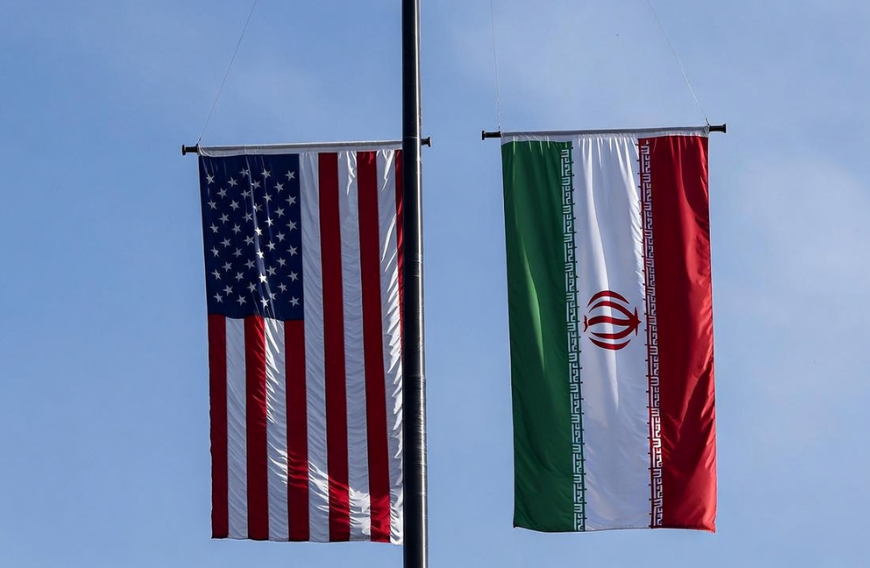
It looks like investors may be growing hopeful about a possible end to the Iran war. U.S. stock index futures inched higher on Monday after the main indexes marked their biggest weekly jump in four months in the last session, as investors assessed prospects for a de-escalation in the Middle East conflict.
As per Reuters, the U.S. and Iran received a framework of a plan to end the hostilities, a day after President Donald Trump threatened to rain “hell” on Tehran if it did not make a deal. Iran said the Strait of Hormuz will not be reopened under a temporary ceasefire.
READ: Oil prices climb amid Iran war, Hormuz disruption sparks fears of worst crisis since 1970s (March 23, 2026)
The recent movements in financial markets come after weeks of heightened geopolitical tension. In early 2026, the escalation of the U.S.–Israel military campaign against Iran and Tehran’s retaliatory strikes introduced significant risk that reverberated through global markets. One of the most immediate effects was a sharp rise in crude oil prices, with benchmarks such as Brent and West Texas Intermediate climbing above earlier levels due to fears of disruption in the Strait of Hormuz, a critical chokepoint for roughly 20% of global petroleum flows. This dynamic lifted inflation concerns and pressured broader risk assets.
Against this backdrop, major U.S. stock indices initially reacted with heightened volatility and declines. The S&P 500, Dow Jones Industrial Average, and Nasdaq Composite recorded multiple sessions of losses tied to elevated energy costs, inflation worries, and uncertainty about future monetary policy as the Federal Reserve weighed the inflationary impact of the conflict. Some periods saw indexes enter correction territory, particularly in sectors sensitive to higher energy costs and slower growth.
However, sentiment appears to be shifting, at least cautiously. As per Reuters, investors drew some comfort from an Axios report, citing four sources with knowledge of the talks, that the U.S., Iran, and a group of regional mediators are discussing the terms for a potential 45-day ceasefire.
The current environment highlights the sensitivity of financial markets to geopolitical developments, particularly when conflicts involve major energy-producing regions. Investor behavior in such periods often oscillates between risk aversion and cautious optimism, reflecting both immediate threats and the possibility of resolution. Market participants tend to weigh the dual impact of geopolitical tension: short-term disruptions to supply chains and commodities, and longer-term implications for economic growth and corporate earnings.
Even amid volatility, financial markets have shown a degree of resilience, supported by expectations that policy responses, diplomatic negotiations, and underlying economic fundamentals can help mitigate prolonged shocks. Investor sentiment is increasingly shaped not only by headline developments but also by the credibility of ceasefire frameworks and broader policy signals. This creates an environment where rapid shifts in perception can drive pronounced market movements.
READ: Countries turn to Saudi port as Strait of Hormuz closes (March 24, 2026)
From a broader perspective, these dynamics underscore the interconnectedness of global markets, where developments in one region can ripple across asset classes and geographies. Portfolio strategies may increasingly emphasize diversification, hedging, and liquidity management to navigate uncertainty. While short-term fluctuations are inevitable, market participants often remain focused on long-term risk-return trade-offs.
The current market climate ultimately illustrates the complex interplay between geopolitics, energy markets, and investor psychology, highlighting the need for vigilance, adaptability, and measured decision-making in an uncertain global environment.