


Oscar-winning director Aneil Karia and actor Riz Ahmed reimagine Shakespeare’s “Hamlet” in a contemporary South Asian London setting, blending family drama, identity and diaspora themes.
There is something about “Hamlet” that continues to invite reinterpretation—on stage, on screen and across cultures and continents. Whether it is the universality of its emotions or the vulnerability of human failings, each culture seems to find its own resonance in the story.
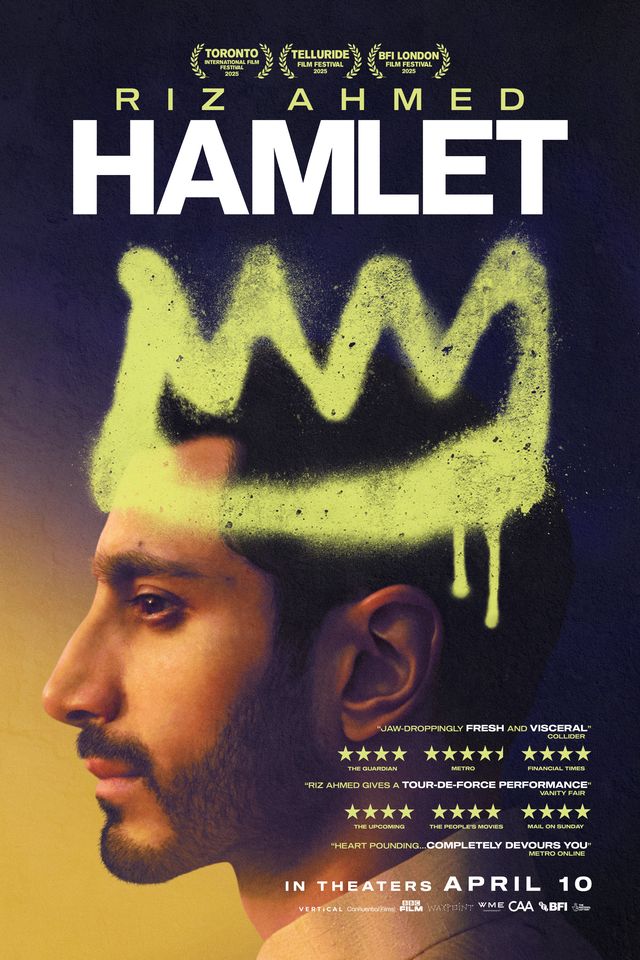 In its latest iteration, “Hamlet,” directed by Aneil Karia, seeks to strike a chord within the South Asian psyche. The film, starring British actor Riz Ahmed, opens in cinemas across the U.S. on April 10. It has already made the festival circuit, screening at Toronto International Film Festival, BFI London Film Festival and Telluride Film Festival.
Karia’s interpretation is set within the elite circles of London’s South Asian community. The cast includes Morfydd Clark, Joe Alwyn, Sheeba Chaddha and Avijit Dutt, alongside Art Malik and Timothy Spall. The screenplay is written by Michael Lesslie.
The Academy Award-winning pairing of Ahmed and Karia proves formidable, transporting the centuries-old narrative into a contemporary setting. Here, the slain king is reimagined as a powerful real estate tycoon—the CEO of Elsinore Properties—whose death leaves “Hamlet,” played by Ahmed, grappling with grief and suspicion.
The film opens on a note that feels strikingly authentic for a South Asian family rooted in metropolitan London, where relationships and professional interests within extended families often intersect—and clash. In a nod to the murky realities of many family-run businesses, director Aneil Karia resists the urge to romanticize the deceased patriarch, presenting him instead as a complex, morally ambiguous figure.
READ: Filmmaker Geeta Gandbhir creates Oscar history with dual documentary nominations (March 17, 2026)
The opening sequence sets the tone not only for a journey into a story of grief, angst and revenge, but also for an exploration of South Asian traditions rarely depicted in Western cinema. “Hamlet” is shown performing funeral rites for his father, preparing the body for cremation—a moment that grounds the narrative in cultural specificity.
For any adaptation to succeed, it must do more than simply relocate the story; it must absorb the nuances and practices of its new setting so seamlessly that they feel intrinsic to the narrative. In “Hamlet,” Karia achieves this balance, allowing the added cultural layers to enrich rather than distract. The traditions and rituals woven into the story feel like organic extensions of the world, making it easy for viewers to immerse themselves fully.
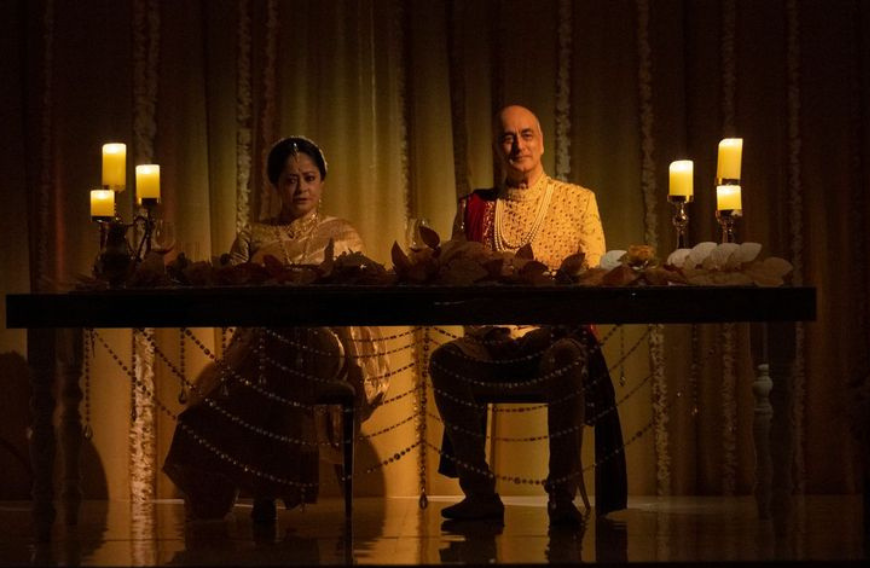
Hamlet’s uncle, Claudius, is portrayed by Art Malik, while his mother, Gertrude, is played by Sheeba Chaddha. Chaddha brings a distinctive eccentricity to the role, capturing the tensions of a South Asian woman navigating the fraught intersection of duty and desire.
READ: Indian immigrant’s son Alexandre Singh wins an Oscar: Here’s what you need to know (March 17, 2026)
Set in the 21st century, the film captures the cross-generational spaces many young South Asians navigate today. In one striking reimagining, the ghost of Hamlet’s father appears not on a castle battlement but in a strip club, where Hamlet, in a haze, confronts his grief and confusion.
No portrayal of South Asian culture feels complete without elements of song, dance and traditional attire—and the film delivers on that front. In a pivotal scene, where players reenact the circumstances of the father’s murder, the narrative unfolds through a stylized blend of Indian dance and music. It’s a familiar device, echoing sequences seen time and again in Hindi cinema. While it may not feel entirely original, the execution is lively enough to keep it engaging rather than formulaic.
Beyond its cultural layering, the film ultimately underscores something more enduring: stories like “Hamlet” continue to resonate not because of where they are set, but because of how deeply they tap into universal human emotions.