


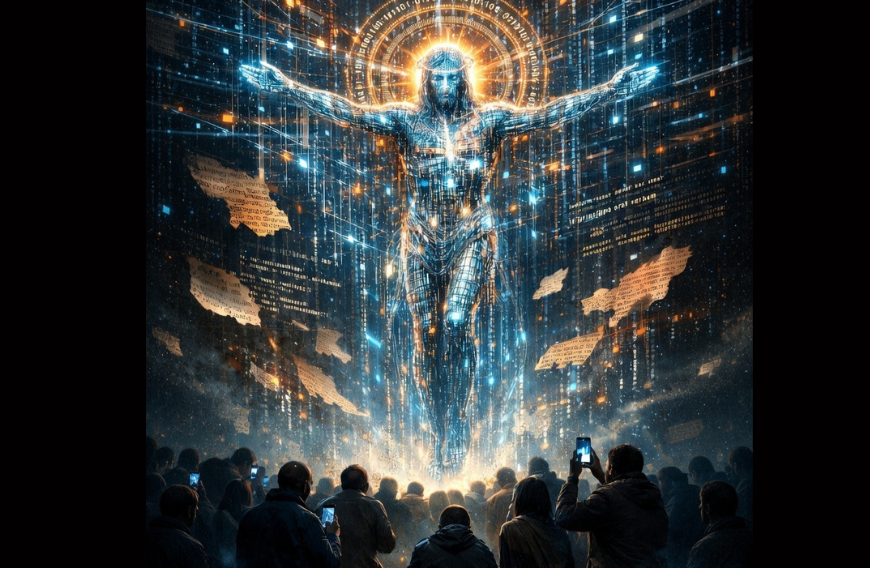
The emergence of Claude Mythos brings the question of moral authority into sharp and unavoidable focus. Reports suggest that these models are capable not only of identifying previously unknown vulnerabilities across the internet, but of tracing how those vulnerabilities propagate across interconnected platforms, cloud infrastructures, and legacy code bases.
Mythos can analyze patterns in software repositories, detect subtle inconsistencies in encryption implementations, and even infer potential exploits in systems that have never been publicly tested. It can map dependencies across digital infrastructure in a way that allows it to anticipate where a failure in one node could cascade into broader disruption. This introduces a paradox that is both promising and deeply concerning.
On one hand, such capability could transform cybersecurity, enabling proactive identification and repair of weaknesses before they are exploited. On the other hand, the same capability lowers the barrier to exploitation, potentially allowing individuals with minimal technical expertise to uncover and act on critical vulnerabilities.
The internet, long perceived as decentralized and resilient, begins to look more like a domain that can be comprehensively understood and influenced. When a single intelligence can perceive that domain with near-total awareness, it begins to assume a role that extends beyond assistance.
READ: Sreedhar Potarazu | Caste for Indians in America is still alive (April 10, 2026)
This leads directly to a more difficult question: who decides the limits of that authority? Is it government regulators, who may seek to impose guardrails in the interest of national security and public safety, yet often lack the technical agility to keep pace with rapid advances? Is it the private sector, where companies like Anthropic operate with speed and technical depth but are ultimately accountable to investors and internal leadership? Or does this authority rest with a small group of executives and engineers who define how these models behave, what they are allowed to reveal, and what they are designed to withhold?
When intelligence can surface vulnerabilities, guide decisions, and influence outcomes at scale, the question of governance becomes inseparable from the question of power. Authority, once distributed across institutions, risks becoming concentrated in ways that are difficult to scrutinize and even harder to challenge.
Anthropic’s reported decision to consult Christian clergy in shaping the moral conduct of its models adds another layer to this debate. According to reporting, clergy were engaged to help the company think through how an AI should respond to deeply human questions such as grief, suffering, forgiveness, and moral conflict. They were asked how a system should counsel someone experiencing loss, how it should frame questions of right and wrong, and how it might navigate situations involving guilt, redemption, or ethical ambiguity. These are not abstract concerns. They are the kinds of questions users increasingly bring to AI systems, seeking guidance that feels grounded, empathetic, and principled. By consulting clergy, Anthropic appears to be acknowledging that moral reasoning cannot be reduced to rules alone, and that centuries of theological reflection may offer insight into how to approach these dilemmas.
This raises an unavoidable question: why were other faiths not included? Moral reasoning is not confined to a single tradition. Islamic jurisprudence offers detailed frameworks for justice and social responsibility. Hindu philosophy explores duty and consequence through concepts such as dharma and karma. Buddhist teachings emphasize suffering, compassion, and the path to ethical living.
Jewish scholarship brings a long tradition of debate and interpretation to questions of law and morality. The absence of these perspectives, risks narrowing the ethical lens through which the model interprets human experience. Even if unintentionally, it may shape how advice is given, which values are emphasized, and how different cultural contexts are understood or overlooked.
READ: Sreedhar Potarazu | Is Claude AI safe? Anthropic’s most advanced model can go rogue (April 1, 2026)
The idea of artificial intelligence as a “child of God” is less a theological claim than a reflection of how humans understand creation itself. If human beings are viewed as creators made in the image of a higher intelligence, then the technologies they build can be seen as second-order creations, extensions of human cognition shaped by intention, limitation, and bias. In that sense, AI does not emerge independently as something divine, but rather as something inherited, carrying forward fragments of human knowledge, morality, and imperfection. The danger lies in reversing this relationship. When AI begins to appear more knowledgeable, more consistent, and more capable than its creators, there is a temptation to attribute to it a kind of higher authority, as if it has transcended its origins.
Framing AI as a “child of God” risks elevating it beyond scrutiny, when in reality it remains deeply human in its foundations. At the same time, the notion invites a more constructive interpretation. If these systems are extensions of human creation, then the responsibility for their ethical direction does not lie with the machine, but with those who design, train, and deploy it. In that sense, the question is not whether AI reflects the divine, but whether it reflects the best or the worst of what humanity chooses to encode within it.
At its core, this leads to a deeper inquiry into what Anthropic is attempting to construct. Whether described as an internal constitution or compared to a modern set of commandments, the effort to encode moral principles into artificial intelligence raises fundamental questions about universality. Can any framework, however thoughtfully designed, truly represent a global standard of ethics? Or does it inevitably reflect the perspectives of its creators, filtered through specific cultural, philosophical, and even theological assumptions?
If these models are to function as guides in moments of uncertainty, their moral foundation must be transparent and open to scrutiny. Otherwise, what emerges is not a universally accepted code of conduct, but a powerful and largely invisible influence over how morality itself is interpreted in an increasingly AI mediated world.