



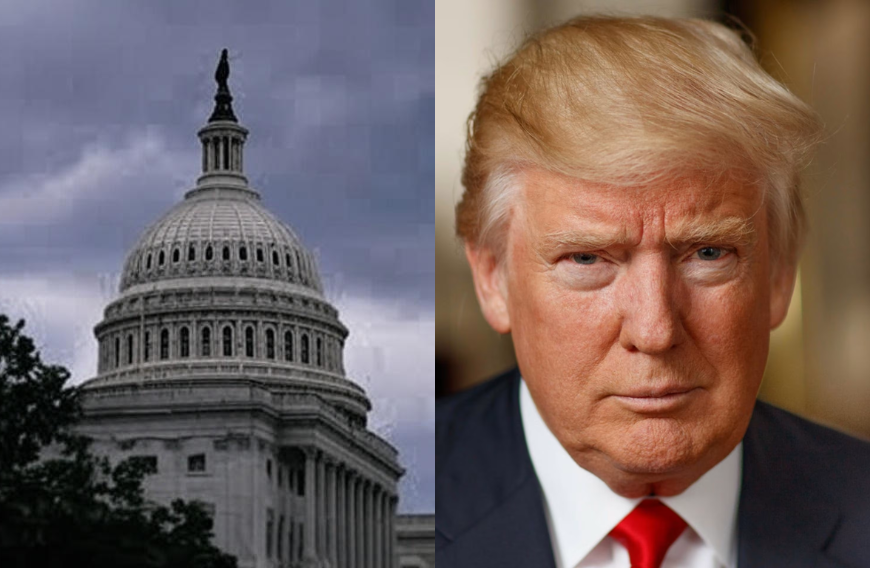
President Donald Trump earned a major win in the Senate. The Senate early Thursday passed President Trump’s requested clawback of $9 billion in federal funding for the Public Broadcasting Service, National Public Radio and foreign aid programs.
Trump’s administration argues that these programs represent unnecessary or misaligned spending that could be better used for domestic priorities like border security, veterans’ services, or infrastructure. Trump has long criticized public broadcasters, accusing NPR and PBS of promoting what he calls leftist propaganda using taxpayer dollars.
In May, he signed an executive order directing the Corporation for Public Broadcasting (CPB) to cease support for NPR and PBS, intensifying efforts to strip funding from institutions he sees as ideologically opposed to his political vision.
READ: President Donald Trump would ‘love to’ stop funding NPR and PBS (March 26, 2025)
Axios reported that this Senate decision is a win for conservative fiscal hawks who wanted to follow on DOGE’s work, while Democrats fear the victory for the White House opens the door for more rescissions packages negating bipartisan spending deals.
While key health programs like PEPFAR (which combats AIDS globally) were spared, billions in other aid face elimination. Trump has also pressured Republican lawmakers to back the cuts, framing the vote as a test of party loyalty. Critics argue these reductions could damage U.S. global influence and harm vulnerable communities abroad, but Trump and his allies contend the moves are necessary to curb “wasteful” spending and prioritize American taxpayers.
The measure has reportedly passed 51-48 with only Republican support. Two Republicans — Susan Collins (Maine) and Lisa Murkowski (Alaska) — voted with Democrats against the bill.
READ: Trump pressures Congress to cut $9.4 billion in funding for PBS, NPR (June 4, 2025)
For Trump’s base, the cuts validate long-standing grievances against what they perceive as liberal-leaning institutions and excessive foreign aid. For critics, however, it raises concerns about the erosion of independent media and the U.S.’s global role.
Axios reports that the package will now need to gain final approval in the House, which is facing a Friday deadline to get the measure to Trump.
This development also underscores the deepening polarization in Washington. The bill passed on a near party-line vote, with only two Republican senators breaking ranks. It reveals how Trump has turned fiscal decisions into political loyalty tests, pressuring GOP lawmakers to fall in line or risk falling out of favor. The final House vote will determine whether this becomes a lasting policy shift.
Trump’s win in the Senate is also a clear signal of his control over the current Republican agenda and the shifting priorities of federal governance. If the House approves the measure, it would mark a major rollback in the U.S. government’s support for global development and public media, potentially reshaping the country’s international image and domestic cultural landscape.