



The Texas Hill Country disaster is not merely about one storm, one agency, or one administration. It is part of a broader, more troubling pattern.
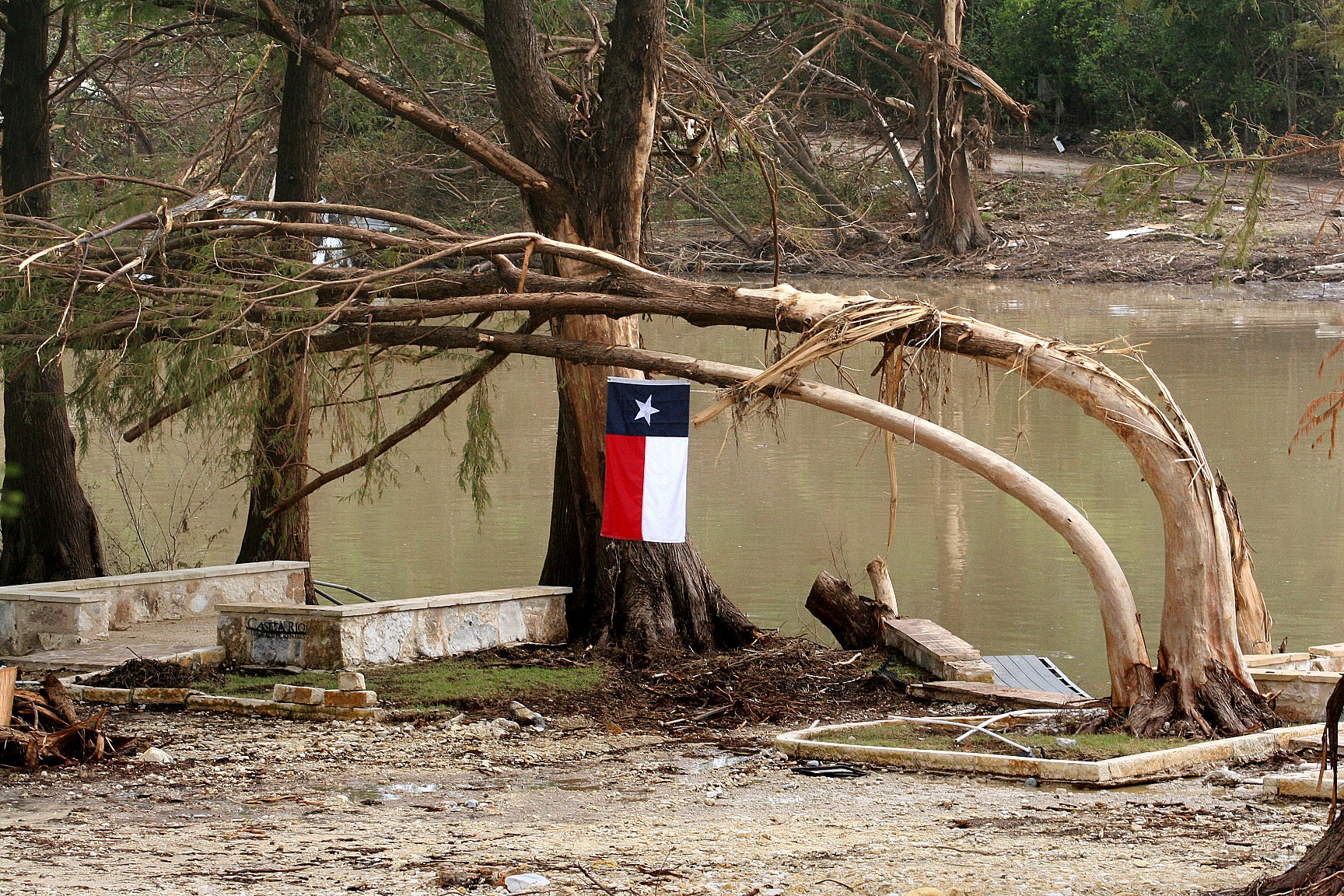
 A devastating flash flood in Texas Hill Country over the July 4th weekend claimed at least 134 lives, with 101 people still missing as of Thursday, July 17. The worst toll came in Kerr County, where a surge from the Guadalupe River swept away more than a hundred people, many of them young girls in camps near the riverfront.
Nearly two weeks later, a stunned nation is still asking: How could a natural disaster like this take so many lives today in a technologically advanced country like the United States, which has tools such as: early-warning systems, advanced weather models, satellite tracking, and coordinated emergency response mechanisms. These tools are used to prepare for earthquakes, tsunamis, hurricanes, and tornadoes. What went wrong this time?
A careful analysis reveals that the flood’s deadly toll was caused not just by the wrath of nature but by an ideology focused on reducing the size and scope of the federal government.
In Texas Hill Country, this fatal combination proved catastrophic. The warning signs were there. The region, known for its thin soil and rocky terrain, has long been prone to flooding. This was the fourth major flood in the area known as “Flash Flood Alley” in the past 50 years.
Frank F. Islam: A third Gulf War could rattle markets and strengthen China’s hand (June 23, 2025)
Two key factors, both pointing to deeper failures of governance, contributed to the scale of the tragedy.
First, despite its known vulnerability to flash flooding, Kerr County lacked a siren-based flood warning system, relying solely on cellphone alerts to warn residents. Many of the campers affected by the flood either didn’t have phones or never received the alerts in time, as the waters surged with little warning in the early morning hours.
Second, the regional office of the National Weather Service (NWS), which is tasked with issuing severe weather warnings, had been operating without a warning coordination meteorologist since the retirement on April 30 of the last person to hold that position. The absence of a person in this critical role may have affected both communication and coordination at a time when every minute mattered.
In addition to the NWS, there were issues with the Federal Emergency Management Agency (FEMA), which is responsible for coordinating disaster response at the national level.
Frank F. Islam: Trump’s tariffs are undermining the U.S. economy(May 17, 2025)
FEMA’s response to the devastation wrought by the floods has been widely criticized as slow and disorganized. In several hard-hit communities, federal assistance did not arrive for days, forcing residents to rely on local volunteers, churches, and community groups to carry out rescue and relief efforts in the crucial early hours.
Part of the reason FEMA has remained largely reactive rather than proactive in states like Texas lies in the political climate in the U.S. Since its creation by the Democratic administration of President Jimmy Carter in 1979, the agency has often been targeted by conservative Republican lawmakers and activists who view strong federal agencies as a form of governmental overreach.
As a result, FEMA, hampered by years of political resistance and chronic underfunding, has not been adequately equipped to invest in long-term preparedness or build climate resilience, especially in rural and disaster-prone regions like the Texas Hill Country.
That inadequacy of federal capacity has increased under President Donald Trump.
Both the NWS and FEMA have been seriously weakened by staffing cuts imposed by the Department of Government Efficiency (DOGE), an entity established by Trump and led by billionaire Elon Musk with calls to “streamline bureaucracy.” Reports indicate that DOGE reduced staffing at more than half of the NWS’s field offices, with several no longer operating around the clock.
Read more columns by Frank F. Islam
At FEMA, the impact was equally damaging. Under DOGE directives, the agency lost 200 staffers to direct terminations, while an additional 20 percent of its workforce exited voluntarily through buyouts. When an organization loses that many experienced personnel in such a short span, its ability to respond to crises is definitely compromised.
The flood has cast a spotlight on the consequences of the cuts at NWS and FEMA. Unfortunately, these cases are emblematic of cuts and potential systemic failures throughout the federal government.
According to ABC News, more than 200,000 federal jobs have been eliminated across a dozen agencies, with another 75,000 workers accepting buyouts. These reductions are now visibly affecting emergency response and public safety.
The Texas Hill Country disaster is not merely about one storm, one agency, or one administration. It is part of a broader, more troubling pattern. For years, the relentless push to “do more with less,” combined with ideological efforts to erode trust in the federal government, has hampered agencies meant to protect the public.
From forecasting floods to inspecting bridges, monitoring air quality, and managing wildfires, the public sector at the federal level performs critical functions that the private sector has neither the incentive nor the infrastructure to handle. When these systems are defunded or understaffed, it can become a matter of life and death.
Staffing shortages in air traffic control, emergency management, and public health aren’t isolated problems; they are symptoms of a governing philosophy that prioritizes cost-cutting over capacity-building, slogans over safety.
The Texas floods are a sobering example of what happens when this philosophy meets reality. The United States, just like every nation, depends on a well-funded, fully staffed, and trusted public sector. The real question is not whether we can afford government; it’s whether we can survive without it.